


Black money scope through real estate sends wrong message: CPD

The Centre for Policy Dialogue (CPD) today opposed the government's move to allow the legalisation of undisclosed income through property transactions, saying such measures are economically unjustified, ethically problematic and politically damaging.
"We have always said that, economically, it is not justified," said Mustafizur Rahman, distinguished fellow of the CPD.

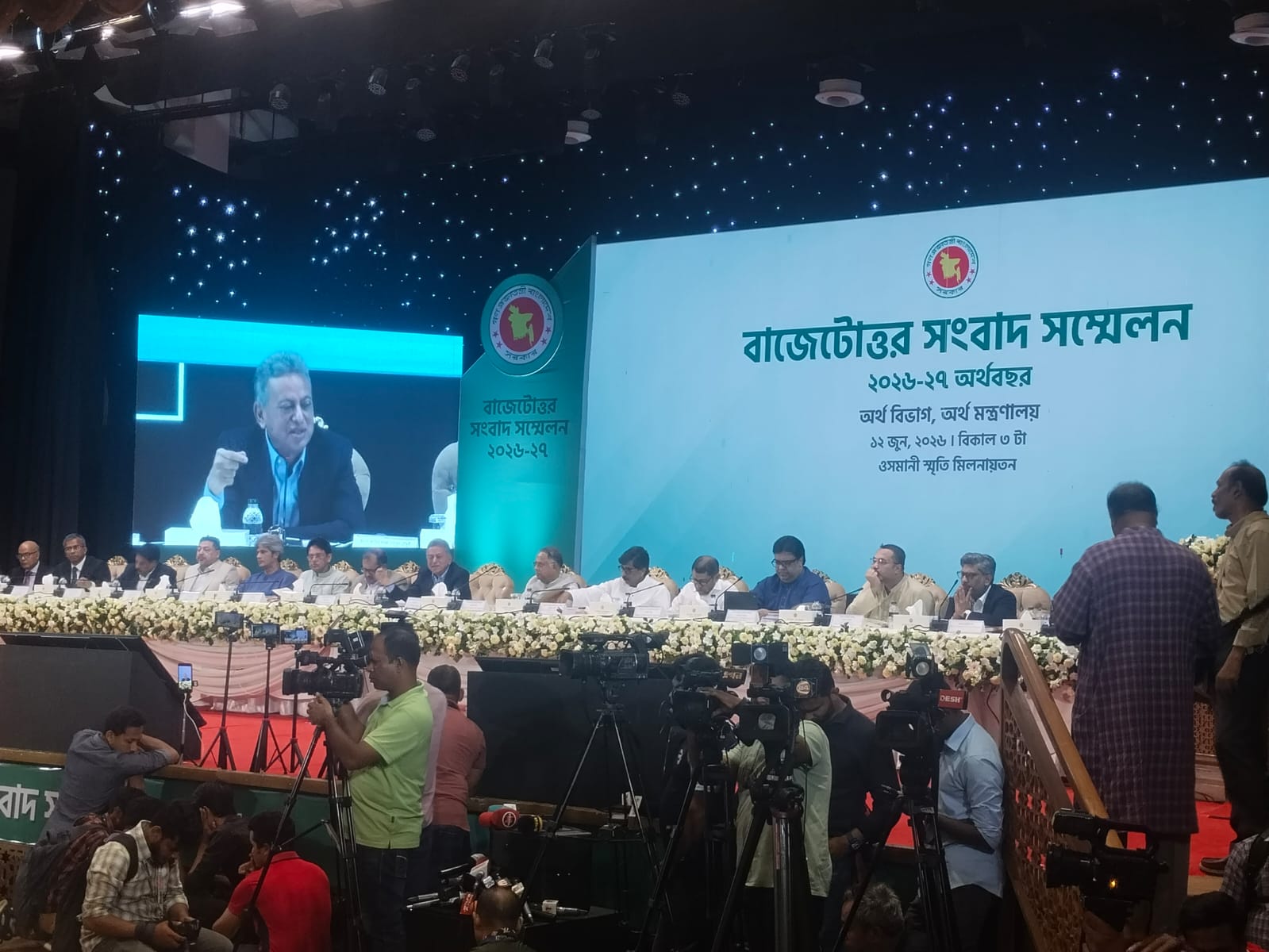
He made the remarks at a briefing on CPD's analysis of the proposed budget for fiscal year 2026-27 at a Dhaka hotel.

"The reason is that every time a scope has been provided to legalise black money, the government's revenue gain has been very limited. Rather, it creates a moral hazard for others," he said.
According to Mustafizur, repeated opportunities to legalise undisclosed wealth discourage honest taxpayers and weaken tax compliance.
"Those who are paying taxes properly may think, 'If I do not pay now and instead pay later, I may receive additional benefits. So, why should I comply this time?' This creates a problem," he said.
Mustafizur also criticised the measure from a political perspective, saying it sends the wrong message to the public.
"Ordinary people tend to think that those who engaged in corruption or did not pay taxes properly are being rewarded, while the burden is being placed on the rest of us," he said.
"So, economically, morally and politically, we have opposed it from all three perspectives."
Although the provision was not included in the budget speech itself, it has been introduced through another mechanism, Mustafizur noted.
However, he acknowledged that policy distortions in land transactions have contributed to undisclosed income generation.
"In some cases, particularly in land transactions, there are significant inconsistencies in government regulations regarding the determination of mouza values. As a result, a substantial amount of money becomes 'black' because of these distortions," he said.
He noted that the government has announced plans to reassess mouza values more frequently and update them regularly, which could help address the problem.
"If that is done, then the black money generated due to weaknesses in our policies concerning land transactions can be addressed," he said.
Mustafizur said policymakers may be viewing the measure as a one-time opportunity linked to planned reforms in land valuation and property transactions.

"They may believe that since they are changing the policy framework, and since some of this black money arose because of policy weaknesses, they should provide one last opportunity," he said, while stressing that the CPD's position remains unchanged.
Echoing Mustafizur's concerns, CPD Executive Director Fahmida Khatun said the provision weakens the principles of tax fairness and equity.
"This undermines tax justice and the principle of fairness in taxation. It creates an inequality between honest taxpayers who have been paying their taxes regularly and those who have evaded taxes," she said.
 For all latest news, follow The Daily Star's Google News channel.
 On Thursday, Finance Minister Amir Khosru Mahmud Chowdhury proposed a provision in parliament, allowing taxpayers to legalise undisclosed income through property transactions.
The measure would enable buyers and sellers of land, buildings and apartments to declare previously undisclosed funds where the actual transaction value exceeds the amount declared in official documents -- a common practice in Bangladesh's real estate market.
Under the proposal, individuals would be able to regularise the undisclosed portion of a property transaction by paying income tax at the applicable individual rate.
The proposal also states that no authority would be allowed to question or initiate proceedings over such income if the taxpayer voluntarily discloses it and pays the required tax, notwithstanding any provisions of the Income Tax Act or other applicable laws.
However, taxpayers already facing proceedings over such transactions would be required to pay an additional 20 percent on top of the applicable tax on the undisclosed amount, according to officials.
The facility will not be available to individuals who have already been convicted by a court in connection with such matters.
Comments