


Oil price shocks threaten inflation, taka stability: CPD
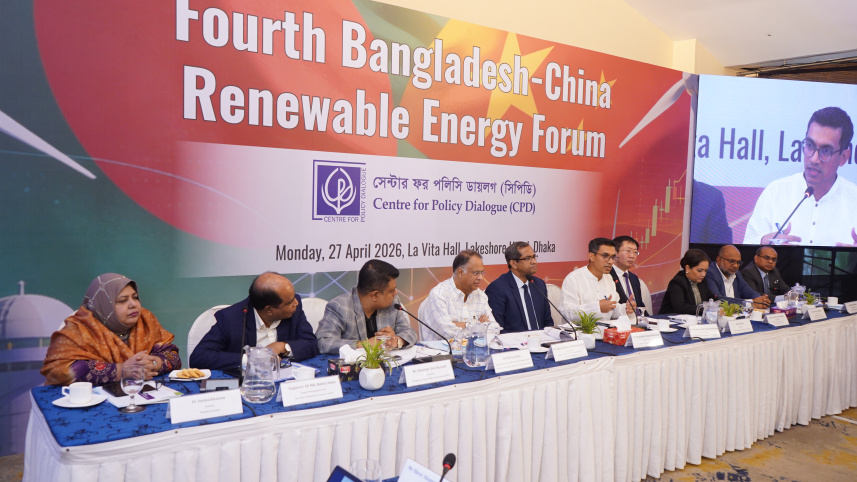
Global oil price shocks are likely to affect Bangladesh’s economy mainly through higher inflation, a weaker exchange rate, and limited output losses, according to a study by the Centre for Policy Dialogue (CPD).
The study finds that while the scale of the impact will depend on the extent of the oil price increase, the transmission channels remain consistent over the medium to long term.

Rising energy costs are expected to feed into domestic prices, weaken the taka, and slightly slow economic growth.
By analysing different scenarios based on projections of price hikes from 20 percent to 60 percent in the global market, using a model that employs econometric tools, the CPD said losses in gross domestic product (GDP) — a measure of the value of goods and services produced in an economy — would remain relatively contained, ranging between 0.21 percent and 0.53 percent.
In contrast, the inflationary impact could be far more pronounced, with price pressures rising from 0.6 percent in the first quarter to as high as 13.6 percent in the fifth year, reflecting the strong pass-through of fuel costs across Bangladesh’s supply chains, the CPD said in a paper presented at the fourth Bangladesh-China Renewable Energy Forum at Hotel Lakeshore in Dhaka.
To address these challenges, the CPD recommended accelerating the transition towards renewable energy, while using domestic natural gas as a “transition fuel” to reduce dependence on imports.
Policy momentum appears to be building, the CPD said.
The BNP-led government has recently announced a target to generate 10,000 megawatts of electricity from renewable sources by 2030 and has formed a committee to prepare the necessary roadmap.
The CPD urged the Ministry of Power, Energy and Mineral Resources to prepare a clear roadmap to achieve the 10,000 MW renewable energy target through both utility-scale and distributed systems.
The think tank said the target could unlock around $10 billion in investment and recommended reviving viable cancelled projects through transparent tendering to speed up implementation.
 For all latest news, follow The Daily Star's Google News channel.
Comments