


DNCC Anti-mosquito Drives: Special measures for risk-prone wards
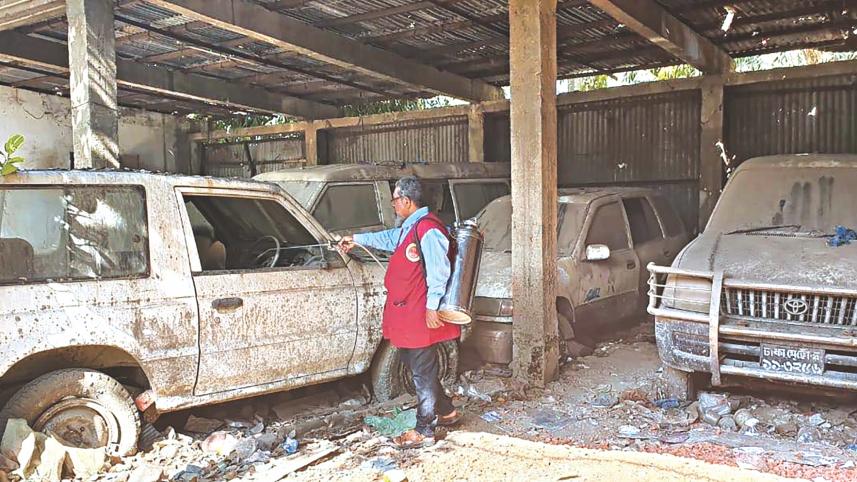
In light of a recent survey, Dhaka North City Corporation (DNCC) will be taking special measures at certain wards under the corporation which are at greater risk of mosquito proliferation.
DNCC's health officer yesterday inaugurated the initiative in Mirpur's Paikpara under ward-12.
 For all latest news, follow The Daily Star's Google News channel.
 According to DNCC officials, a recently published survey of Directorate General of Health Services (DGHS) shows that several wards under both city corporations are at risk of mosquito proliferation. Of them, DNCC has five risk-prone wards: 1, 12, 16, 20 and 31.
Considering the survey, DNCC will ramp up their monitoring and anti-mosquito drives in these five wards to keep the number of mosquitoes in check round the year.
"Our men use hand-sprays and fogging machines in two shifts -- in the morning and evening. With this initiative, they'll search for mosquitoes and their breeding grounds and will work to raise awareness among people outside the two shifts," said Ward-12 Councillor Md Iqbal Hossain Titu.
While inaugurating the initiative at 11am, DNCC Health Officer Brig Gen Mominur Rahman Mamun said, "Keep your buildings and adjacent areas clean. City corporation's vehicles will collect your waste, so please don't throw them here and there. Also, don't let water in small containers get stagnant near your building."
Seeking assistance from all, he also requested local colony residents and officials from different offices to clean their areas once a week by themselves for the sake of their families.
During the inauguration, Zonal (4) Executive Officer Saleha Binte Siraj was also present.
In the DGHS survey, it stated that the mosquito population density in the capital will multiply within 15 days, as a change of seasons is creating suitable environment for their breeding.
A DGHS team found presence of Aedes mosquitoes in 12 percent wards of Dhaka South City Corporation and in 10 percent wards of DNCC.
They also found the density of Culex mosquito larvae to be 200 in every 500ml water in different parts of the city.
Culex mosquitoes account for 95 percent of the population while five percent are Aedes mosquitoes, according to researchers.
Comments