


Bhasan Char: An economy that floats on boats

- Bhasan Char businesses entirely depend on cargo boats
- Boats carry 240 tonnes of goods daily
- Weather dependency makes island trade highly volatile
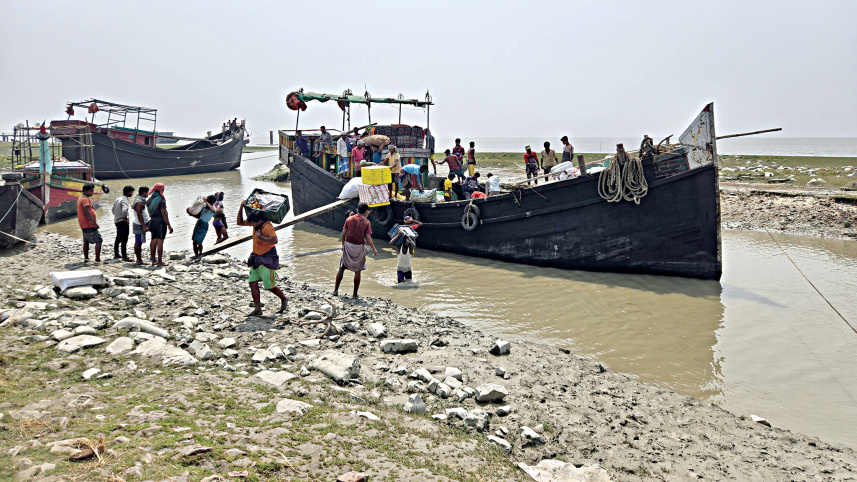
On Bhasan Char, any and all businesses depend on boats.
The island has no road or bridge connection with mainland Bangladesh. As a result, nearly everything needed to sustain life there -- including rice, fuel, medicine, construction materials, LPG, and consumer goods -- must arrive by water.

This isolation has created a small but steady transport economy built around wooden cargo vessels. Since the relocation of Rohingya refugees began in December 2020, a supply chain has gradually developed involving traders, boat owners, van drivers, porters, and small shopkeepers.
“Without these boats, the island stops,” said Noyon Hossain Tushar, a trader operating on the route since 2021.
Two routes connect Bhasan Char to the mainland -- one through Hatiya in Noakhali and the other through Chattogram. Traders said Chattogram has become the primary supply gateway, while the Hatiya route is used only occasionally.
Around six wooden cargo boats currently operate on the Chattogram route. These locally built vessels carry between 25 tonnes and 60 tonnes of goods per trip across shallow and often rough coastal waters.
Boat owners charge around Tk 750 per tonne on the Chattogram route. On average, four boats operate daily, each carrying roughly 60 tonnes of cargo.
This means nearly 240 tonnes of goods reach Bhasan Char daily, generating transport revenue of around Tk 1.8 lakh per day, or about Tk 54 lakh monthly if operations continue uninterrupted.
However, operators said the business is not highly profitable once costs are considered.
Traders on Bhasan Char said most businesses operate informally without registration, licences, VAT or tax payments, relying on verbal approval from the Navy. Rohingya traders are allowed to operate only within designated market areas.
INCOME HINGES ON WEATHER
A wooden cargo vessel costs between Tk 60 lakh and Tk 80 lakh to build and operate. But regular income depends heavily on weather conditions.
Cyclones, rough seas, tidal surges, and seasonal instability can halt movement for days.
“Some days, everything moves. Other days, nothing does. You can lose a week’s income just waiting,” said a boat owner.
Fuel remains the highest variable cost. Operators said each round trip requires diesel worth Tk 24,000 to Tk 25,000.
Each vessel usually employs seven crew members who live on board during trips that can last more than a day. Maintenance is also frequent because saltwater, heavy loads, and rough conditions quickly damage wooden vessels.
“We cannot skip maintenance,” said a crew member. “If the boat fails at sea, it becomes dangerous.”
The Hatiya route offers higher transport rates -- around Tk 1,200 per tonne -- but irregular trips and lower cargo volumes make it less attractive for cargo vessel operators.
 For all latest news, follow The Daily Star's Google News channel.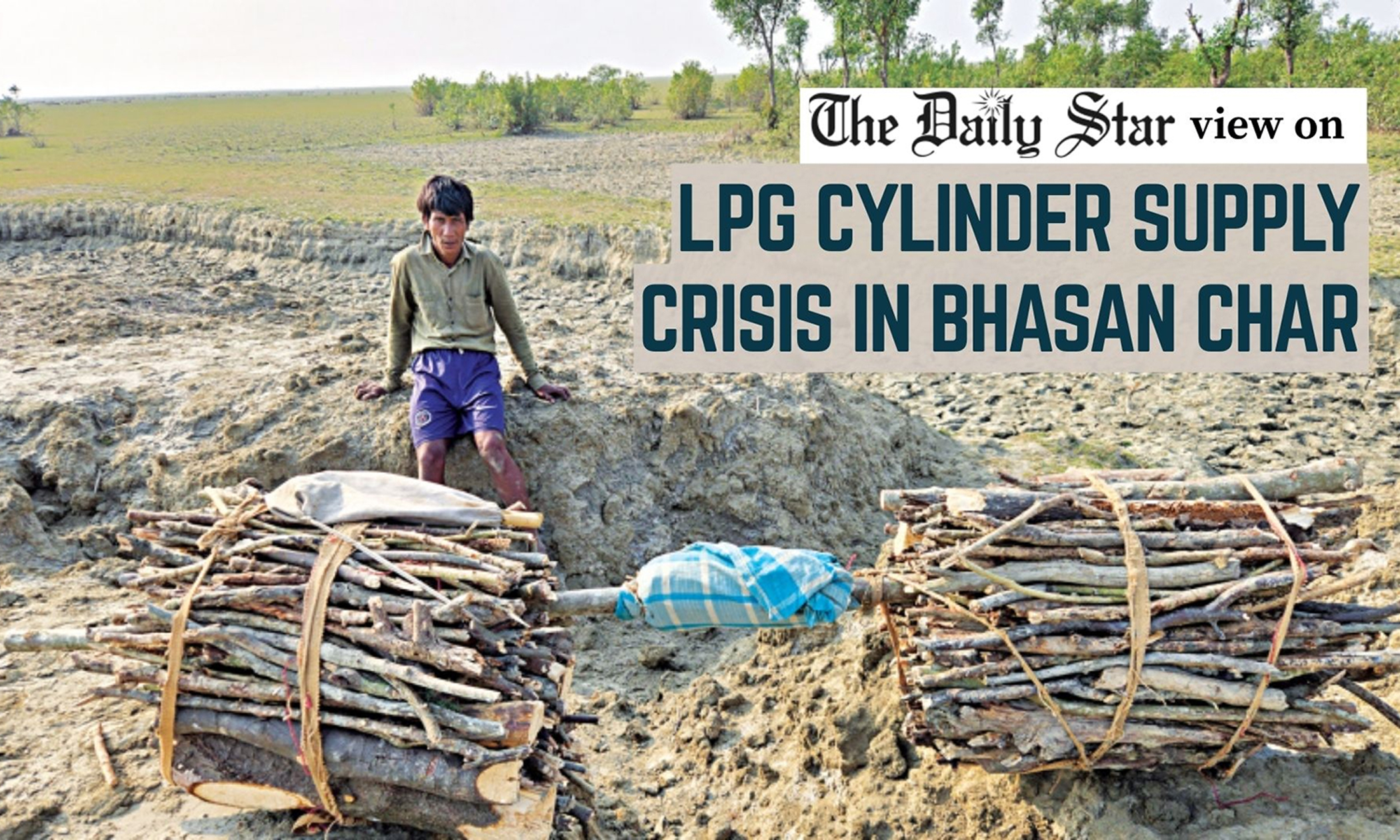
Meanwhile, three speedboats operate passenger services between Bhasan Char and Chairman Ghat in Noakhali. Passengers pay around Tk 1,200 per trip.
These speedboats are mainly used by NGO workers, patients, and officials travelling between the island and the mainland.
FROM JETTY TO MARKETS
Once boats unload their cargo at the jetty, another chain of activity begins.
Around 300 rickshaw vans transport goods across the island, while nearly 25 porters unload cargo from boats.
Van drivers earn Tk 50 to Tk 100 per trip depending on distance and load.
By the time essentials reach shops, retail prices already include transport, unloading, and distribution costs.
Bhasan Char currently hosts around 40,000 Rohingya refugees alongside several thousand Bangladeshi personnel. Although purchasing power remains limited, demand for essentials is steady.
Rice, edible oil, sugar, fruits, and LPG are regularly shipped from Chattogram.
A rice trader said he distributes around 60 tonnes every four to five days at government-set prices.
LPG has become increasingly important. A 12kg cylinder sells for around Tk 1,728.
“Demand has increased,” said a shopkeeper. “People prefer LPG when it is available.”
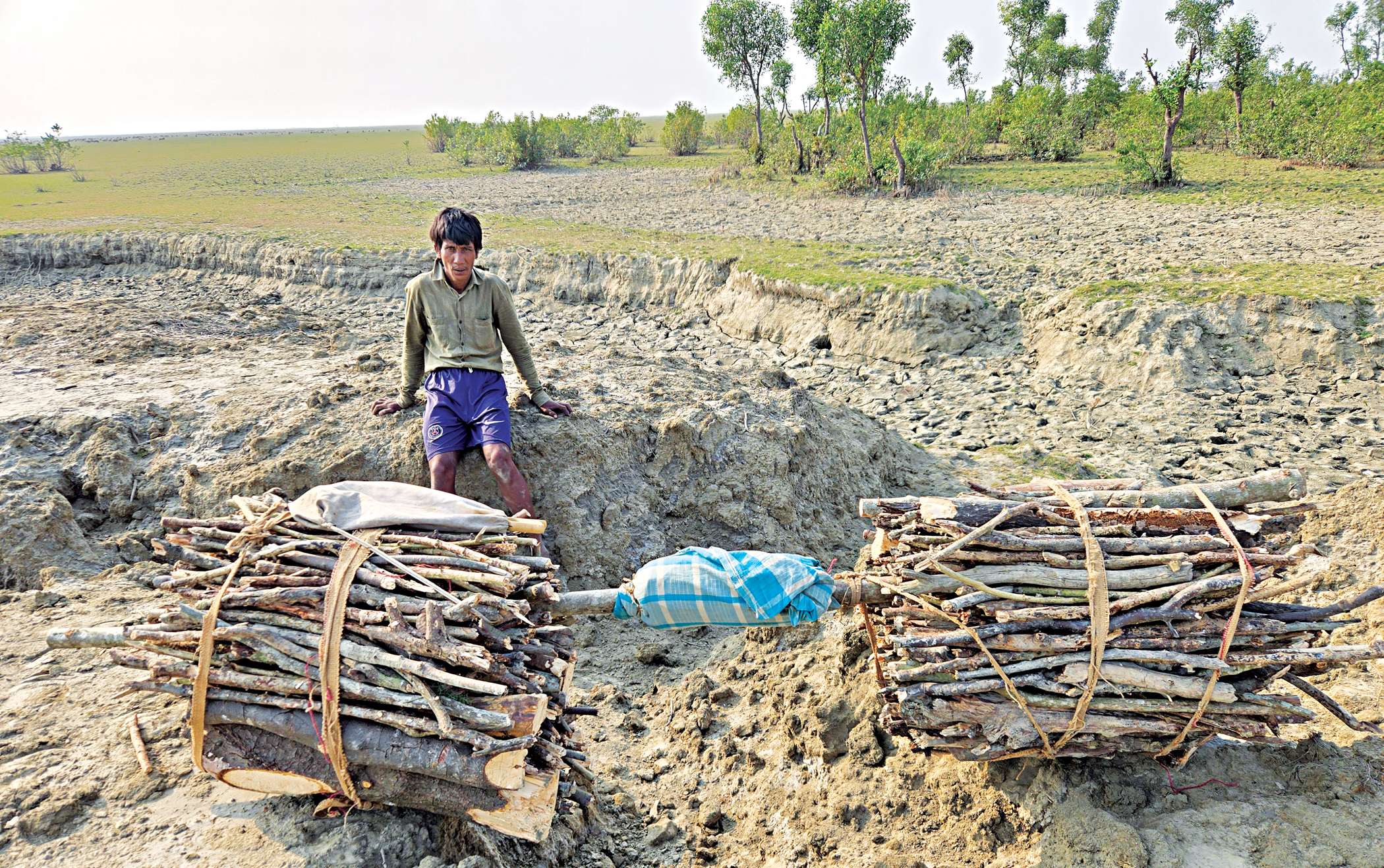
Traders and aid workers said interruptions in LPG supply have also led to increased tree cutting on the island, showing how supply chain disruption can create environmental pressure.
SMALL PROFIT MARGINS
Retail activity on Bhasan Char centres around three main markets with around 150 shops selling essentials to refugees, workers, and officials.
Many shops are operated by Rohingya traders under supervision. Tea stalls, grocery shops, snack outlets, clothing stores, and small restaurants dominate the markets.
In the Cluster-5 area, a fresh vegetable market, established in late 2020, has grown into one of the island’s main commercial centres, with more than 100 mostly temporary shops selling vegetables, clothing, cosmetics, electronics, and household items. Many of these small shops were constructed by Rohingya traders.
Although it started mainly as a vegetable market, it has gradually expanded into a wider retail hub. Shops now sell clothes, shoes, electronics, cosmetics and other non-food items.
Traders said the market has become a key destination for Rohingya residents, particularly women, who visit the area to buy daily necessities and household items.
A four-member market committee, formed by Rohingya traders, oversees the market’s day-to-day operation.
On the other hand, Section-19 Bazar contains 17 shops, including groceries, restaurants, MFS (mobile financial services) outlets, salons, and garment stores. The market remains active from morning until late evening.
The restaurants are among the busiest outlets during lunch and late afternoon, as many NGO staff and workers depend on the market for food during working hours.
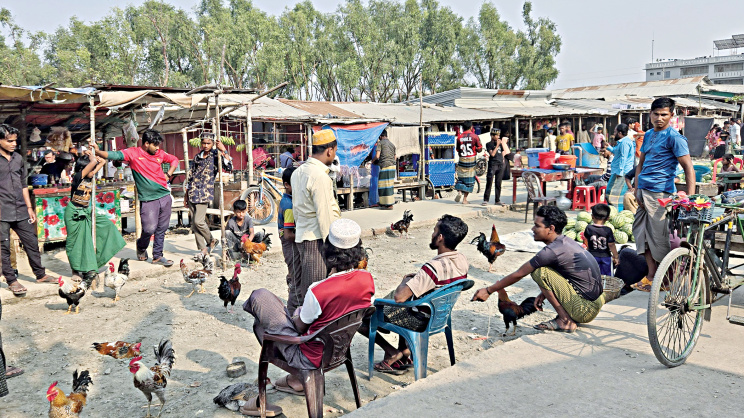
Another market near the jetty, known as Ghat Bazar, mainly supports cargo movement. Established in 2017 during embankment construction, it once had nearly 200 shops. That number has now fallen to 31 because of weak demand.
Shopkeepers said business survives on low but regular sales.
“People usually buy tea, biscuits, soap, oil, and other daily essentials,” said shopkeeper Sumon Hossain. “Sales are not high, but demand remains steady because there is no nearby alternative.”
Another trader, Akter Hossain, said transport delays quickly affect prices.
“Everything comes by boat. If boats are delayed, supply falls, and prices rise,” he said.
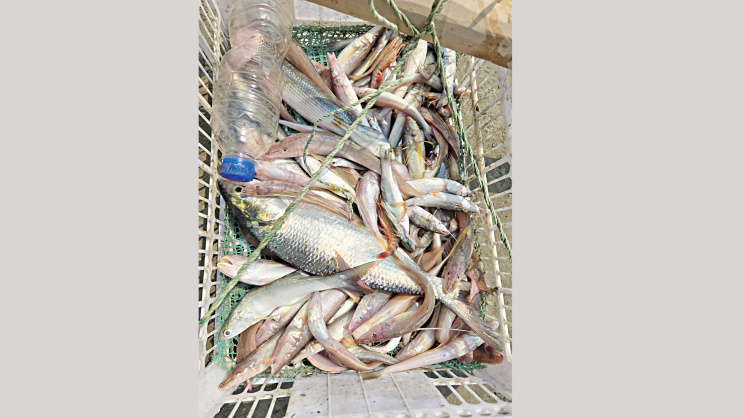
Shopkeepers said some residents also grow vegetables on small plots and catch fish from nearby rivers and canals.
“They sell vegetables and fish in the local markets. It helps them earn some money and also adds to the supply of fresh food on the island,” Sumon said.
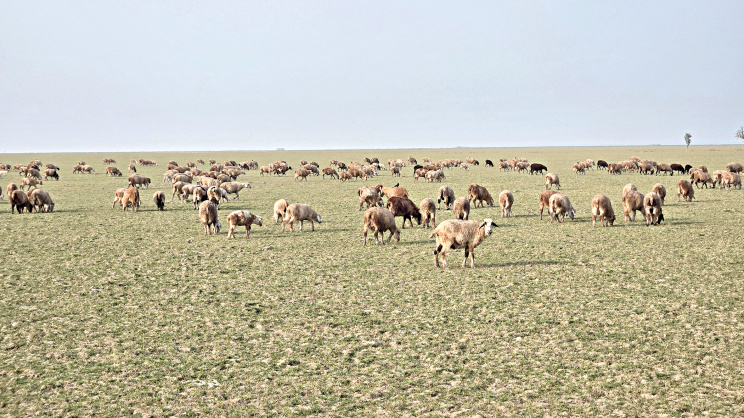
Sheep farming is emerging as a growing business, attracting traders from Noakhali ahead of Eid-ul-Azha. More than 10,000 sheep are now being raised on the island, where natural grazing on vast open land helps reduce farming costs.
The isolation has created a small but steady transport economy built around wooden cargo vessels. Since the relocation of Rohingya refugees began in December 2020, a supply chain has gradually developed involving traders, boat owners, van drivers, porters, and small shopkeepers
Traders invest in young sheep, hire caretakers to raise them, and sell them during peak Eid demand. According to farmers, sheep are sold for Tk 5,000 to Tk 15,000 depending on size and condition, making the business increasingly profitable.
Tea stalls attract the most regular customers because prices are low. Clothing shops operate on thin margins, with daily sales averaging Tk 800 to Tk 1,000.
Around 150 people work in retail businesses on the island, earning monthly wages of Tk 7,000 to Tk 8,000. Others work as van drivers, shop assistants or casual labourers. Fishing provides additional income for some, but it is irregular.
AID RESALE BECOMES THE NORM
Humanitarian aid items distributed to Rohingya refugees are also being resold at lower prices, creating an informal resale market on the island.
Rice distributed as aid is resold at Tk 20 to Tk 23 per kg, compared to retail prices of Tk 45 to Tk 50. Edible oil is resold at Tk 120 to Tk 127 per litre, below the regular market prices of Tk 175 to Tk 188.
Traders said door-to-door buyers collect aid items directly from beneficiaries before reselling them in local markets at prices 10 to 20 percent lower than regular market rates.
Beneficiaries said they sell part of their aid to buy vegetables, snacks, household items, and other essentials not included in aid packages.
“Some families need cash more than extra rice or oil,” said a trader in Cluster-5 Bazar. “Shopkeepers buy those items cheaply and resell them with a small margin.”
INVESTORS FACE HIGH RISK
The majority of the investors come from Noakhali, seeing Bhasan Char as a small but steady market.
“Most investors came here because Bhasan Char has a fixed demand,” said Alamin Hossain, a trader from Noakhali.
Another investor said the market is small but predictable.
“There is risk because of weather and transport problems, but there is also less competition. In mainland markets, many people sell the same goods. Here, if you can bring goods regularly, you can sell them,” he said.
Bhasan Char itself was built through state investment. The government spent Tk 2,312 crore to develop housing and infrastructure for up to one lakh Rohingya refugees.
The project includes 120 cluster villages, cyclone shelters and a 13km flood embankment. By October 2024, more than 38,000 refugees had been relocated there.
Despite growing commercial activity, Bhasan Char remains economically isolated.
Its infrastructure was designed mainly for habitation, not for integration into national supply chains.
Limited transport capacity, rough weather, weak infrastructure, and heavy dependence on boats continue to disrupt trade.
Markets remain vulnerable to cyclones, flooding, and tidal surges. Financial services are also limited, with no physical banks or microfinance institutions on the island. Businesses depend mainly on mobile financial services.
Traders said they operate under several layers of regulation. Prices and transport arrangements are influenced by rules enforced by the Navy, the Camp-in-Charge office, and the market committee.
While such controls help maintain order, they also complicate market operations on an island where business already depends on uncertain weather and fragile transport links.
Comments