


Remembering Syed Shamsul Haq
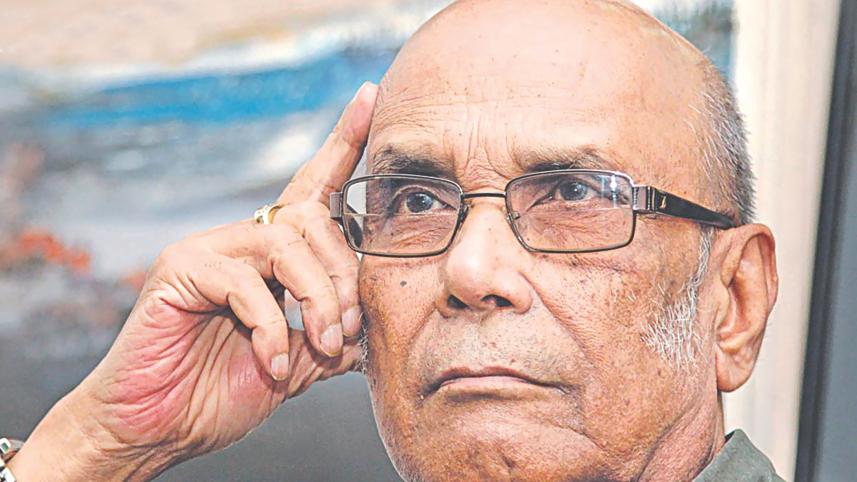
Be it verses, plays or stories -- Syed Shamsul Haq depicted a nation’s proud history with a mastery that no one else could hope to achieve in one life.
His “Nuruldiner Shara Jibon” (The Life and Times of Nuruldin) captured the rise of peasants of Bengal in rebellion against the tyranny of the British around the end of eighteenth century in Rangpur, the region he was born in about 200-years later.
 For all latest news, follow The Daily Star's Google News channel.
 1971, the nation’s most glorious year in modern history, reemerges as a truthful flashback each time Haq’s famous play -- “Payer Awaj Pawa Jay” -- (We Hear the Footsteps) is staged at theatres.
Years later, in the ‘90s, Haq delivered yet another of his legendary poetic creation -- “Amar Porichoy“ (My Identity). It has it all -- from the anthropological history to cultural heredities, from remote ancestry to Bengali nationhood.
Yesterday marked the birth anniversary of Syed Shamsul Haq, one of the most prolific poets, writers and playwrights of the country.
Born in Kurigram on December 27, 1935, he commanded contemporary Bangla literature for over six decades as a literary giant.
Starting from Pakistan days, Haq’s fountain of literary creations flowed ceaselessly for decades, inspiring hundreds of thousands of poetry lovers, and connoisseurs of literature at home and abroad.
Haq married Anwara Syed Haq. Together they had two children.
Popularly known as Syed Haq, he wrote innumerable poetry, fiction, plays (mostly in verse), and essays. He wrote several film scripts and penned many patriotic songs. His literary works were included in the curriculum of junior school, secondary, higher secondary, and graduate level Bangla literature.
Haq is also credited for introducing the Bengali audience to some of the great plays of world literature with his translation work.
He had won every major award there was in the field of literature in the country including Independence Award (2000), Ekushey Padak (1984), Bangla Academy Award (1966), Adamjee Literary Award (1969), Alakta Gold Medal (1982), Alaol Literary Award (1983), Kabitalap Award (1983), Literary Award of the Association of Women Writers, Jebunnessa-Mahbubullah Gold Medal (1985), Padabali Kabita Award (1987), Nasiruddin Gold Medal (1990), National Poetry Award (1997), National Poetry Honour (2001), and TENAS Medal (1990).
Haq passed away at a Dhaka hospital on September 27, 2016, at the age of 81. He was buried next to Kurigram Government College as per his last wish.
PROGRAMME IN KURIGRAM
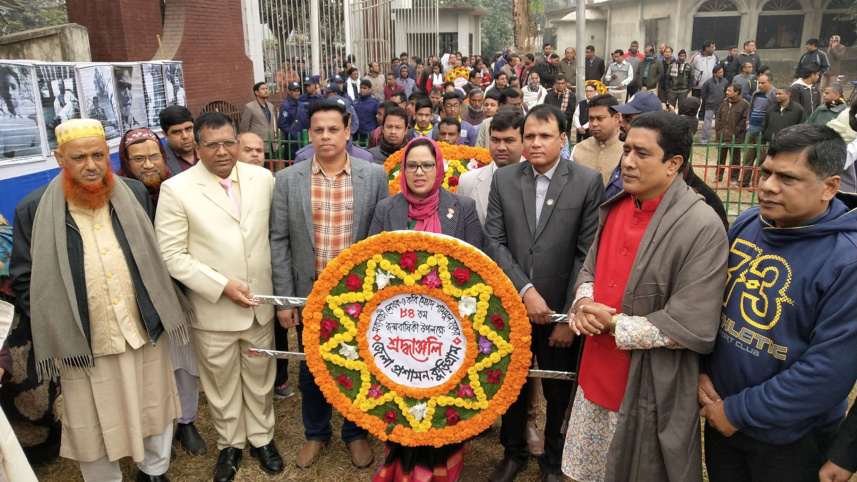
Syed Haq’s birth anniversary was observed in Kurigram in a befitting manner yesterday.
The district administration organised a daylong programme, including rally, placing wreaths at his grave, book fair, discussion and prayers, reports our correspondent.
A discussion on Haq’s life and work was held at Kurigram Primary Teachers’ Training Institute, attended by among others, the deputy commissioner, additional deputy commissioner, vice principal of Kurigram Government College, additional police superintendent, principal of Kurigram Law College, public prosecutor, president of Kurigram Press Club and general secretary of district Shilpakala Academy.
Comments