


Sapiosexual
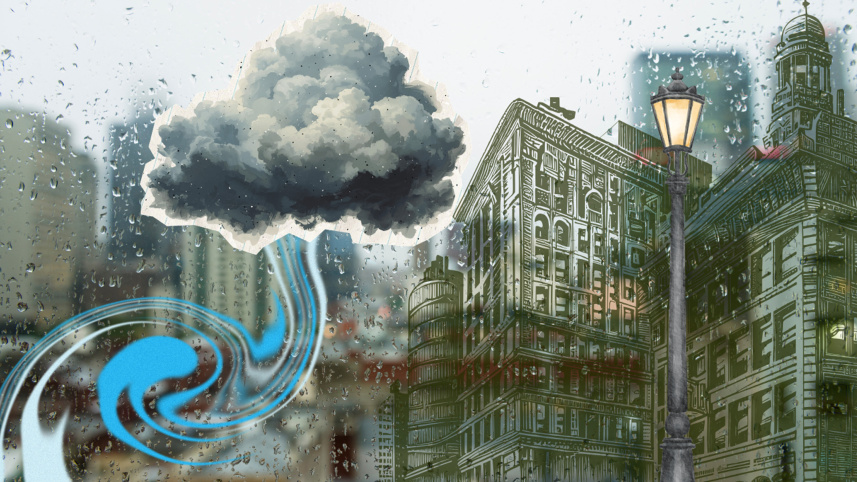
A single night’s rain submerged Dhaka city, and my mind kept drifting back to my friend Kaisar. Though to be fair, he couldn’t really be called a friend in the truest sense anymore. Nowadays, we only catch up occasionally, at long intervals. After a brief exchange of superficial updates, we lapsed back into months of silence.
Yet there was a time when Kaisar and I were in touch every single day. We used to explore art and culture together. We were likely around the same age, give or take a year or two. Curiously, I always addressed him with the formal “apni”, using his first name, and Kaisar did the same with me. Whenever there was a painting exhibition, an installation, or a classical music concert, the two of us would go together. We were staples at art-film screenings as well. Almost every evening, we would hang out and chat at the Aziz Super Market. It was a good life. But somehow, imperceptibly, we drifted apart. It took me years to realize that my regular contact with Kaisar had completely ceased. The estrangement seemed to stem from both sides, without any specific incident to blame.

Kaisar began occupying my thoughts from the moment the rainy morning broke. Gradually, so many memories of those old days flooded back that my mind became submerged knee-deep in nostalgia, just as Dhaka city was drowning waist-deep in water.
The rain had started in the early hours before dawn on the first of July, and it showed no sign of stopping. Even while half-asleep, I could tell a torrential downpour had begun outside. The wind howled, rattling against the windowpanes. Yielding to the cozy temptation, I rolled over without leaving the bed, and the cool draft lulled me into a second, deeper slumber.
When I finally got up at nine, I saw that all the surrounding alleys were swallowed by waist-deep water. My Facebook feed was flooded with pictures of waterlogging. People were posting snapshots of a submerged Dhaka from every corner. Students were stranded, unable to reach schools, colleges, or universities. Office-goers stood bewildered on overflowing pavements. Buses, CNGs, and rickshaws looked as though they were on the verge of sinking entirely. The streets in areas like Mirpur, Dhanmondi, and Mohammadpur resembled rushing rivers. People were making memes, photoshopping boats, steamers, and submarines onto flooded streets to troll the situation. Some lamented that plastic would eventually destroy the world.
According to a segment of Dhaka’s residents, discarded chips packets scattered everywhere were the root cause of the waterlogging. Another group argued that it wasn’t chips, packets, plastic, or polythene, but rather the systematic filling up of rivers, canals, marshes, and water bodies to construct high-rises that caused the crisis. The government drafts countless plans, claiming every year that waterlogging will be a thing of the past by the following year. Yet, the moment heavy rains lash the city next monsoon, the whole town goes under again. Then, government officials and their loyalists deflect, claiming that since citizens refuse to stop littering chips packets everywhere, the waterlogging will persist. They blame plastic and polythene. Yet, the government does nothing to clear the plastic, nor do they take steps to curb its usage. Meanwhile, the opposition and government supporters alike maintain their habit of tossing empty packets wherever they please after eating chips. Consequently, whenever it rains heavily, city dwellers brace themselves for the inevitable deluge. And once it floods, the entire city grinds to a halt for a day or two.
Many years ago, on a similarly rainy day, Kaisar and I had travelled to Dhanmondi, drenched to the bone.
It wasn’t solely the rain that brought that day or Kaisar back to my mind. The true catalyst was Maymuna. Three days ago, Maymuna told me a strange story. Well, not a story, but she shared a real-life incident. Maymuna’s tale revolved around a mysterious painting. As I listened to her, I realized that I already knew another piece of the same puzzle she was describing. If one were to piece them together, it would form an incredible narrative. Yet, I chose to remain a silent listener, keeping my side of the story to myself. I felt it wouldn’t be right to tell Maymuna. But ever since hearing her account, a flood of old memories had been unlocked, and I felt a sudden, urgent need to see Kaisar as soon as possible.
My mind kept wandering back to the events involving Akhtarul Islam twenty years ago, right at the dawn of my professional life. I muttered to myself, What a time that was!
*
Kaisar was supposed to arrive at my office at 5:00 PM. Sitting in my cubicle, I watched through the large glass window. Dense clouds had gathered. The colour of the clouds was a deep, heavy black, yet to me, they looked like thick, curdled white milk swirling across the sky. I couldn’t fathom why this bizarre metaphor kept recurring in my mind. But every time I stared at the dark, impending rain clouds, the image of thick white milk churning in the heavens flashed before me. As time ticked away, the clouds grew heavier, more saturated, and damper. Perhaps, deep within, the friction of water particles was warming them up. Maybe the vast, churning water vapour had made the lower layers of the clouds restless.
Someone remarked, “It’s going to pour today. A proper downpour.”
Secretly, I hoped Kaisar wouldn’t show up. I wished he’d get stuck somewhere or that some excuse would cancel the Dhanmondi trip. The rain was coming; there was no stopping it. As far as the eye could see, there was nothing but clouds. A massive formation of cosmic water vapour hung over the entirety of South Asia like a well-marshalled army. The moment war was declared, it would unleash itself upon the earth like a volley of buckshot.
Translated by Alamgir Mohammad. This is an excerpt. Read the rest of the story on The Daily Star and Star Books and Literature websites.
Alamgir Mohammad teaches literature and Translation Studies at the tertiary level. He has published 25 titles in translation.
 For all latest news, follow The Daily Star's Google News channel.
Comments