


‘Sur Sarathir Mohaproyan’ reflects on Amiya Ranjan Bandyopadhyay’s lifelong pursuit of music

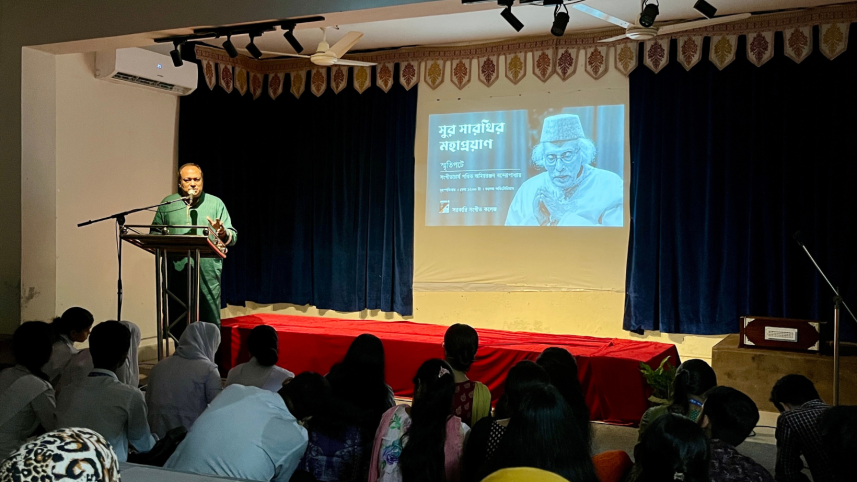
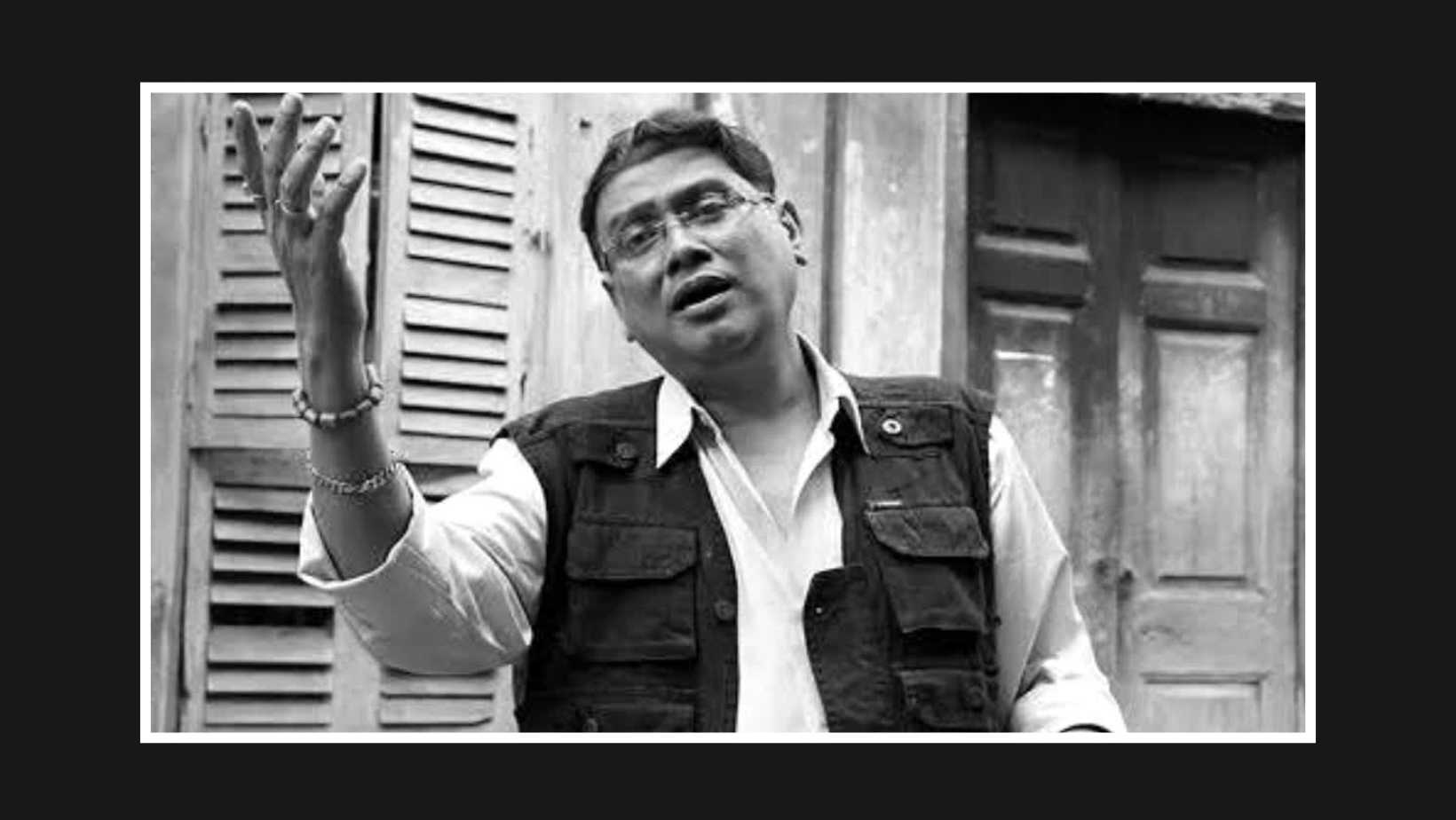
Pandit Amiya Ranjan Bandyopadhyay spent nearly a century shaping the sound of classical music. A leading exponent of the Bishnupur gharana, he was revered not only as a khayal vocalist but also as a scholar, researcher and guru whose teachings influenced generations of musicians. On Guru Purnima, July 29, the maestro passed away in Kolkata at the age of 99, bringing to an end a lifetime dedicated to music, scholarship and the guru-shishya tradition.
A week later, on August 6, the Government Music College in Dhaka remembered the legendary musician through “Sur Sarathir Mohaproyan”, a memorial programme that brought together teachers, alumni and students to celebrate his life and legacy. The event became an afternoon of reflection, remembrance and learning, introducing a new generation to one of the greatest torchbearers of Bengal’s classical music heritage.
The programme opened with a welcome speech by Lecturer Saiful Taankar, followed by a one-minute silence in memory of the maestro. A documentary on Bandyopadhyay’s life and musical journey was then screened. Featuring archival footage and excerpts from his interviews and previous music programmes, the film portrayed him as a performer, teacher and thinker whose influence reached far beyond the stage. Following the screening, speakers including Dr Fakir Shohedul Islam Suman, Assistant Professor and Head of the Department of Classical Music; Professor Dr Aleya Parveen of the Department of Political Science; Ranjan Chandra Sarker, teacher at the Dhaka Cultural Centre; Ustad Syed Sajid Hossain, former teacher (tabla) at Government Music College; Sumon Reja Khan, member secretary of the Government Music College Alumni Association; M M Yunusur Rahman, secretary of the Government Music College Teachers’ Council; and Uzzal Wasi, an alumnus of the college delivered their speeches. The programme concluded with closing remarks by Professor Aniqa Raisa Chowdhury, vice principal of Government Music College.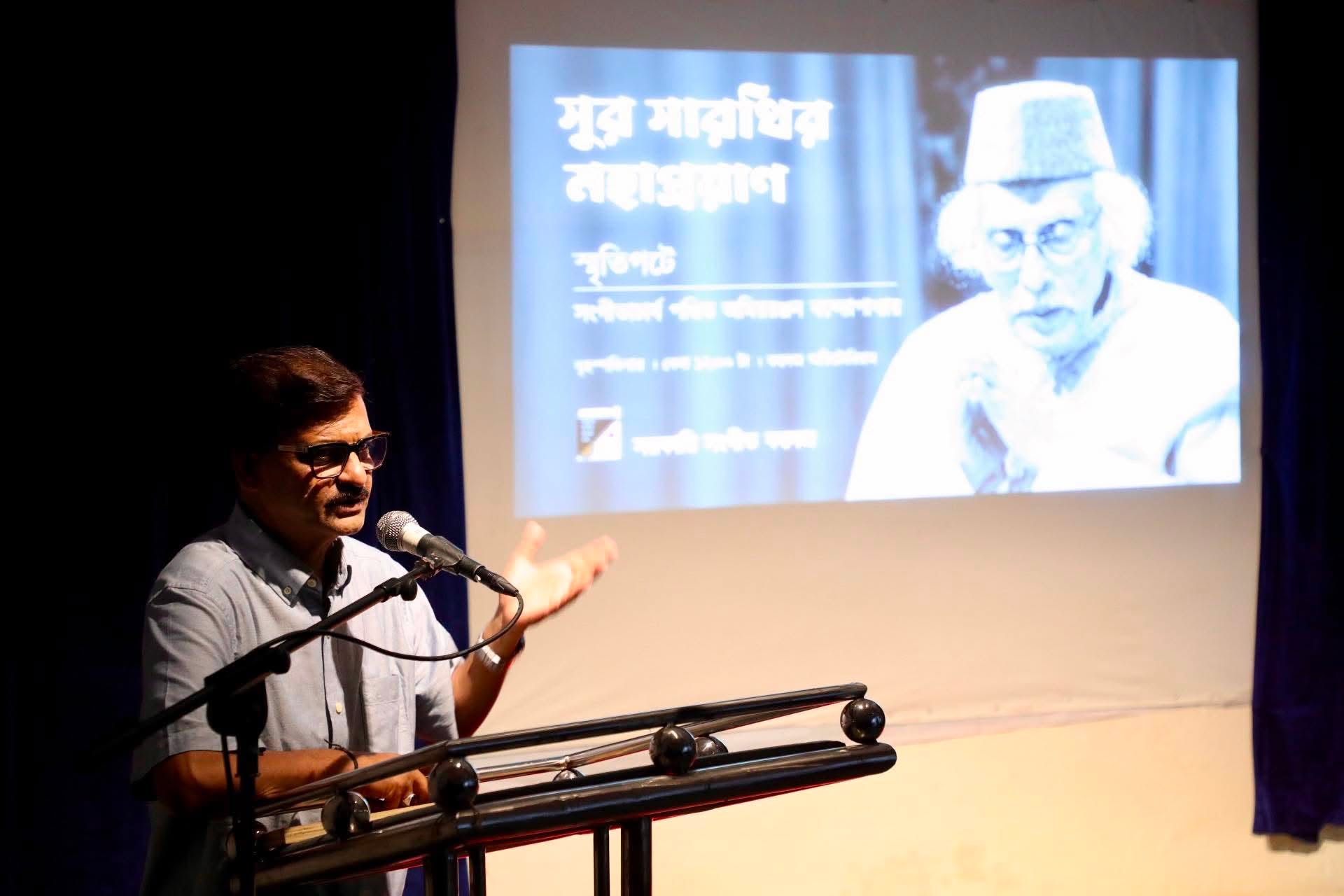
Born on February 21, 1927, into a family with more than 150 years of musical tradition, Amiya Ranjan Bandyopadhyay was the son and disciple of Sangeetacharya Satya Kinkar Bandyopadhyay. He emerged as one of the foremost exponents of the Bishnupur gharana, earning acclaim for his disciplined presentation of ragas, clarity of taans and deep sense of musical aesthetics. A top-grade artiste of All India Radio and Doordarshan, he performed across India, Europe and the United States while remaining deeply committed to teaching.
His contribution extended beyond performance. Bandyopadhyay was one of the founding members and the first head of the Vocal Music Department at Rabindra Bharati University, where he taught for more than three decades. In 1968, he completed a PhD at Visva-Bharati on the aesthetics of music. His doctoral research, later published as “Sangeeter Shilpadarshan” (The Philosophy of Art in Music), explored the artistic philosophy of music and reflected his lifelong effort to connect performance with intellectual inquiry. He was later awarded honorary Doctor of Literature degrees by Rabindra Bharati University and Sidho-Kanho-Birsha University in recognition of his remarkable contribution to classical music.
Delivering the keynote address, Dr Fakir Shohedul Islam Suman, a disciple of Bandyopadhyay, shared personal memories of his guru. He said the programme was organised so that younger students could understand the musician’s life, philosophy and contribution to classical music. “For nearly 20 years, I have tried to pass on to my students the ideals and musical philosophy that Guruji gave us. Music spreads not only through family lineage but through the guru-shishya tradition, where every generation carries the knowledge forward,” he shared. 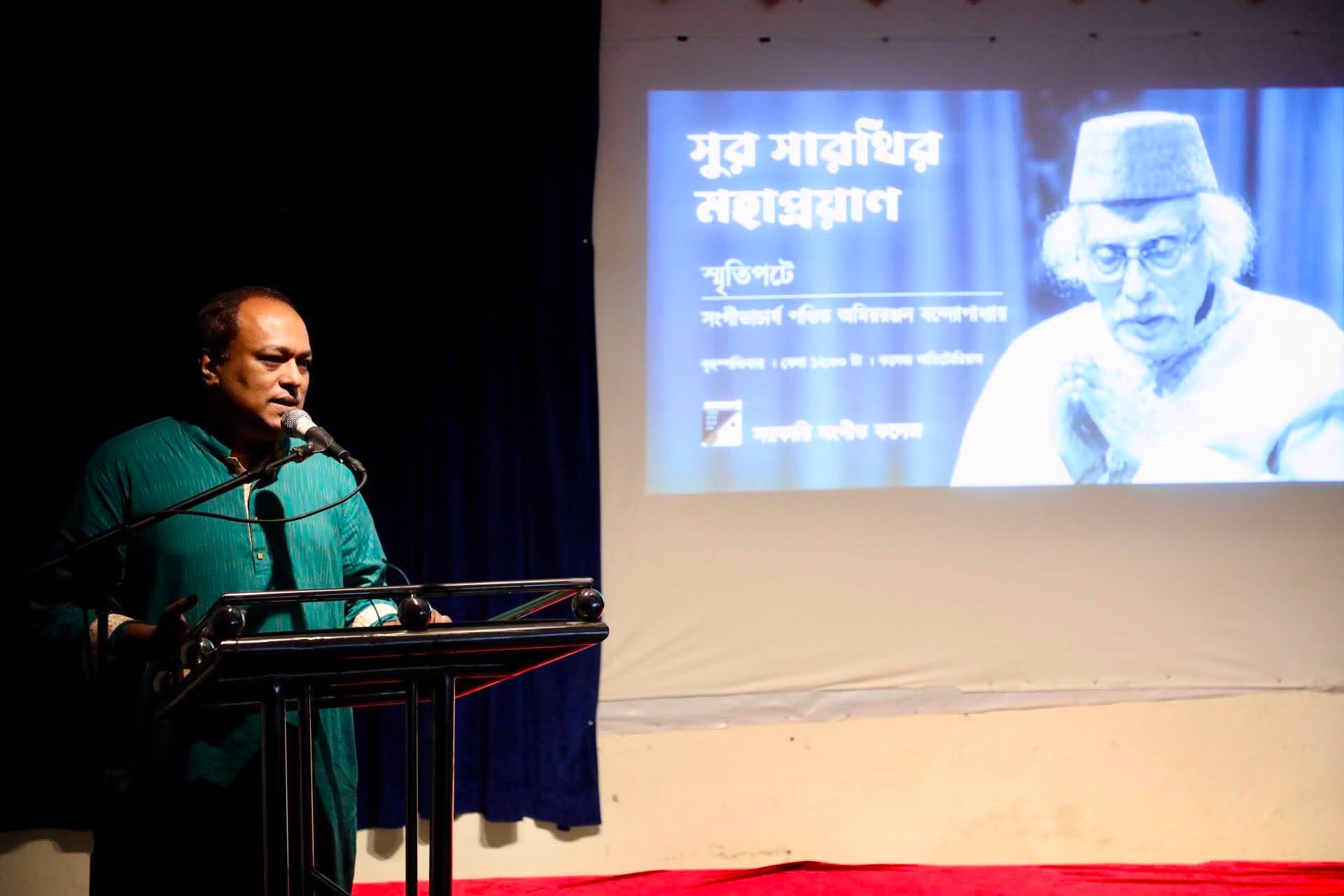
Recalling his teacher’s lifelong commitment to preserving the Bishnupur gharana, Suman added, “Bengalis have only one gharana of their own — the Bishnupur gharana. Guruji dedicated his life to preserving and elevating it. That heritage now belongs to the next generation.” He also said that his guru believed music should be nurtured through both practice and scholarship.
Many of the speakers echoed that message, emphasising that Bandyopadhyay’s legacy deserves deeper research alongside continued performance.
Professor Dr Aleya Parveen said his philosophy, discipline and research remain valuable subjects for future scholars. “To remember him is to remember his work. His philosophy, research, performance style and discipline all deserve serious study. His contributions should become part of future research so that the next generation can continue to learn from him,” she said.
Former teacher Ustad Syed Sajid Hossain reminded students that mastery in classical music cannot be achieved through shortcuts. He stressed that discipline, sincere practice and the guru-shishya tradition remain central to musical learning.
In her closing remarks, Vice Principal Professor Aniqa Raisa Chowdhury reflected on Bandyopadhyay’s remarkable career, highlighting his achievements as a performer, researcher and educator. She noted that his doctoral research on musical aesthetics and his decades of teaching demonstrated his belief that music was both an art and an academic discipline. She added, “He believed an artiste must respect the audience while remaining true to artistic values. His life teaches us discipline, dedication and devotion. Success comes slowly, through years of sincere practice.”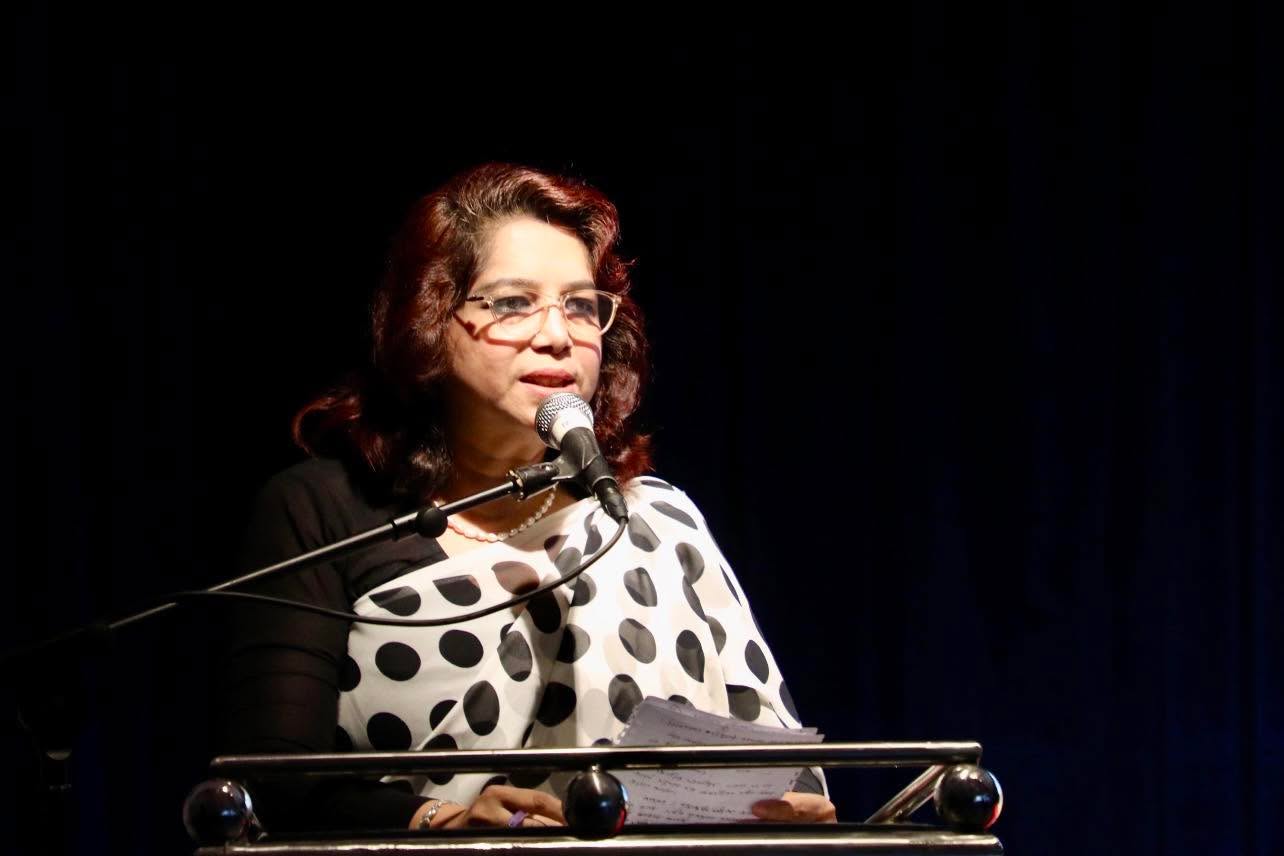
Addressing the students, she urged them to continue studying the maestro’s philosophy and research. “His musical legacy and ideals will continue to inspire us. We hope our students will carry forward his values through learning, research and sincere practice.”
The memorial concluded without any musical performance. Instead, through silence, shared memories and thoughtful discussion, the programme celebrated a life devoted to knowledge, discipline and artistic excellence. For the students gathered at the Government Music College, it offered more than a farewell to a legendary musician. It was an introduction to a guru whose legacy continues to resonate through his disciples, his scholarship and the enduring tradition of the Bishnupur gharana.

 For all latest news, follow The Daily Star's Google News channel.
Comments