


‘Noakhailla Maiya’ Oyshee finds power in her roots

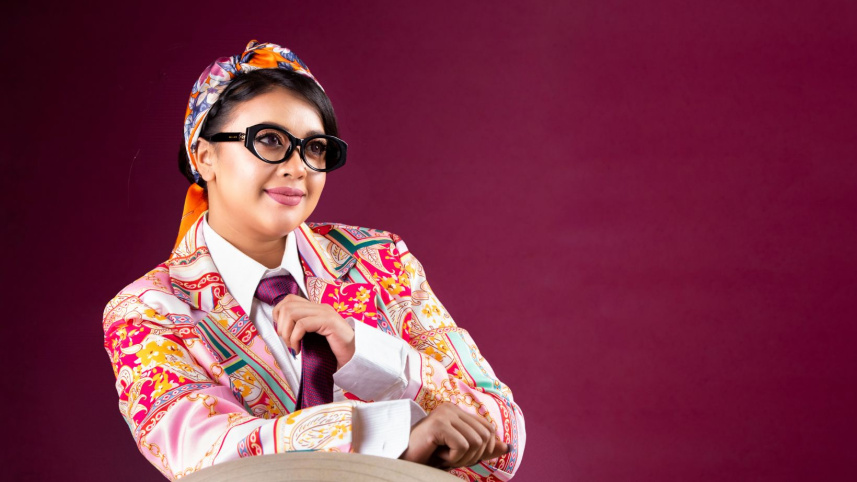
National Film Award-winning singer Fatima Tuz Zahra Oyshee has spent more than a decade building a career defined by versatility, persistence and an unwillingness to remain confined to one identity.
From her early days in music to her latest release, “Noakhailla Maiya”, she has continued to experiment while becoming increasingly selective about the work she takes on.

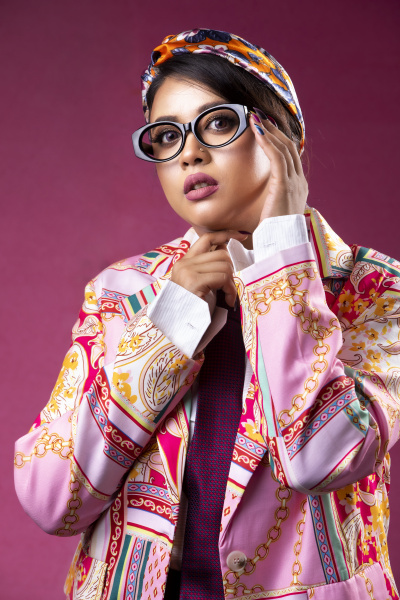
The song, a collaboration with rapper Black Zang, has introduced another dimension to Oyshee's artistry, with the singer also taking on songwriting and composition. Yet its release was accompanied by an unexpected setback: her Facebook account was disabled once again, just a day after the song came out.
It was not the first time. Earlier this year, her verified account had also been disabled and was eventually restored with professional assistance.
“I honestly don't know what's behind it. I don't want to accuse anyone without evidence, but it felt as though someone was repeatedly reporting my account,” Oyshee says. “If someone is determined to keep working, obstacles like these can only delay them, not stop them.”
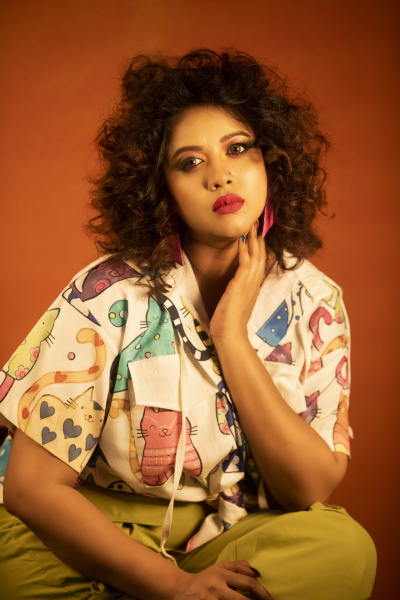
That determination has shaped her career. Since emerging as a mainstream singer around 2015, Oyshee says she has recorded nearly 150 original songs. Her “Oyshee Express” album brought recognition, while winning the National Film Award made her rethink what she wanted from music.
“There came a point when I realised I didn't want to chase quantity anymore,” she says. “After receiving the National Film Award, I felt a greater responsibility towards my audience. I wanted people to expect quality from me rather than constant releases.”
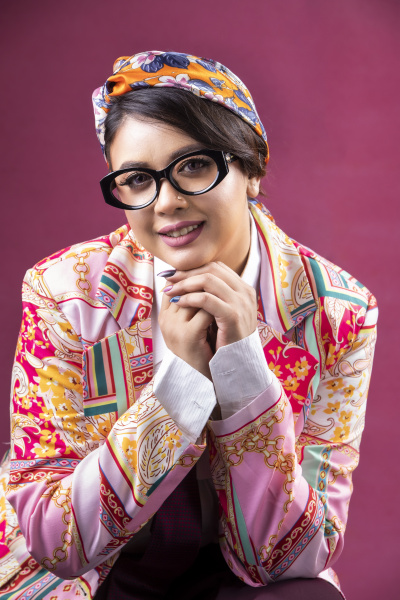
For Oyshee, becoming selective did not mean becoming less ambitious. Instead, it gave her room to explore.
“I wanted to surprise people by creating something they wouldn't expect from me,” she says. “But creativity doesn't arrive simply because you decide to be creative. It has to come naturally.”
That creative instinct eventually found its way back to her roots. As a daughter of Noakhali, Oyshee wondered why contemporary music had so rarely embraced the region's dialect in a modern musical setting.
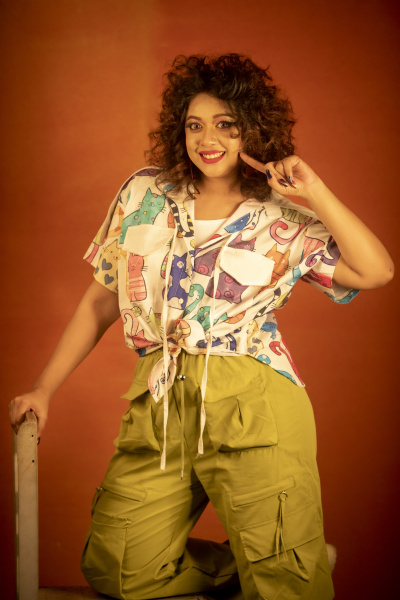
The idea became “Noakhailla Maiya”. While travelling to a concert, she wrote the entire song on her phone. Before going on stage, she opened her laptop and worked out the basic composition, melody and structure.
“There were practically no corrections afterwards,” she recalls. “The lyrics you hear now are the same ones I wrote sitting in that car.”
The song was later enriched by Zang's rap and contemporary production. Its originality even led some social media users to suggest that artificial intelligence had written the lyrics.
Oyshee responded with humour. “I wanted to ask those claiming it was written by AI, does AI really know the Noakhali dialect?” she laughs.
But songwriting is hardly a sudden reinvention. Oyshee began writing poetry as a school student, learning metre and rhythm from a teacher and filling diaries with verses. After completing her MBBS, that creative instinct gradually returned.
Her life outside music is equally demanding. Oyshee is currently pursuing a Master's in Public Health, specialising in hospital management, while working on her thesis involving coronary care. Balancing medicine and music are far from easy.
“Two professions are very difficult to maintain. It takes a lot of willpower, dedication and passion,” she says.
Her confidence, she believes, was nurtured from childhood by her father.
“My father always told me, ‘If you want, you can do anything. You are a superwoman.’”
Those words became a philosophy. “I try to prepare myself so that if someone tries to break me, I can rebuild myself in my own way,” she says.
That willingness to reinvent herself is also visible in her recent screen and playback work. She made a brief appearance in “Headline”, directed by Saleh Sobhan Auneem, alongside her husband, actor Arefin Zilani, while also lending her voice to a soulful track for Kazi Asad's web film “Lifeline”.
 For all latest news, follow The Daily Star's Google News channel.
 After years of proving that she can move between genres, professions and creative spaces, Oyshee is now less interested in being everywhere than in being remembered for the right work.

“I'll release a song only when I truly believe it's ready,” she says. “I'd rather wait than put something out simply for the sake of staying visible.”
Comments