Five reasons why Bangladesh shouldn’t join the Mecca Pact

In foreign policy analysis, the rational actor model holds that a country should make foreign policy decisions on the basis of facts and careful analysis rather than emotion. This involves identifying a country’s objectives, determining their relative importance, considering the available options, assessing the likely consequences of each, and ultimately choosing the course of action that best serves its national interests. Bangladesh should apply the same careful assessment before deciding whether to join the Mecca Joint Defence Agreement. Viewed through this lens, there are several compelling reasons why joining the pact may not be in Bangladesh’s best interests.
First, states generally enter defence pacts when they face serious external security threats, particularly military ones. Pakistan, Türkiye and Saudi Arabia entered the Mecca Pact in response to their respective security concerns and geopolitical calculations, seeking to strengthen collective deterrence. Pakistan, for instance, faces significant security challenges on both the domestic and external fronts. Movements seeking independence in Balochistan remain a persistent internal challenge, while tensions along Pakistan’s borders with India and Afghanistan create additional security concerns. From Pakistan’s perspective, therefore, such a pact could provide an additional layer of security in the event of a large-scale military confrontation with one of its neighbours.
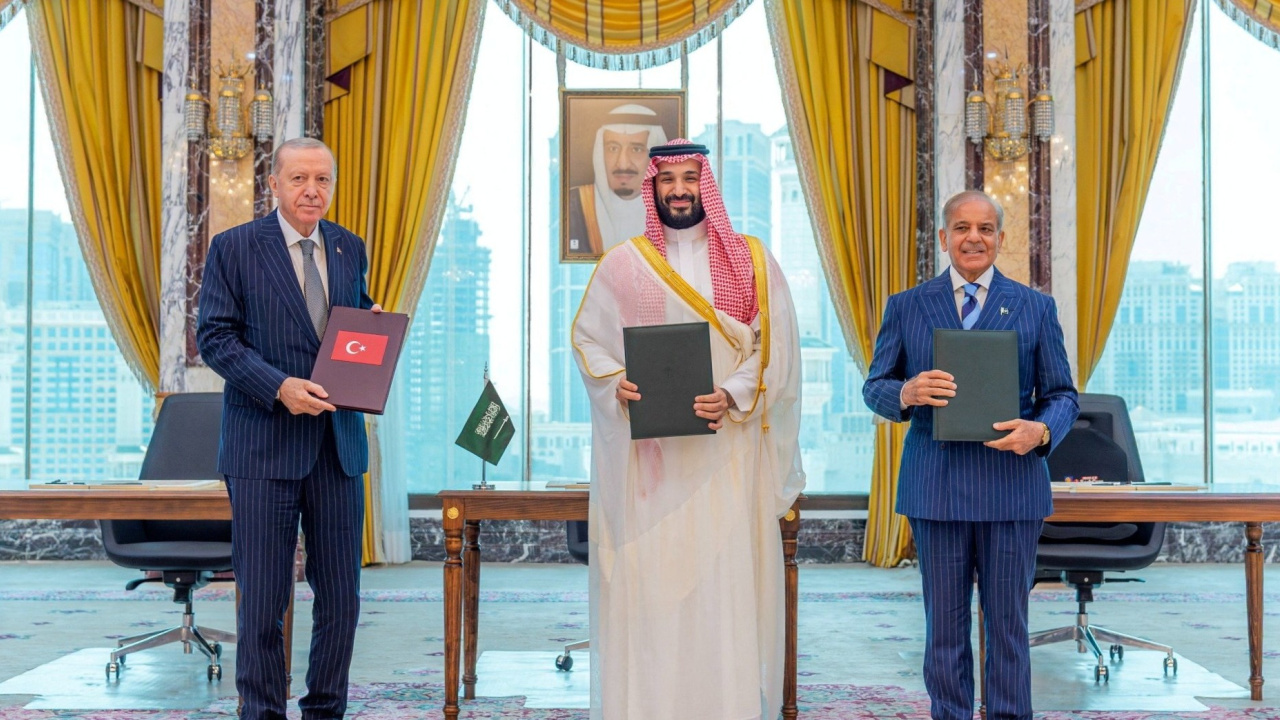
Saudi Arabia, meanwhile, faces its own regional security challenges, particularly in relation to Iran and Iran-aligned groups. In July 2026, for instance, the Iran-backed Houthis claimed responsibility for a missile attack on Saudi Arabia following Riyadh’s support for the American-led war against Iran. For Saudi Arabia, a collective defence arrangement could therefore serve as an additional deterrent against regional threats.
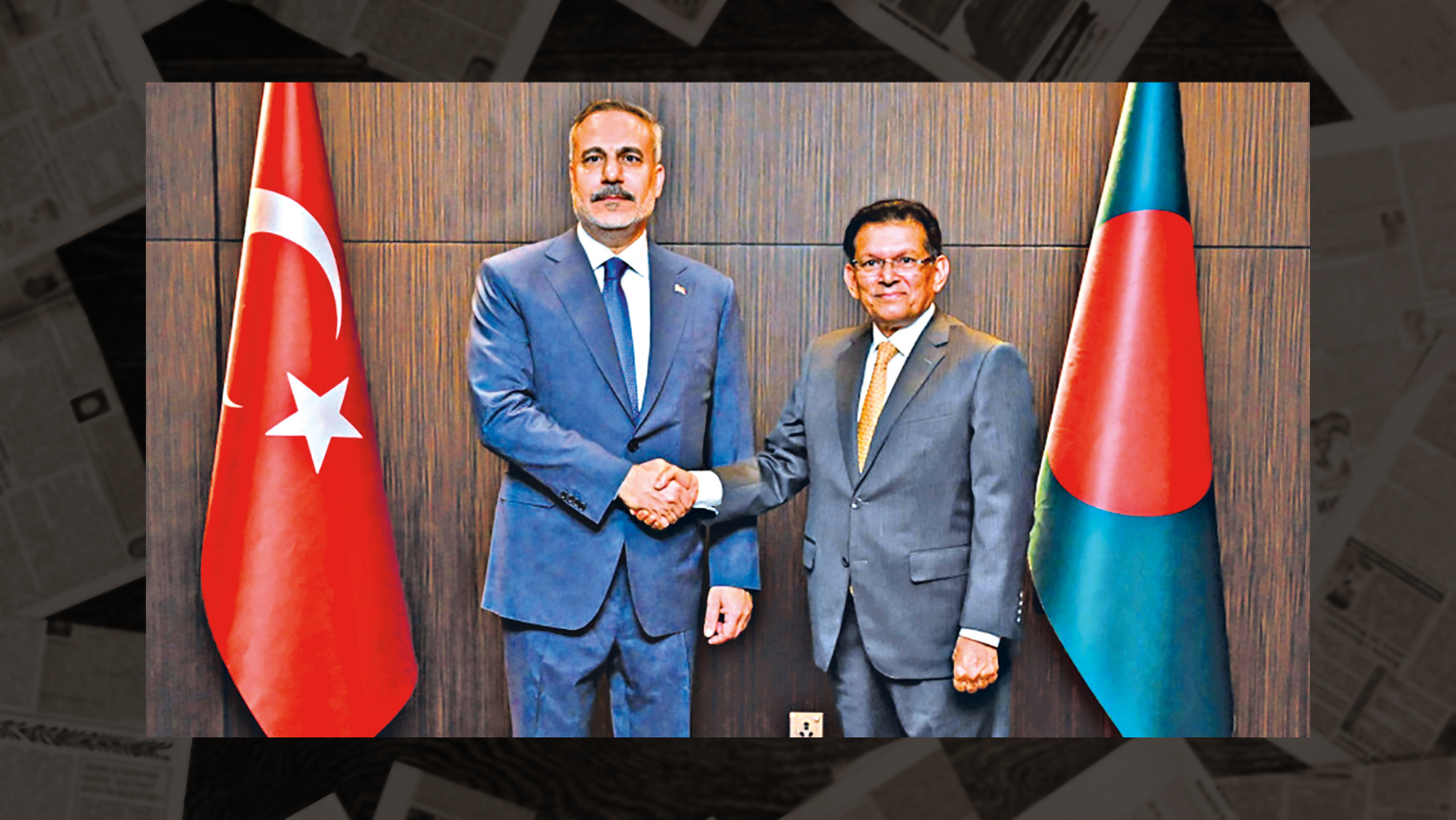
Similarly, Türkiye has security interests spanning Syria, Iraq, Libya and the Caucasus, as well as an interest in expanding defence ties with Bangladesh. During Foreign Minister Hakan Fidan’s visit in June 2026, Türkiye expressed interest in deeper strategic and defence cooperation, which could also create opportunities to expand its defence exports to Bangladesh.
Bangladesh should avoid joining military or defence pacts that could limit its foreign policy independence or compromise the broader well-being of its people. Instead, the country should pursue a non-aligned foreign policy that safeguards its strategic flexibility and prioritises the socio-economic needs and long-term interests of its people.
Second, under the pact’s collective-defence provision, an attack on one member would require the others to come to its defence. If, for instance, Pakistan became involved in a war with India, Bangladesh could find itself under pressure to support Pakistan and take a position against India. Why should Bangladesh assume such an obligation? Bangladesh certainly has many unresolved issues with India, ranging from water-sharing and trade to border challenges such as ‘push-ins’ and smuggling. But these problems cannot be resolved through military confrontation. They require sustained diplomacy, as demonstrated by the successful resolution of the maritime boundary dispute and the Land Boundary Agreement.
Third, Bangladesh also needs to prioritise effective migration diplomacy. Saudi Arabia is an important destination for Bangladeshi migrant workers, but so are the UAE, Oman, Qatar and Kuwait. Maintaining strong relations across the Gulf is therefore crucial to Bangladesh’s economic and labour interests. Some of these countries have their own political and strategic differences with members of the pact, and Bangladesh’s decision to join could complicate its relations with them. If these other Muslim-majority countries have chosen to remain outside the pact, Bangladesh should carefully consider the diplomatic and economic costs of joining it.
Fourth, the Strait of Hormuz is a critical maritime chokepoint for global trade and commerce. If Bangladesh were to join the pact and tensions between Iran and the pact members escalated, Iran could restrict the passage of Bangladeshi cargo vessels through the strait. Such a development could have serious consequences for Bangladesh, particularly for its energy security.
Fifth, given its current socio-economic realities, Bangladesh can ill afford to become involved in any war. The country needs to prioritise human security, including food, health, economic and environmental security, rather than becoming entangled in military conflicts. Joining such a defence pact could have serious consequences for Bangladesh’s long-term socio-economic interests by putting pressure on the country to take sides in conflicts that may have little to do with its own security. Any involvement in war would ultimately come at a cost to ordinary people, as limited national resources would have to be diverted from development and essential public services towards military expenditure. War is invariably costly for nations and their citizens, even as it can generate profits for arms and energy companies.
The Strait of Hormuz is a critical maritime chokepoint for global trade and commerce. If Bangladesh were to join the pact and tensions between Iran and the pact members escalated, Iran could restrict the passage of Bangladeshi cargo vessels through the strait. Such a development could have serious consequences for Bangladesh, particularly for its energy security.
Some may argue that Bangladesh should strengthen its military and war-fighting capabilities to deal more effectively with India or Myanmar, believing that greater military strength could, for instance, compel India to make concessions on water-sharing or pressure Myanmar to repatriate the Rohingya refugees. Such an argument, however, is problematic because military build-ups can create a security dilemma, prompting neighbouring countries to respond by strengthening their own capabilities and potentially triggering an arms race. History suggests that such arms races rarely serve the interests of ordinary people. The Cold War competition between the United States and the Soviet Union, and the enormous resources devoted to it, offers an important example of the social and economic costs that prolonged military competition can impose.
The bottom line is that Bangladesh should avoid joining military or defence pacts that could limit its foreign policy independence or compromise the broader well-being of its people. Instead, the country should pursue a non-aligned foreign policy that safeguards its strategic flexibility and prioritises the socio-economic needs and long-term interests of its people. In this approach, geoeconomic considerations and long-term economic interests should take precedence over military alignments and geopolitical calculations.
Dr. Md. Shariful Islam is an Associate Professor and Chairman of the Department of International Relations at the University of Rajshahi. He can be reached at shariful_ruir@ru.ac.bd.
Send your articles for Slow Reads to slowreads@thedailystar.net. Check out our submission guidelines for details.
Why Gaza peace deals keep falling apart
Rohingya genocide: Will the ICJ verdict bring justice?
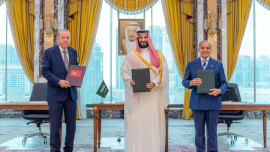
Should Bangladesh join the Mecca Pact?

Documenting Rohingya history / Rohingya repatriation needs more than diplomacy

Nine years on, Rohingya refugees need more than shelter
Myanmar’s partial Rohingya repatriation plan: Another attempt to mislead Bangladesh?

Is Trump’s Gaza peace plan falling apart?

What Japan’s changing Indo-Pacific strategy means for Bangladesh

Can India and Bangladesh build a more equal economic partnership?