


If the 1980s and '90s were so great, who built the present?

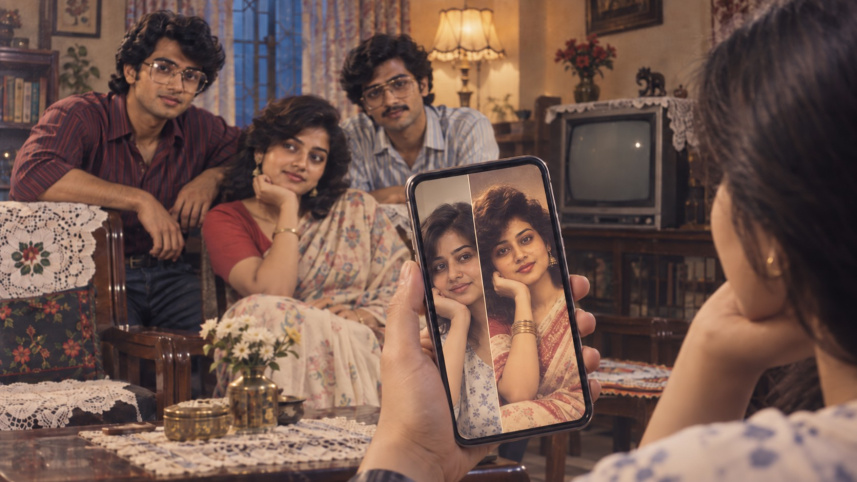
1980s and '90s nostalgia has taken social media by storm. Everyone seems to be turning their present-day photographs into AI-generated versions of themselves from the '80s and '90s, while simultaneously mourning the loss of a time they hold close to their hearts and cursing the present.
The AI touch may be new, but the sentiment certainly is not. Every now and then, social media is flooded with people reminiscing about the 1980s and '90s, insisting that life was much better back then and lamenting that the current generation has somehow “gone to the dogs”.

As a member of Gen Z, I find this rose-tinted view of the past rather unconvincing.
Nostalgia is not a bad thing. It is one of the most natural human emotions. We all romanticise periods of our lives, particularly childhood and youth. But the idea that we once lived in some sort of cultural golden age and then suddenly everything went downhill is a much more complicated proposition.
After all, the present generation did not appear out of nowhere. The world of 2026 emerged through a continuum: the 1980s shaped the 1990s, the ‘90s shaped the 2000s, the 2000s shaped the 2010s, and all those decades, in turn, produced the society we live in today.
And there is an uncomfortable question here: who exactly is running the country now?
The people who grew up in the supposedly glorious '80s and '90s are today’s policymakers, bureaucrats, academics, professionals, businesspeople, media figures, cultural gatekeepers and political leaders. They have spent years shaping the institutions and society we now complain about.
So if that supposedly great upbringing was really as exceptional as we keep hearing, what exactly did it produce? Where is the institutional excellence? The civic culture? The accountability? The public morality? The intellectual tradition? The supposedly superior social values?
You cannot keep telling younger generations that they are culturally inferior while refusing to acknowledge that you inherited the country and helped shape the society in which they grew up.
There is also a problem with how we remember the past.
Bangladesh has never had enough rigorous academic examination of its post-independence social and cultural evolution. Until roughly the 2010s, the public sphere was also far more heavily shaped by urban elites and cultural gatekeepers.
As a result, what we came to see as “society” was often only the respectable slice of it that those gatekeepers deemed worthy of visibility.
The things we now call "vulgar", "tasteless" or "uncultured" were not invented by today’s social media platforms. They were always part of popular culture. They simply did not have access to the mainstream.
Take Humayun Ahmed and Kasem bin Abu Bakar.
Humayun Ahmed became hugely popular because he represented a refined, accessible version of middle-class cultural taste and successfully entered the mainstream through television and literature.
But Kasem bin Abu Bakar's books were already hugely popular. The difference was that the cultural establishment did not consider him worthy of the same mainstream attention. His popularity existed regardless; the Dhaka-centric cultural elite simply did not see it.
Something being invisible to the cultural elite does not mean it did not exist.
Technology has now demolished much of that gatekeeping. Almost everyone has a smartphone and access to Facebook, YouTube or TikTok. People who would once have remained invisible can now build enormous audiences without asking newspapers, television channels, publishers or cultural institutions for permission.
That is how people such as Hero Alom, Prince Mamun and countless others have emerged.
They are no longer hidden. Sometimes they are so colourful, controversial and culturally omnipresent that they can eclipse the very elites who once decided what deserved public attention. Eventually, mainstream media has little choice but to acknowledge them.
 For all latest news, follow The Daily Star's Google News channel.
 And then the middle-class guardians of “good taste” begin lamenting that society is suffering from a “famine of aesthetic taste”.
But perhaps society is not suddenly going to hell. Perhaps we are simply seeing more of what was always there.
So, the problem with nostalgia for the 1980s and ‘90s is that we remember the parts that make us feel good while forgetting those that help explain why the present looks the way it does.
And if the people who grew up in those supposedly glorious decades are now running the country, they should ask themselves a simple question: if your upbringing was really that exceptional, why is the society you built -- and continue to shape -- in such poor state?
Comments