


‘Sampriti’: Dhaka exhibition celebrates artistic ties between Bangladesh and India

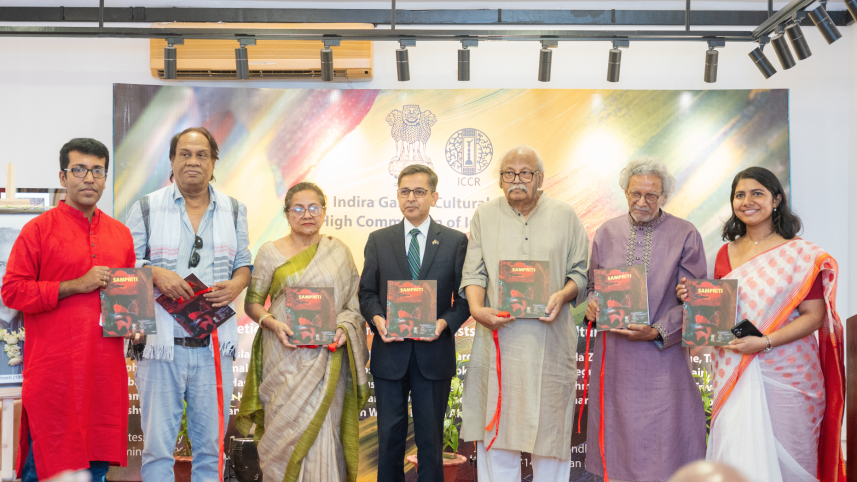
The Indira Gandhi Cultural Centre (IGCC), High Commission of India, inaugurated the art exhibition “Sampriti” at its Gulshan premises yesterday (May 7), bringing together artists, scholars, diplomats, and cultural personalities for an evening of art, music, and cultural exchange.
The exhibition, organised as a continuation of the “Sampriti” Art Camp held on April 10 and 11, also marked the 77th Foundation Day of the Indian Council for Cultural Relations (ICCR). The inauguration found a deeper emotional context as it coincided with the 165th birth anniversary of Rabindranath Tagore. For Bangladesh and India, Tagore is not only a literary figure but also a cultural inheritance—one whose songs, poems, and humanist vision continue to live across borders.

The programme began with the ceremonial lighting of the lamp in tribute to Tagore by High Commissioner of India to Bangladesh Pranay Verma, Prof Rafiqun Nabi, artist Monirul Islam, Prof Farida Zaman, and Prof Abdus Sattar. The gesture set the tone for an evening centred on Tagore’s lifelong wish of establishing peace and harmony.
Speaking at the event, High Commissioner Pranay Verma reflected on Tagore’s lasting place in the shared heritage of the two countries. He said, “Gurudev Tagore continues to embody the ideals of creativity, humanism, and cultural harmony,” adding that these values remain central to the relationship between India and Bangladesh.
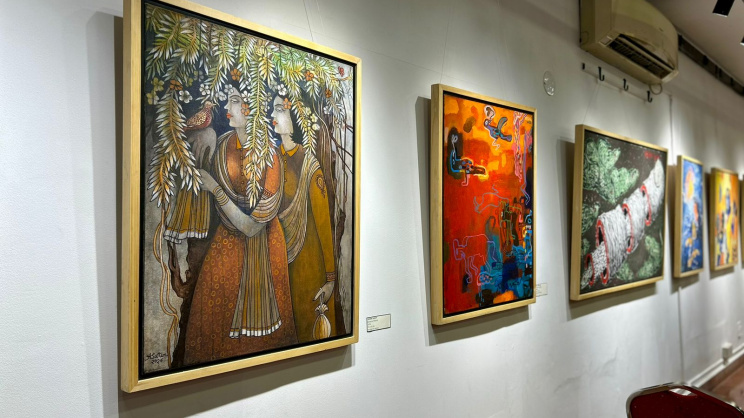
The exhibition features works created during the two-day art camp by 33 eminent contemporary Bangladeshi artists and ICCR scholars. Among the participating artists are Rafiqun Nabi, Monirul Islam, Abdus Shakoor, Abdus Sattar, Farida Zaman, Ranjit Das, Jamal Ahmed, Naima Haque, and many others. Curated by Prof Sanjoy Chakraborty of the Faculty of Fine Arts, University of Dhaka, “Sampriti” brings together different artistic voices, each responding in its own way to the idea of friendship, coexistence, and cultural exchange.
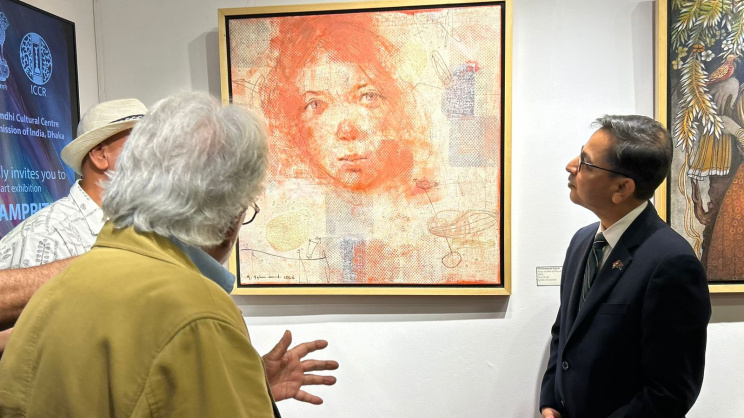
Formally inaugurating the exhibition, High Commissioner Verma said the relationship between India and Bangladesh is deeply rooted in history, language, culture, and enduring people-to-people ties. He also noted that art remains one of the most powerful ways of renewing these bonds, as it creates space for dialogue, empathy, and understanding beyond political or geographical boundaries.
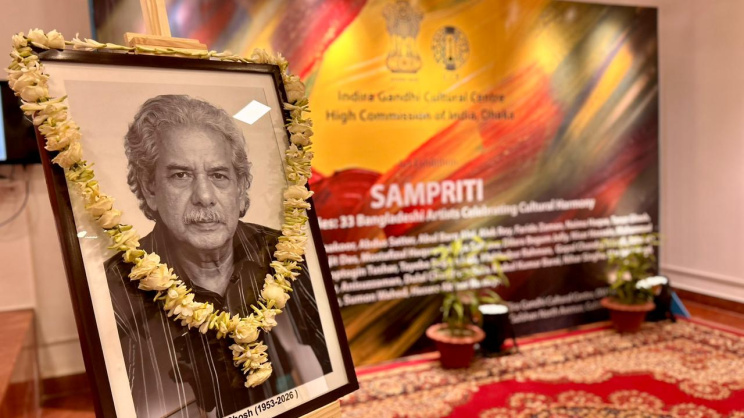
The evening also carried a note of remembrance. The High Commissioner paid tribute to eminent artist and ICCR scholar Tarun Ghosh, who passed away in April. One of his works has been included in the exhibition, honouring his artistic contribution and his connection to the spirit of cultural exchange.
Senior artist Prof Rafiqun Nabi expressed hope that “Sampriti” would lead to more artist exchanges between the two countries. Artist Monirul Islam also appreciated the initiative, saying, “It is rare to see such a diverse assembly of artists,” while thanking the curators and organisers for bringing them together.
Adding music to the evening, Prof Shahnaz Nasrin Ila of the University of Dhaka’s Music Department performed Rabindra Sangeet. Her renditions included “Borisho Dhora-Majhe Shantiro Bari” and “Majhe Majhe Tobo Dekha Pai”, among other Tagore songs, making the tribute to Tagore feel intimate and complete.
Through its paintings and performances “Sampriti” became a gathering of memory and artistic goodwill. The exhibition reflected how cultural friendship is often carried forward through songs, colours, and the people who continue to believe in them instead of grand declarations.
The exhibition will remain open for public viewing from May 8 to 17 at IGCC, Gulshan, Dhaka.
 For all latest news, follow The Daily Star's Google News channel.
Comments