


Old Dhaka kabab joints: Where faith meets flavour
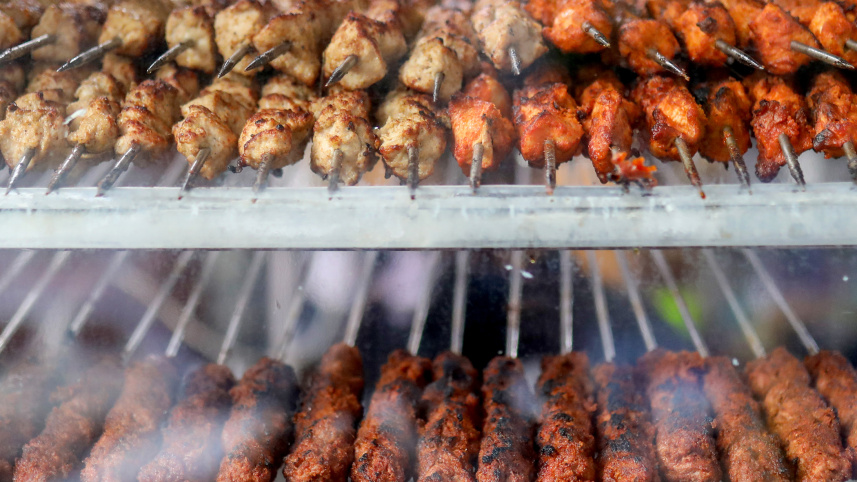
So today I met the gentlest man in Dhaka -- and I’m not exaggerating. In Bangla we call such a soul “mati’r manush”: more than a man moulded by earth, it honours humility, humanity, and the rare gift of connecting without ego.
That’s exactly what I felt with Javed Warsi of Arsalan Nihari and Kabab Corner on Dhakeshwari Road. Though a partner in the business, his warmth and effortless manner carried the generosity that makes Old Dhaka’s lanes feel like home.


I’d heard of Arsalan for years but only now went with a friend. Two women past mid‑age, we wandered Old Dhaka late at night, unbothered by stares, blending in easily thanks to Javed’s welcome.
His kabab joint felt less like a restaurant than a dawat at home. We tend to over‑order, but he guided us gently: “Take one dish first, if you need more, order later.” He even held back the butter chicken, knowing we were full.
His simple philosophy -- no waste, no excess -- was born in lockdown, when he prepared meals for stray dogs, musafirs, and the downtrodden. Compassion shaped his mindful way of serving. His Warsi roots, shaped by Hazrat Haji Waris Ali Shah’s call to selfless devotion, live on in his actions.
For him, feeding musafirs -- the wanderers, the homeless, the forgotten -- is not charity but worship. “A musafir lives without knowing where he’ll sleep or eat, yet asks nothing of anyone, trusting only Allah,” he told me. During lockdown, he prepared meals himself and served them every Thursday.
Each plate, simple and humble, he sees as an offering placed directly in God’s name. “For me, the Pak Panja Tala is an unshakeable seal of divine grace and love,” he added, invoking the open palm iconography revered in Shia and Sufi traditions.
The shop is owned by four friends, but Javed manages the crowd with natural authority and quiet strength. The Lalbagh and Wari outlets cater to Dhaka’s Mughlai Street‑style menu.

In Dhaka, where diners often expect royal treatment, he insists on fairness. If someone holds a table while waiting for friends, he gently asks them to step aside so others in the queue can sit -- an almost unheard‑of courtesy here. Smiling, he added: “I must keep the line. Today is quiet; usually it’s an hour’s wait.”
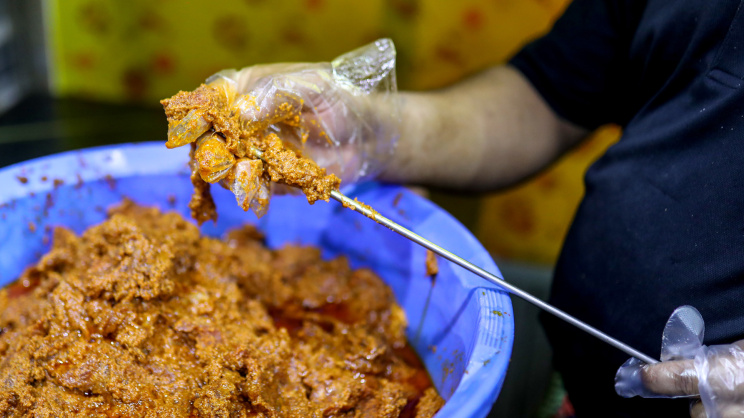
Their head cook, once a disciple of Javed’s uncle, learnt hands‑on -- mixing masalas, marinating meats, mastering recipes. He hails from Bhola and now reproduces the originals with remarkable fidelity. Javed beams: “Try his beef raw chap, sheekh kababs, mutton boti -- you’ll never want to go elsewhere in Old Dhaka.” Local diners, he adds, go mad for butter chicken and brain masala.
I, however, melted for the crisp, oil‑free hot parathas and a steel glass of chilled lassi crowned with hand‑churned buttery froth. The butter foam -- caught in that fleeting stage before fat settles into butter and liquid separates as buttermilk -- is a uniquely indulgent topping, one you simply won’t find anywhere else in Dhaka. The sweet version of the lassi is divine with a hint of salt, while the salted one is lighter yet still refreshing.
The highlight of the dinner for me was the homemade achar platter, recipes lovingly preserved by Javed’s 95‑year‑old mother. Arsalan is more than a kabab shop -- it’s a place that balances Mughlai flavours to your taste, where respect, warmth, and a sense of home are served alongside the food. Despite its modest space, the restaurant accommodates large groups with ease, supported by a kitchen next door and a separate booth for take‑out parcels.
Arsalan is not an exception but part of a larger tradition. Old Dhaka’s kabab joints have always been more than eateries; they are cultural sanctuaries where food, faith, and hospitality converge. Javed’s gentle stewardship simply reminds us why these places endure -- because they feed not just the body, but the spirit of the city itself.
 For all latest news, follow The Daily Star's Google News channel.
Comments