Can we save young Bangladeshis from deadly Mediterranean crossings?
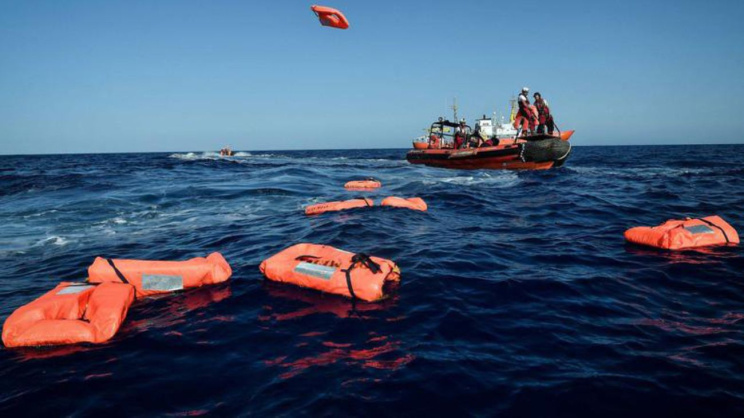
On 3 August 2026, 42 people left Libya for Greece in a small boat. Thirty-eight of them were Bangladeshis. The boat ran out of fuel and drifted in the Mediterranean Sea for almost 11 days. Ten people, including nine Bangladeshis, died from extreme heat and a lack of food and water. Finally, 29 Bangladeshis were rescued near the Egyptian coast (The Daily Star, 17 August 2026).
The question is simple: why do young Bangladeshis still take the same route when they know about the deaths, abuse and suffering? Blaming brokers alone does not give us the full answer. Behind this journey are dreams of a better life, a lack of good jobs, family pressure and debt, the success of people already in Europe, and limited legal ways to get there. This is not only a crime issue. It is also about the economy, family, society and the migration system.
How big is the problem?
According to the International Organization for Migration (IOM) report Bangladeshi Nationals Arriving by Sea and by Land in Europe, 24,318 Bangladeshis reached Europe by sea and land in 2025. This was 59 per cent higher than in 2024.
The Daily Star, citing BRAC and Frontex data, reported on 17 August 2026 that 3,608 Bangladeshis reached Greece by sea from Libya between January and June 2026, while another 4,249 reached Italy. The same report said that nearly 110,000 Bangladeshis entered Europe through the Central Mediterranean route between 2009 and June 2026. These numbers show that irregular migration from Bangladesh to Europe is now a serious concern.
Are poverty and unemployment the whole story?
A lack of jobs, low wages, an uncertain future and financial pressure certainly push young people to look abroad. But poverty alone cannot explain this migration. The poorest families cannot easily raise Tk 1–1.5 million to send someone to Europe through Libya.
Dutch migration scholar Hein de Haas offers a useful explanation through his “aspirations-capabilities” framework. In simple terms, migration depends not only on the factors that push people out of one country or pull them towards another. It also depends on where people want to go and whether they have the means and opportunity to get there.
Young Bangladeshis increasingly aspire to opportunities beyond their own country. Even a young person in a village can now see what life looks like in Rome, Milan, Paris or London through a smartphone. Yet affordable and legal opportunities to reach these places have not expanded at the same pace. Put simply, aspirations have become global, but legal mobility has not kept up. It is in this gap between aspirations and actual opportunities that irregular migration routes continue to thrive.
If they choose to go, who is responsible?
Here, the idea of bounded agency is important. It means that people make their own decisions, but they do so within limits. In our 2025 study, Bounded Agency and Aspirations: Understanding the Motivations for Irregular Migration from Bangladesh to Europe, my co-authors Selim Reza, Syed Nurullah Azad, A. Aziz and I analysed the experiences of 100 returnee migrants. We found that migrants make choices, but those choices are shaped by economic hardship, social pressure and limited legal options.
Imagine a young man who has tried several times to get a legal visa but failed. A local job pays Tk 15,000–20,000 a month, while his friend in Italy earns several times more. His family says, “Do something.” Then a broker says, “I can get you there.” The decision is still his, but his good options are limited. He has agency, but it is bounded.
How does migration become a social norm?
When migrants send money home, build houses or buy land, other families naturally compare their lives with those of migrant families. Scholars call this relative deprivation — feeling left behind compared with others around you. Over time, migration can become a social norm. People begin to think that going abroad is what a successful young person is expected to do. This can develop into a culture of migration, where migration is not only about earning more money but also about gaining social status.
Family considerations also play an important role. The New Economics of Labour Migration suggests that migration is often a collective household decision rather than an individual one, with families treating it as an investment in their future. A family may borrow Tk 1–1.5 million in the hope that earnings from Europe will eventually repay the debt and improve the household's economic situation. But as more money, time and effort are committed to the journey, abandoning it and returning home becomes increasingly difficult.
Why continue despite the dangers?
Migration is not one single decision. It is a series of decisions. Leaving Bangladesh is one step, reaching Libya another, and getting on a boat yet another. Here, the idea of sunk cost is useful — the money, time and effort already spent cannot be recovered. After spending a large amount of money and suffering for months, a young man in Libya may think, “I have come this far. Europe is just one more step away.”
Returning home can also mean confronting debt and the stigma of being seen as a failure. Family members or neighbours may ask, “Others made it. Why couldn't you?” The fear of such humiliation can push migrants to continue their journey despite the risks. The debt that initially financed the journey can therefore become another powerful reason not to turn back.
Will arresting brokers solve the problem?
Brokers must be punished when they commit fraud, trafficking or other crimes. But arresting one broker will not solve the wider problem. Behind irregular migration is a migration infrastructure — a chain of people and contacts stretching from villages to Dhaka, transit countries, Libya and Europe. One person finds clients, another arranges documents or tickets, another helps with border crossings, and someone else arranges the boat.
As long as there is strong demand and high profits, another broker can replace the one who is arrested. So, the question is not only, “Who is the broker?” We must also ask, “Why does the broker's market continue to exist?”
Europe faces two different realities. The European Union wants to reduce irregular migration and migrant smuggling. At the same time, many European countries need foreign workers and skilled people. This is why initiatives such as the Talent Partnership with Bangladesh are important. They aim to improve skills and create more opportunities for legal labour mobility. The challenge is to connect Europe's demand for workers with Bangladesh's large number of young people seeking opportunities abroad through legal, affordable routes.
Europe's migration dilemma
Europe faces two different realities. The European Union wants to reduce irregular migration and migrant smuggling. At the same time, many European countries need foreign workers and skilled people. This is why initiatives such as the Talent Partnership with Bangladesh are important. They aim to improve skills and create more opportunities for legal labour mobility. The challenge is to connect Europe's demand for workers with Bangladesh's large number of young people seeking opportunities abroad through legal, affordable routes.
This is also where migration diplomacy matters. Europe wants fewer irregular arrivals, while Bangladesh wants legal jobs and better protection for its workers. Bangladesh can cooperate on reducing irregular migration while also negotiating for legal labour quotas, seasonal work, skills partnerships and recognition of qualifications. Controlling irregular migration and expanding legal mobility should be discussed together.
What should be done?
The response should work at three levels. At the micro level, individuals and families need reliable information about costs, debt, risks and legal options. At the meso level, action must address brokers, recruiters, diaspora contacts, social media and local networks that can make dangerous migration appear normal. At the macro level, Bangladesh needs better skills training, legal recruitment, visa opportunities, labour agreements, talent partnerships and stronger migration diplomacy.
Arresting brokers or frightening young people is not enough. They already know that people die at sea. What they need is a legal route that is easier to understand, affordable and more trustworthy than the broker's route. So perhaps the bigger question is no longer simply, “Why are young Bangladeshis taking irregular routes to Europe?” It is this: “Why does the irregular route still look easier to them than the legal one?”
Mohammad Jalal Uddin Sikder is an Associate Professor and Researcher at the Department of Political Science and Sociology, North South University.
Send your articles for Slow Reads to slowreads@thedailystar.net. Check out our submission guidelines for details.
The reality of vocational training for Bangladeshi women

Breastfeeding in Bangladesh: What is holding mothers back?

Fidel Castro at 100 / Why Fidel Castro’s legacy still haunts Washington
Thirst in the Sundarbans: The water crisis facing Munda women

Which female-dominated jobs are actually the most exposed to AI?

What remains of Bangladesh's fading ethnic traditions
Good intentions are not enough: Why Bangladesh should rethink orphanages

Are we eating microplastics with our fish?
The invisible Mintis of Karwan Bazar