


Digital Preparedness for Future-Ready Primary Education
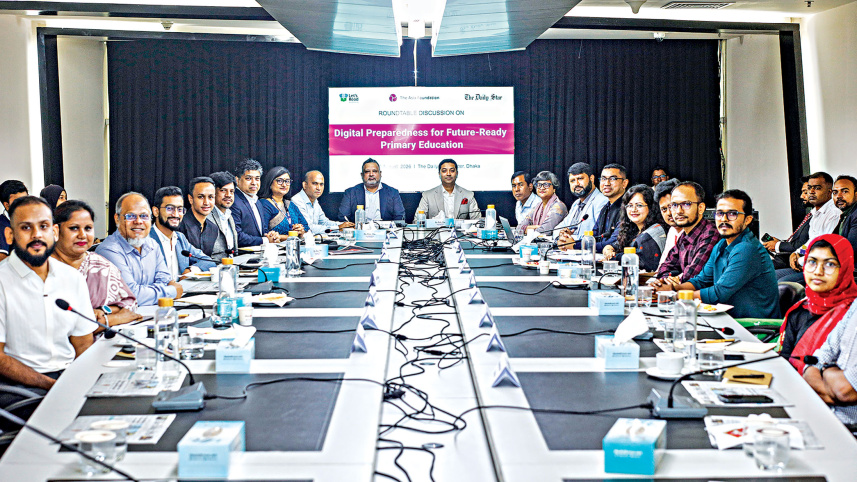
A roundtable titled “Digital Preparedness for Future-Ready Primary Education” was held on 10 August 2026 at The Daily Star Centre, Dhaka. Jointly organised by The Asia Foundation and The Daily Star, the dialogue brought together policymakers and development sector leaders to discuss Bangladesh’s digital education preparedness and ways to build a future-ready primary education system.

Kazi Faisal Bin Seraj
Country Representative
The Asia Foundation

The Asia Foundation has been working in Bangladesh for nearly seven decades, continuously adapting its approach to meet the evolving learning needs of new generations. Our journey has progressed from traditional book distribution programmes to Let’s Read, a digital platform that expands access to quality reading materials across borders. Today, the platform brings together literature from eighteen countries in more than sixty languages, with content carefully curated and graded to match the reading abilities of learners at different stages. Through collaboration with UNESCO, we have further enriched the platform by integrating traditional games and cultural learning elements into the digital reading experience, making education both engaging and accessible. The Asia Foundation continues to explore how Artificial Intelligence can be effectively integrated into primary education to support both teachers and students. Our goal is not simply to introduce new technologies, but to harness digital innovation to help reduce persistent gaps in skills, knowledge, and learning opportunities. The long-term impact of these efforts will depend on the availability of affordable, reliable, and inclusive digital infrastructure. Teacher engagement remains central to this transformation, as educators are the key drivers of meaningful technology adoption in classrooms. We are witnessing a broader evolution in educational development: a shift from traditional literacy initiatives toward technology-enabled learning ecosystems. By ensuring that digital tools are accessible, relevant, and equitable, we can help prepare young learners to thrive in an increasingly dynamic and technology-driven world.

M. Moazzem Hossain (Keynote Speaker)
Programme Head - Development
BRAC Education Programme
UNESCO data for 2025 indicates that 74 per cent of the global population, or 6 billion people, utilise the internet. Connectivity in Bangladesh is expanding rapidly, with BTRC data reporting 136 million internet subscribers and total 4G coverage. However, a significant gap remains between access and actual learning outcomes. Approximately 50 per cent of children aged seven to fourteen have yet to achieve foundational reading competency, while 40 per cent struggle with basic mathematics. Regional disparities exacerbate this issue; for instance, the Rangpur division lags significantly behind national human development averages with female literacy at 75.8 per cent. While over 15,000 primary schools possess multimedia classrooms, the transition from possession to practice remains slow. A NAPE study reveals that although 60 per cent of teachers claim digital proficiency, only 25 per cent actually implement these skills in a classroom setting. Future progress must align with the UNESCO framework, focusing on human-centric mindsets and digital safety rather than mere hardware procurement. Addressing the “One Teacher, One Tab” policy window requires a shift toward continuous mentorship and the creation of age-appropriate, inclusive content that safeguards children from misinformation and digital exclusion.

Bobby Hajjaj
Honourable State Minister
Ministry of Primary and Mass Education
A robust education system relies upon the “Three Cs”: Curriculum, Classroom, and Consistency. Addressing the five key pillars: curriculum, teachers, administration, infrastructure, and technology, is essential for comprehensive reform. There is currently a significant effort to build a massive digital ecosystem comprising hardware, a sophisticated Learning Management System (LMS), and AI-based assessment tools for teachers and students alike. This includes an ERP and monitoring system linked to “Edu-IDs” to ensure accountability. Recent reports regarding the cost of student uniforms and the “One Teacher, One Tab” initiative have been subject to widespread misinformation; in reality, these are carefully designed programmes aimed at enhancing student dignity and teacher efficiency, with a uniform pilot currently underway and designs finalised by a twenty-member expert panel to maintain quality. Uniform regulations are being developed to bring all institutions, including approximately 50,000 private kindergartens, under a single regulatory framework. This ensures that every child receives a standard of education regardless of whether they attend a public or private school. Furthermore, the national curriculum is being refined to focus on play-based and storytelling approaches for younger learners, with an emphasis on foundational skills. Cultural education, encompassing music, art, and Quranic recitation, is also being integrated to offer diverse learning choices. The government has pledged to increase education spending to 5 per cent of GDP within the next five years to support these ambitions. Success in this digital transition requires a “bottom-up” approach, where systems are built and tested before formal policy statements are issued, ensuring that technology serves as a meaningful partner in the learning process.

Shahir Chowdhury
Founder & CEO
Shikho
Digital initiatives in the education sector suffer from excessive fragmentation and a lack of uniformity. While government portals boast high registration figures, daily engagement is often negligible compared to private EdTech platforms that sustain substantial daily activity. Effective digital transformation requires the implementation of a unified database, application, and teacher workflow across all educational tiers. Expertise in User Interface and User Experience is critical to ensure that technology is intuitive for both educators and students. Furthermore, the rapid evolution of Artificial Intelligence has compressed software cycles, meaning technology often becomes obsolete within months. Consequently, traditional project-based procurement models are no longer viable for modern needs. The state should move toward licensing models, Public-Private Partnerships, or government-to-government agreements to maintain current infrastructure. Adopting successful international EdTech models, where private companies provide scalable solutions under license, would prevent the waste of taxpayer funds and ensure that the national digital education framework remains functional, adaptable, and relevant.
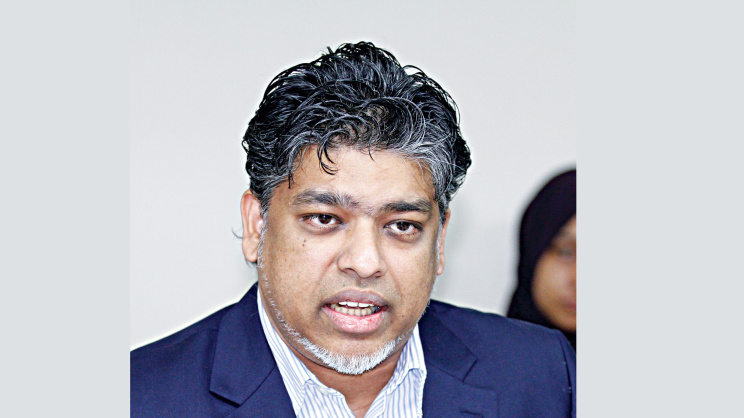
Korvi Rakshand
Founder
JAAGO Foundation
Possessing internet access does not correlate with functional digital literacy. While 130 million people in Bangladesh are connected, usage remains largely restricted to social media platforms rather than educational or professional purposes. Many youths struggle with basic digital tasks, such as managing email or joining video conferences, highlighting a major skill deficiency. Digital preparedness must therefore shift its focus from the mere procurement of hardware to comprehensive operational training. There is a critical need for Artificial Intelligence to be integrated as a teacher’s assistant rather than a replacement. By utilising the 15,000 existing multimedia classrooms already present in schools, a platform could be developed to track student progress and identify specific learning gaps in real-time. Current strategies that rely heavily on distributing devices, many of which remain unused at home, fail to address core educational requirements. Future efforts should prioritise the creation of scalable AI platforms through collaboration with EdTech experts to build a robust digital ecosystem that supports personalised instruction.

Dipti Das
Head of English and School Education
British Council
Evidence from school visits suggests that one-off training sessions are insufficient for making teachers digitally proficient. Despite historical ICT training efforts, a significant gap remains in the practical application of these skills within the classroom. Often, teachers struggle to cover the manual syllabus, leaving little room for multimedia integration. The core challenge lies in determining whether digital literacy should be a standalone training subject or embedded within subject-specific instruction for English, Science, and Mathematics. Current expectations for teachers to create multimedia content must be balanced against the reality of their foundational skills. Furthermore, the post-pandemic period necessitates a focus on learning recovery, where digital tools can play a transformative role if utilised correctly. Inclusion must also be a priority, ensuring that digital classrooms are designed to assist children with disabilities. Strengthening data governance is equally vital to coordinate efforts between development partners and government platforms. Recognising these challenges is the first step toward developing a continuous, blended learning process that ensures educational effectiveness.

Tahera Jabeen
Social Development Advisor
British High Commission Dhaka
Digital transformation must be viewed through the lens of preparedness rather than mere technology adoption. Research indicates that 70 per cent of teachers lack basic digital skills, suggesting that confidence and ongoing support are greater constraints than the availability of hardware. Professional development should encompass digital pedagogy, critical thinking, and the responsible use of Artificial Intelligence. Inclusivity remains a major concern, as unequal access to devices and connectivity deepens existing educational disparities. Globally, women are under-represented in AI-related research and technical careers; therefore, fostering digital confidence in girls at an early age is a strategic necessity. Furthermore, safeguarding children in digital spaces is paramount. Skills to recognise misinformation and protect privacy must be prioritised, particularly for adolescent girls who face barriers like cyberbullying and online harassment. Finally, achieving national ambitions requires a systematic approach to spending. Current education expenditure remains at 2 per cent of GDP, necessitating a more targeted resource allocation to ensure that digital initiatives deliver measurable improvements in learning outcomes.

Dr. Mohammad Akhtaruzzaman
Curriculum and Digital Learning Specialist
Department of Education - Government of Australia
Bangladesh’s digital development has been uneven and disconnected, with many software solutions developed without proper planning or coordination for an integrated national system. A systematic and well-coordinated approach is urgently required to align efforts across all educational tiers, from primary to tertiary. Establishing national checkpoints, specifically a National Assessment Plan for Literacy and Numeracy (NAPLAN) at Years 3, 5, 7, and 9, would allow for the accurate measurement of learning outcomes and targeted teacher training. For higher years, a modified assessment could incorporate Artificial Intelligence and digital literacy. Furthermore, addressing the widespread vacancies of qualified educators requires structural reform in teacher training. Replacing the traditional Master of Education with a Master of Teaching for graduates of various disciplines offers a viable solution. This programme, delivered through online or blended flexible block models with sixty days of mandatory in-school placement, would produce high-quality educators for the future while simultaneously filling critical vacancies within the national school system.

Mirza Mohammad Didarul Anam
Education Specialist
Aspire to Innovate (A2I)
The journey of digital governance in education began nearly two decades ago, initially focusing on teacher preparedness and ICT training. The Teachers’ Portal now serves as a significant Professional Learning Community, allowing educators to share content and professional insights across districts. While basic ICT skills have been largely established, the focus must now shift toward the integration of Artificial Intelligence. There is a massive opportunity to use AI for accountability and tracking “learning trajectories” through unique student identifiers. Such systems can identify specific learning gaps and suggest necessary interventions, making administrative oversight more efficient. However, current teacher usage of AI often leans toward entertainment rather than educational application. Training must move beyond basic content generation to focus on humanising technology and contextualising it for the classroom. Greater interoperability between government systems and private EdTech platforms is essential to move away from isolated silos.
By engaging teachers in these advanced digital spaces, the education system can foster a more transparent and results-oriented environment for students.
 For all latest news, follow The Daily Star's Google News channel.
Farhana Islam
Head of Environmental, Social and Governance
Grameenphone
Building digital inclusion in Bangladesh requires more than just service provision; it demands a focus on youth upskilling and healthy digital habits. Long-standing partnerships with UNICEF have successfully integrated digital literacy and online safety into national curricula for secondary education, impacting millions of students. These initiatives emphasise the importance of a digital footprint, teaching students that their online behaviour has lifelong consequences for future career prospects. For marginalised communities, the focus remains on basic internet proficiency, such as operating smartphones for government services and digital registration. However, primary education is the most critical stage for developing these behaviours. The current focus is shifting toward the responsible use of Artificial Intelligence, ensuring that users act as responsible partners with technology. This involves creating a sense of human accountability for AI-generated outputs and preventing the spread of misinformation. Collaborative efforts between the government and private sector can scale these pilots, ensuring that millions of children navigate the digital world safely and constructively.
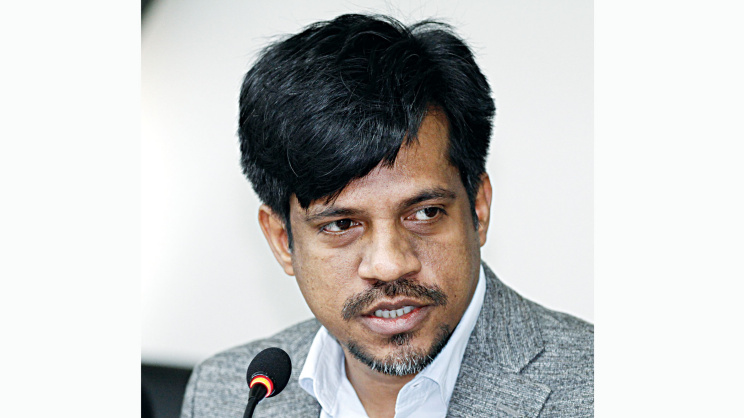
Mohammad Yasin Arafat
Senior Education Officer
Asian Development Bank
A comprehensive policy framework for Artificial Intelligence and digital technology in education is currently absent, leading to significant duplication of efforts. Establishing a medium-to-long-term vision is essential, whether as a standalone policy or an integrated part of the national education sector plan. This framework should provide clear guidance on digital infrastructure, content, and access. Crucially, technology must not be viewed as the core of education; instead, learning should remain central, with technology serving as a supplementary tool to achieve specific competencies. Observations of classroom practices indicate that technology is often used superficially, such as simple PowerPoint presentations that fail to enhance the learning process. Furthermore, the state should consider pivoting from traditional procurement to a service-leasing model. Under this arrangement, competent technology companies would provide hardware, continuous troubleshooting, and software updates. This approach ensures that educational institutions are not burdened with technological waste or the maintenance of obsolete equipment, offering a cost-efficient and sustainable method for modernising the national primary education system.

Sheikh Kasif Mahboob
Technical Specialist - Education
Save the Children Bangladesh
While high-level discussions often focus on digital transformation, a stark reality remains: 50 per cent of students in primary Classes 3 to 5 struggle to read foundational Bengali. Consequently, “future-ready” education must prioritise foundational literacy and numeracy alongside digital initiatives. Technology and Artificial Intelligence should be harnessed primarily to assist teachers in addressing these core competency gaps. One proposed strategy involves integrating an AI-assistive application into the “One Teacher, One Tab” initiative. This tool would allow educators to evaluate student learning levels in real-time and provide data-driven recommendations for remedial measures, while keeping the teacher as the primary decision-maker. Furthermore, the existing Teachers’ Competency Framework should be digitised and upgraded. A digital assessment platform would enable the analysis of teacher needs, allowing for targeted capacity development. Ultimately, the provision of hardware alone cannot transform the education sector; meaningful progress is only possible when teachers are enabled to use these digital tools to strengthen the foundational skills of their students.

Fasbeer Eskander
Founder
The Front Page
Digital education is frequently viewed solely through the lens of classroom instruction, yet the family unit plays an equally vital role in a child’s technological upbringing. Since education begins at home, parents must be technologically aware to guide children in the safe and constructive use of digital tools. Primary education is the most critical period for parental involvement, presenting an opportunity for schools to host workshops that educate families on healthy digital habits and screen time limits. Media organisations also bear a responsibility to disseminate information regarding safe technology usage. By producing content focused on digital parenting and cyber security, the media can help families navigate the complexities of a child’s digital footprint. Furthermore, as Artificial Intelligence evolves rapidly, parents must remain informed about data privacy and the risks of sharing personal information. Keeping families up to date with the pace of technological change is essential for ensuring that the next generation of students uses technology safely, responsibly, and effectively during their formative years.

Munem Shahriar
Founder & CEO
Tinkers Technologies Ltd.
Empowering educational institutions requires a move away from generic software production toward education-focused tools that support both parents and teachers. Experience with the “Future Neurons” programme involving 4,000 students highlights a common misconception: that AI is primarily for creative editing rather than foundational logic. Successful digital education prioritises logic-building and critical thinking before introducing hardware; students should master coding concepts with pen and paper prior to digital implementation. AI can significantly enhance teacher efficiency, allowing for the creation of interactive websites and lesson materials in a fraction of the time traditionally required. Furthermore, early prediction models utilising years of student data and psychometric analysis can identify potential academic struggles long before they manifest in major examinations. This allows for personalised interventions and individual care. The primary focus of digital preparedness must shift from the mere procurement of devices to the effective application of existing resources. By strengthening logical foundations and utilising AI for early academic forecasting, the education system can become more proactive and results-oriented.

Khaled Bin Helaly
AI Consultant
Asiatic Marketing Communications
Training sessions at Asiatic have demonstrated that Artificial Intelligence can drastically improve operational efficiency, reducing tasks that previously required six days to just six hours. However, consistency remains the most significant challenge in digital training; missing even small portions of instruction can leave participants unable to grasp subsequent concepts. To improve national preparedness, the education sector must focus on creating a unified, native-language platform. A system in Bengali is essential for effectively serving teachers and students in rural areas who may not possess advanced English proficiency. Such a platform would also allow for the centralisation of teacher and student data, enabling the tracking of KPIs and learning curves to identify where specific focus is needed. Global trends, such as China’s mandate for AI education starting at age six, underscore the speed at which educational requirements are shifting. Bangladesh must adopt a mass-level communications strategy to promote these digital programmes, ensuring that parents and educators recognise digital literacy as a mandatory and urgent requirement for the future.

Mohammad Tabibur Rahman
Deputy Secretary
Ministry of Primary and Mass Education
The primary education sector in Bangladesh encompasses over 65,569 government schools and 350,000 teachers, many of whom face significant logistical and socio-economic hurdles. In many remote areas, poverty and hunger remain major barriers to learning, with students frequently arriving at school undernourished. Infrastructure gaps also persist, yet substantial progress has been made, with broadband connectivity now reaching all government primary schools. Current initiatives such as “One Teacher, One Tab” and online monitoring systems are being phased in to improve administrative oversight. The PEDP-5 project represents a large-scale effort to integrate app-based education and teacher training over the next five years. However, caution must be exercised regarding the age at which children are introduced to digital devices, as concerns regarding addiction have led several nations to restrict usage for younger students. Addressing these challenges requires a holistic approach that combines digital rollout with social safety nets, such as school feeding programmes, to ensure that the most vulnerable students are not left behind during the technological transition.

Mohammad Abdur Rahim
Additional Director General
Directorate of Primary Education
Preparedness for the future must be defined by feasibility and implementation rather than abstract goals, as technology evolves too rapidly for long-term designs to remain relevant. Bangladesh’s heterogeneous geography, characterised by flash floods, haors, and river erosion, presents unique challenges for managing approximately 115,000 schools, including private kindergartens. Successful digital transformation requires collective effort from teachers, guardians, and the state, alongside simplified procurement processes. Furthermore, a critical shift is needed in teacher recruitment. The current policy lacks an aptitude test to determine a candidate’s genuine interest in teaching. Many individuals enter the profession only after failing to secure other employment, leading to low job satisfaction and a resistance to implementing digital learning. Introducing mandatory aptitude tests would ensure that recruits are naturally inclined toward the profession and more likely to adopt digital tools in the classroom. Reform policies for both administration and teacher recruitment are currently being developed to address these structural issues. Ultimately, digital learning can only succeed if the educators themselves are committed to the transition.

Tanjim Ferdous (Moderator of the Session)
Head of Strategic Partnerships
The Daily Star
Digital education must extend beyond the mere provision of computers and internet access; it must encompass critical thinking, creativity, and the responsible use of technology. Primary education is the foundational stage where a child’s curiosity and adaptability are formed, yet the digital divide between urban and remote areas remains a formidable challenge. It is vital to move toward an education system that produces confident and curious students who can question and utilise technology rather than just consume it.
Recommendations
- Prioritise the strategic integration of Artificial Intelligence across the educational framework to enhance instructional efficiency and address gaps in foundational competencies, supported by comprehensive professional development.
- Implement a single, integrated digital database and learning management system to ensure seamless data interoperability across all educational tiers.
- Introduce mandatory aptitude tests for new recruits and transition from one-off training sessions to a model of continuous, peer-supported professional development.
- Shift from the outright purchase of hardware toward a service-leasing or licensing model to mitigate the risks of technological obsolescence.
- Utilise Artificial Intelligence and digital tools primarily as assistive resources to identify real-time learning gaps and core academic benchmarks.
- Establish a standardised national assessment plan at regular intervals to accurately monitor learning outcomes and integrate digital literacy into student evaluations.
- Develop a robust digital citizenship framework that incorporates ethical safety guidelines and inclusive access for children with disabilities and marginalised communities.
Comments