


‘Ekhane Rajnoitik Alaap Joruri’: Sunny’s bold political statement

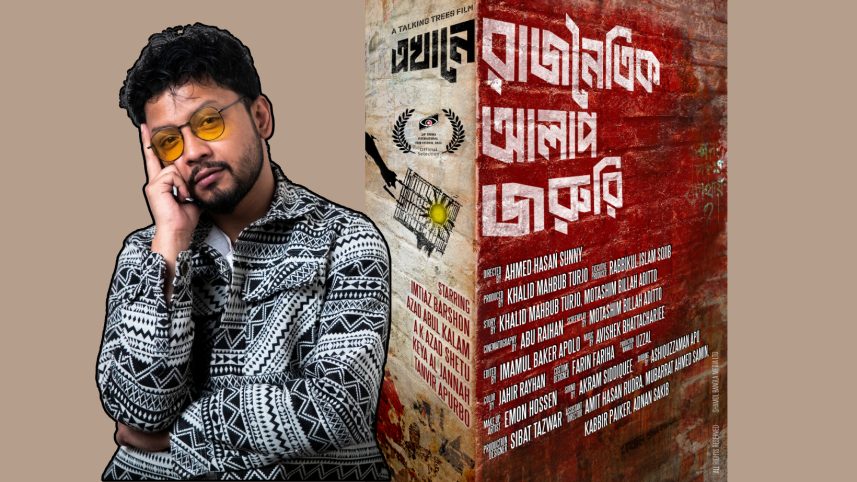
Ahmed Hasan Sunny built his reputation through music — with tracks like "Shohorer Duita Gaan", "Amra Hoyto", "Manush Keno Erokom", and "Kemne Ki" — but he has always insisted cinema was his first language.
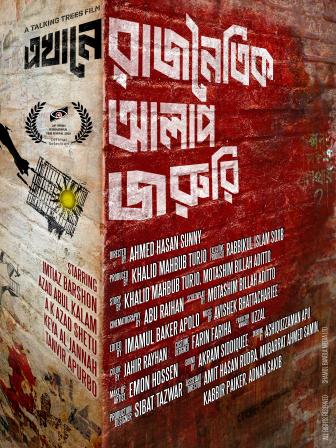
This December, he steps into public view as a filmmaker with his debut feature, "Ekhane Rajnoitik Alaap Joruri", releasing on December 26. The film unfolds against the tremors of the 2024 student-public uprising, stretching across multiple generations of political unrest.


Sunny traces the impulse back to a much earlier moment: watching "Ora 11 Jon". Long before his songs found an audience, he was making short films and commercials, learning by trial and repetition. A feature, he says, demanded a different posture. "A feature film is a whole other responsibility," he reflects. "I wanted to make it in silence. Maybe I got things wrong, maybe I got things right — but I tried to do it my way."
The cast includes Imtiaz Barshon, Keya Al Jannah, Azad Abul Kalam, A K Azad Shetu and Tanvir Apurbo. Yet the film's core tension is carried by two brothers caught in the emotional drift of political upheaval — a mirror, Sunny says, of the psychological descent he witnessed across the country.
He pushes back against the idea that the film has been years in the making. "I've imagined fifteen different films, and this wasn't one of them. It came suddenly. The shifting political climate made it feel like the right time." The July Movement, he insists, is not the centrepiece but a pressure point: a way of exploring how ordinary people absorb political shock.
For Sunny, the film is not "urgent" — a word he resists — but it offers a revision of political history told through lived experience rather than rhetoric. "We've been mistreated by the British, by India, by Pakistan, by our own governments. These layers flow through the film. If it does anything, it helps us see where we stand politically, socially, and economically. And honestly, no one needs to watch a film. Sometimes not watching is the best choice."
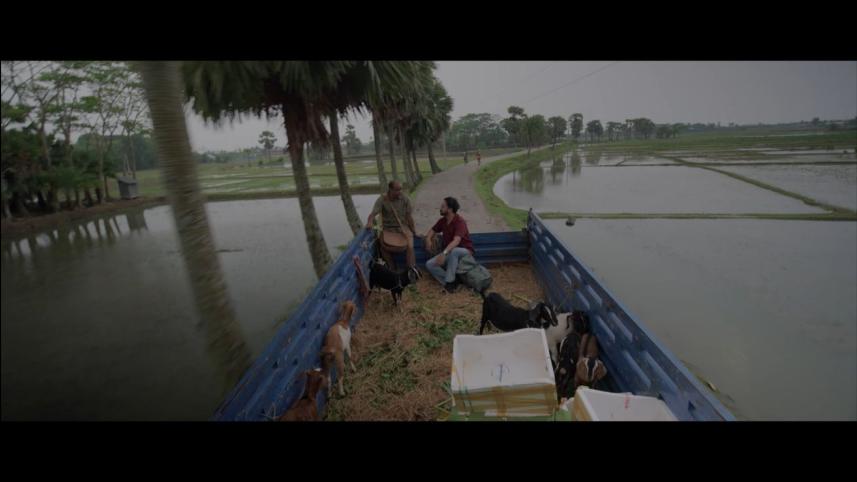
He is clear on one point. There is no such thing as being apolitical. "Our generation claims to hate politics, but that's because we don't understand political structures. A tea seller in a village is as political as a professor."
The script was developed by Khalid Mahbub Turjo, with Sunny, Turjo and Motashim Billah Aditto shaping the final narrative. Barshon plays a foreign-returned young man who is forced into political awareness — a journey many young people felt during the July uprising, Sunny argues.

The film also pushes back against recent attempts to diminish the Liberation War. One character — a Hindu survivor of 1971 who returns to agricultural life — anchors the story's historical weight and its contrast between urban detachment and rural political consciousness.
Sunny has already signed for his next film, where he will compose the music. For now, his debut will premiere at the Dhaka International Film Festival. "This is the beginning of my journey as a filmmaker," he says. "I want to keep walking."
 For all latest news, follow The Daily Star's Google News channel.
Comments