


Films should provoke thought, not propaganda: Imtiaz Barshon

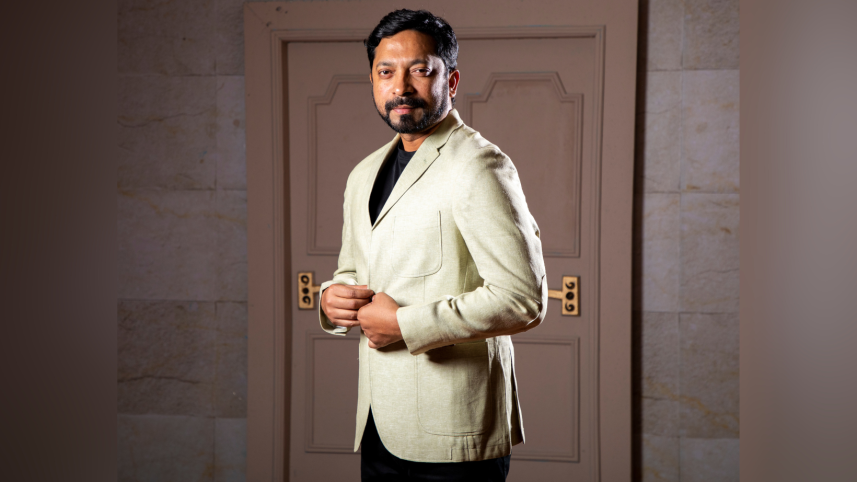
Imtiaz Barshon has his hands full. His long-delayed web film "Omimangshito", which had been stuck at the censor board for years, was finally released on December 15, while his upcoming film "Ekhane Rajnoitik Alap Joruri" is set to hit screens on December 26. Though the two films deal with different subjects, they share a common thread. Both urge the audience to think.
Speaking about the release of "Omimangshito", Barshon said, "For a long time, it was hidden behind the scenes. At one point, I thought the film might never be released. But once it finally passed censorship, I started holding on to hope that it would be released someday, one way or another. And finally, it has been released this December, the month of Victory. That truly makes me very happy."

According to Barshon, "Omimangshito" offers more than just a story. It serves as food for thought. According to Barshon, "In Bangladesh, many cases remain unsolved for various reasons, sometimes due to political pressure, sometimes because of negligence in investigation, and at other times due to the absence of concrete clues despite sincere efforts. If a film like this can create even a small impact, provoke discussion, or prompt some response from the authorities regarding such unresolved or mysterious cases, then it will have achieved something meaningful. Barshon believes that in such a case, the pain and effort behind the film would feel worthwhile.
Talking about "Ekhane Rajnoitik Alap Joruri", Barshon said the title itself initially drew him in. When he read the script, he discovered a narrative that brings together a wide range of political issues, tracing them back to even before the birth of Bangladesh. These are conversations we rarely see in cinema. While such debates may surface in private gatherings or informal discussions, they are almost never portrayed on screen, particularly in Bangladeshi films.
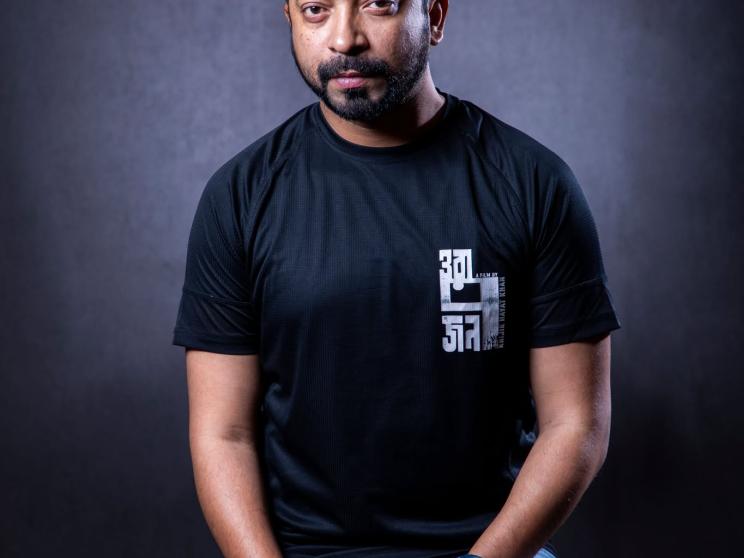
Globally, political themes in cinema are often explored either directly or indirectly. In Bangladesh, however, such discourse has seldom been articulated with clarity. When these conversations were woven into the narrative of "Ekhane Rajnoitik Alap Joruri", Barshon felt the film's journey and dialogue became especially compelling. The story touches on politics from the British colonial era, the Liberation War of 1971, and even the movement of 2024.
For Barshon, this is particularly significant for the younger generation. There was a time when many young people believed engaging with politics was unintelligent or uncool. Yet it was these very individuals who stepped forward during the 2024 movement and turned it into a success. He believes this generation needs a deeper understanding of history and political discourse. From that perspective, "Ekhane Rajnoitik Alap Joruri" stands as meaningful content for all, offering not just entertainment, but genuine food for thought.
When asked about working on politically themed films and how he remains cautious, Barshon said, "For me, the key question is whether the content is politically correct. Whether what the screenwriter or filmmaker wants to say is truthful and responsible. If it is politically correct, I feel comfortable working on it. But if I feel that what is being said is not entirely true, then I might choose not to do the work."
Films dealing with political or cultural issues often risk turning into propaganda or becoming overwhelmed by slogans. Asked how filmmakers and actors can avoid this pitfall, Barshon emphasised the conscious effort behind "Ekhane Rajnoitik Alap Joruri" to remain grounded in truth.
"This is possible, but it has to be handled very tactfully and technically so that it does not turn into propaganda," he said. "Our director, Ahmed Hasan Sunny bhai, was very conscious from beginning to end. As artists—myself, Pavel bhai, Azad Abul Kalam, and Setu bhai—we had many personal discussions about which lines might create controversy and which might feel like propaganda, so we could avoid them. All of us were careful to ensure that nothing felt forced or agenda-driven. Both my director and producer put in tremendous effort right up to the final stage, and I am especially grateful to them."

Barshon added that the biggest challenge was ensuring there was no distortion of history, no omission of real incidents, and no establishment of false narratives, whether intentional or unintentional. "These concerns had to be kept in mind at every step, especially in the dialogues. Making sure there was no historical distortion, no propaganda, and no misinterpretation was truly challenging," he said.
Reflecting on the challenges artists face amid growing political tension, Barshon said, "Politics is not something outside of you, me, or any of us. None of us are outside politics. Often, people in the creative world may not be indifferent, but they are not always vocal. They do not speak on every political issue. But when a country enters a period of crisis, when silence is no longer an option, when the government or administration becomes authoritarian and turns against the people, then standing on the side of justice becomes a responsibility for every artist, regardless of whether it brings threats or not."
 For all latest news, follow The Daily Star's Google News channel.
Comments