


A filmy, star-studded Eid mired by logistical questions

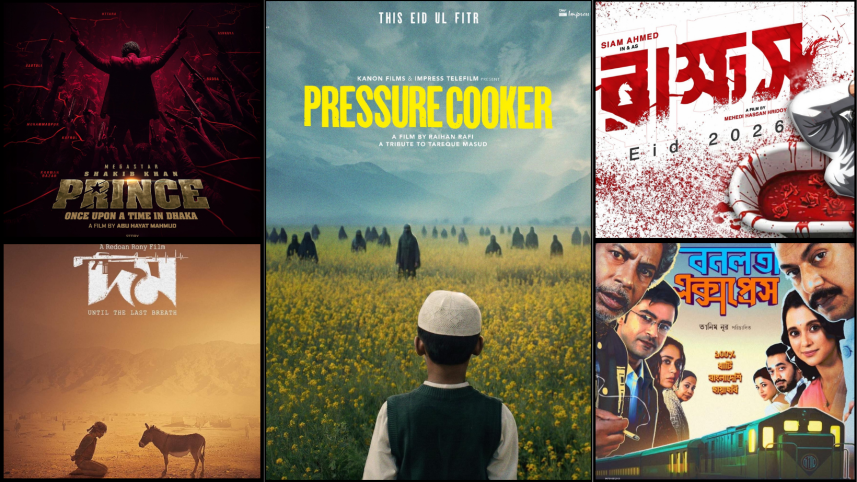
The biggest religious festival in Bangladesh is Eid-ul-Fitr, and in just a few days, it will be celebrated in harmony with the rest of the world. This is a crucial window for the film industry, as it is the time when most moviegoers choose to grace the halls.
Several major films are set to release this Eid, starting with Tanim Noor’s “Bonolota Express”. Following the success of his previous work, “Utshob”, Noor presents a story based on the novel “Kichukkhon” by the late Humayun Ahmed. The film has already generated buzz with its poster, featuring a powerhouse cast including MosharrafKarim, Chanchal Chowdhury, Azmeri Haque Badhan, Zakia Bari Mamo, Sariful Razz, and Sabila Nur. Notably, it marks the onscreen reunion of Mosharraf Karim and Chanchal Chowdhury after nearly sixteen years. By focusing on the diverse lives of passengers on a train journey, Noor continues to cater to the distinct audience he built through “Utshob”—viewers who appreciate ordinary life portrayed beyond the tropes of global violence or thrillers.
After a long hiatus, filmmaker Redoan Rony returns to the camera with “Domm”. Since its announcement, the film has been widely discussed and is finally arriving on the big screen this Eid. Shot partly in Kazakhstan, the film stars Afran Nisho in the title role, alongside Chanchal Chowdhury and Puja Chery. The narrative explores the perilous journey of illegal immigrants and the obstacles they face while attempting to go abroad through unlawful means.
Meanwhile, “Prince”, starring superstar Shakib Khan, is considered a frontrunner for the season. Directed by Abu Hayat, the film features a cast from both Bangladesh and India and is set within the crime world of the nineties. Despite the pressure of a tight schedule and filming locations spanning Hyderabad, Sri Lanka, and Kolkata, the director maintains that no compromise is being made on quality. Opposite Shakib Khan are Jyotirmoyee Kundu and Tasnia Farin, making this high-budget action film a main attraction, provided the final shooting wraps in time for its scheduled release.


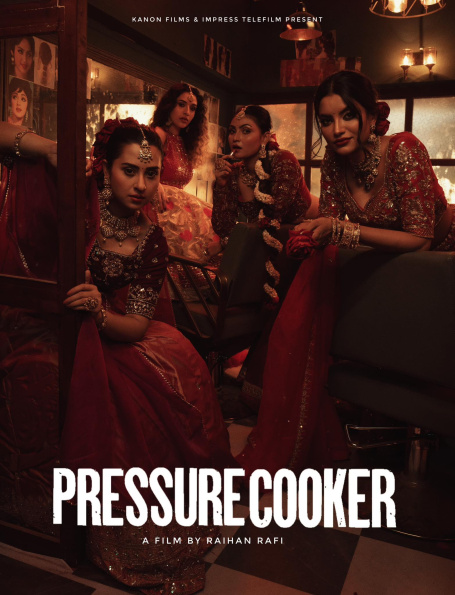
This Eid also sees Mehedi Hasan Hridoy helming “Rakkhosh”, an action-packed film starring Siam Ahmed and Kolkata’s Sushmita Chatterjee. The film’s first look hints at a story wrapped in violence, psychological conflict, and darkness, with scenes shot in Sri Lanka and Malaysia. Parallel to this, Raihan Rafi presents “Pressure Cooker”, his first self-produced film, which he has dedicated to the late filmmaker Tareque Masud. The story focuses on the internal struggles of women living in Dhaka, a city Rafi metaphorically describes as a "pressure cooker" where the "whistle" represents their silent cries. The central roles are enacted by Shabnam Bubly, NazifaTushi, Maria Shanta, and Snigdha Chowdhury.
While these five major films are poised to dominate the conversation, a lingering concern remains regarding their financial viability. Productions like “Prince” and “Domm” far exceed typical budgets, yet Bangladesh currently has only 60 to 70 cinema halls suitable for high-quality screenings. This infrastructure limitation makes it extremely difficult to recoup massive investments, especially when distributing multiple big-budget films simultaneously. While some old halls may undergo temporary renovations to meet demand, issues like poor management and the persistent threat of piracy—both locally and during international releases—remain significant hurdles. Ultimately, for these films to succeed commercially, they must find ways to sustain longer theatrical runs through superior storytelling and visual treatment. In a crowded market, the films that truly resonate with the audience will survive, eventually increasing their number of screenings while others fade. One can only hope that the dedication shown by these filmmakers results in a successful season that defies these logistical odds.
 For all latest news, follow The Daily Star's Google News channel.
Comments