


6-hour massacre left around 400 dead

People of Satbaria union at Sujanagar in Pabna came under the wrath of the Pakistani army and their local collaborators as independence seekers had dominated the area during the Liberation War in 1971.
In addition to providing freedom fighters with training ground and local Awami League leaders with space to organise the war, the area also offered a safe passage for the freedom fighters and refugees to enter India.
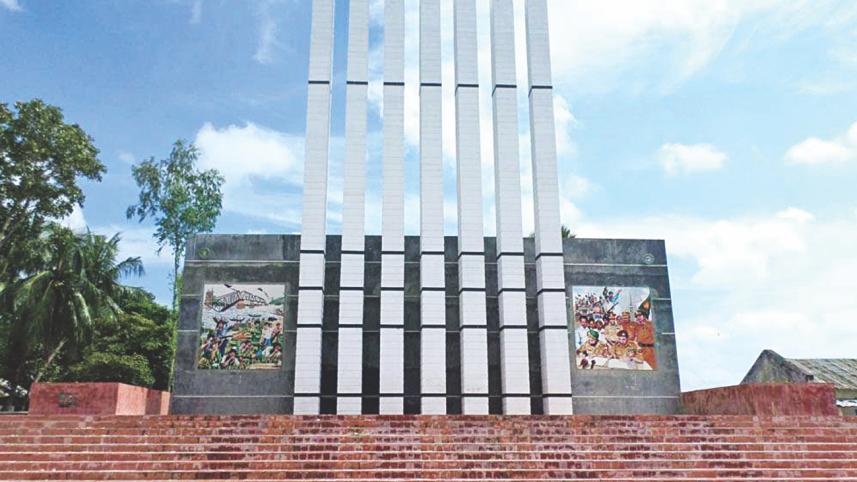
In retaliation, around 300 Pakistani army men and local Razakars launched a synchronised attack on 15 villages of the union on May 12, 1971, leaving around 400 people dead.
Abdus Subhan, the then chief of Pabna Jamaat-e-Islami who had played the key role in organising anti-liberation elements in the district, accompanied the invading army and led his associates to killing the pro-liberation people, AL leaders and Hindus.
Bodies of around 100 people, who were on their way to India to take refuge, littered the bank of the Padma river and boats afloat following the six-hour massacre that started at 6:00am. Many houses of these villages were looted and torched during the attacks.
"Subhan, in conjunction with the Pakistani army, had tried to knock down pro-liberation people in our area," freedom fighter SM Shamsul Alam told the International Crimes Tribunal-2.
Shamsul, the 22nd prosecution witness in the case, said he had seen Pakistani army shoot four people dead immediately after a conversation with Subhan at Fakitpur, one of the 15 villages.
The other villages were Momrajpur, Kuripara, Tarabatia, Satbaria, Kandarpapur, Sindurpur, Nischintapur, Harirumpur, Shemnagar, Naruhahi, Singhanagar, Bhatpara and Gupinpur.
"What crimes had we committed? Was it our fault that we had supported the Awami League? … Moulana Subhan led the atrocities in our localities. I want justice," said Khorshed Alam, another eyewitness.
The 63-year-old retired police constable from Fakitpur said he had heard the sound of gunshots from his house around 6:00am and saw people fleeing the village,added Khorshed.
He hid himself in a sugarcane field beside the Union Parishad office when he saw a white car along with four to five Pakistani military vehicles near the office.
"Moulana Subhan, clad in a white panjabi, got down from the white car and talked with some army men, who also got down from their vehicles. Then they [army men] opened fire on several people, who immediately collapsed on the ground."
After the killings, the vehicles had rolled out towards Kandarpapur and Sindurpur villages, said Khorshed.
Shamsul Alam, who witnessed his father's murder from 50 yards away, said an army man had shot his father on the instruction of Subhan.
"'See, how Joy Bangla is!' said Subhan Moulana as he kicked my father's body a couple of times," said Shamsul, son of influential AL leader Mohiduddin Pramanik of Satbaria.
The next day Khorshed, Shamsul, Fazlul Haque, the then principal of Satbaria College, and the victims' families made a list of 170-175 deaths. But they could not count the unidentified people buried by locals.
In its yesterday's verdict, the tribunal said: "The accused Moulana Abdus Subhan had actively and knowingly contributed to and induced the group of army by his act and conduct in carrying out the attack that resulted in killing of hundreds of civilians in 15 villages."
His role in these killings was one of three charges for which he was handed the capital punishment by the tribunal.
 For all latest news, follow The Daily Star's Google News channel.
Comments