


Giving children a voice through fashion
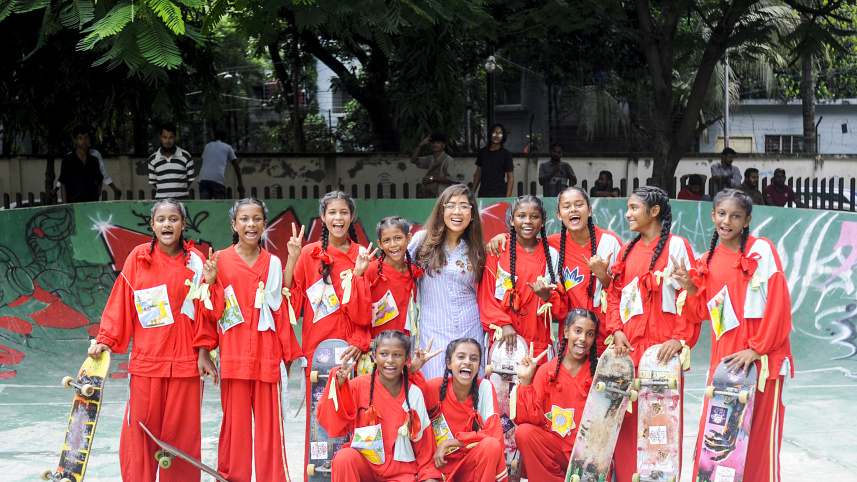
Bangladesh Street Kids Aid uses skateboarding to connect with street-involved and underprivileged children. It also links them to education, medical and hygiene support. The children of BSKA have found confidence, discipline and a powerful form of self-expression through skateboarding. For a special Star Lifestyle project, that spirit became the starting point of a collaboration with three creative professionals who approached the children not simply as subjects of a photoshoot, but as individuals with their own stories and identities.

“When they are in motion, they look like a flock of butterflies”
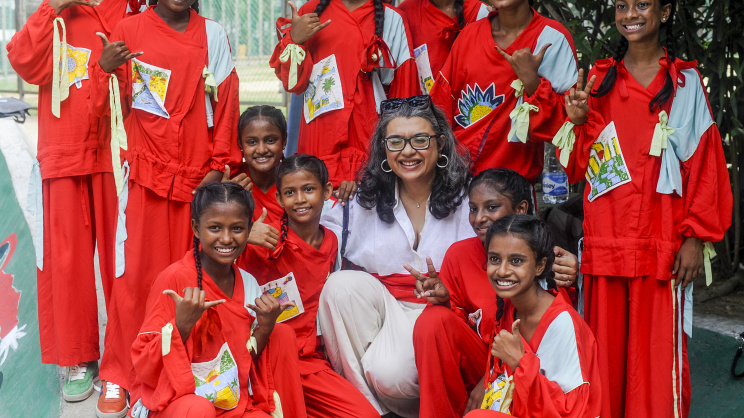
For Sara Hossain, Director of Craftsman Footwear & Accessories Ltd, designing shoes for the children began with an image that stayed with her. She had seen photographs of girls skateboarding in sarees during Pahela Baishakh, moving with a confidence that challenged familiar ideas about how girls should dress or occupy public space.
“To me, it felt like a rainbow in a cloudy sky,” Hossain recalls. “When they are in motion, they look like a flock of butterflies.”
That sense of movement, colour and freedom shaped the footwear she created for the Star Lifestyle photoshoot. Bright mustard, green, magenta and contrasting combinations were chosen with the children’s ages and energy in mind.
“Being a girl in Bangladesh is difficult,” she says. “Doing something out of the norm is even harder.”
For the BSKA children, that philosophy resulted in shoes designed not to tone down their energy, but to keep up with it.
“They should hold their heads high when they are wearing something they created themselves”
I saw a couple of videos of the children on social media and fell in love with the statement of freedom and self-expression they demonstrated,” recalls Sharmin Rahman, creative director and designer.
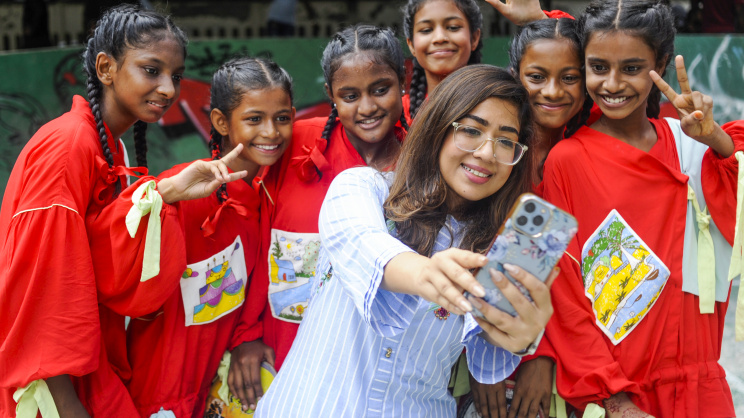
For the photoshoot, Rahman decided the clothes should begin with the children themselves. She wrote to them and asked them to draw whatever they liked. Those drawings became the visual language of the 11 outfits.
Rather than refining the drawings into conventional motifs, Rahman preserved their uneven lines, spontaneous colours and individual character.
“I thought these children are extraordinary and they should be presented as who they are and in their true spirit,” she explains. “They should hold their heads high when they are wearing something they created themselves.”
The project reflects Rahman’s broader design philosophy. Before thinking about silhouette or decoration, she considers who a garment is made for, its purpose and the story it should portray. For her, responsible fashion extends beyond sustainable fabric to the use of local materials, techniques, artisans and community capabilities.
“We wanted to be a part of their happiness”
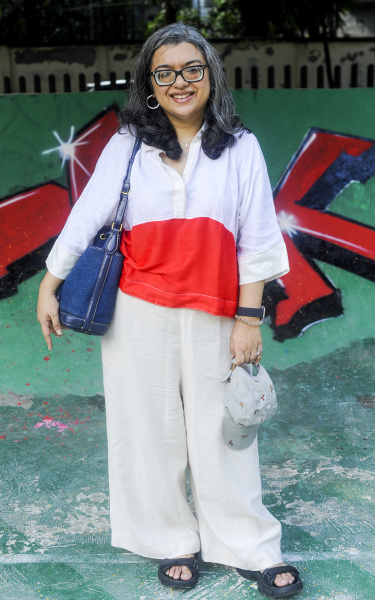
Khalid Mahmood Khan and the Kay Kraft team helped turn the creative language of the outfits into wearable garments.
“We felt connected to the concept when Sharmin Rahman shared the idea in her very own way,” says Khan, Entrepreneur, Kay Kraft.
Each outfit was designed around an individual child’s artwork, making the project closer to made-to-order work.
“Usually, Kay Kraft does ready-to-wear products. This collection was like individual samples for the children, with their own drawings incorporated in individual pieces,” Khan explains.
Preserving the individuality of those drawings required extra attention.
“From a production point of view, it needs a bit more effort and care to keep individuality and uniqueness,” he says.
 For all latest news, follow The Daily Star's Google News channel.
 The team approached the work enthusiastically, knowing the children would eventually see their own drawings transformed into garments. Khan credits Rahman for developing the concept and guiding its execution, while noting that the project also aligned naturally with Kay Kraft’s broader mindset.
For him, however, the most rewarding part was emotional rather than technical.
“We know that the children will be happy and more spirited, inspired wearing this,” Khan says. “We wanted to be a part of their happiness.”
Comments