


The people behind Dhaka’s unlikely skateboard revolution

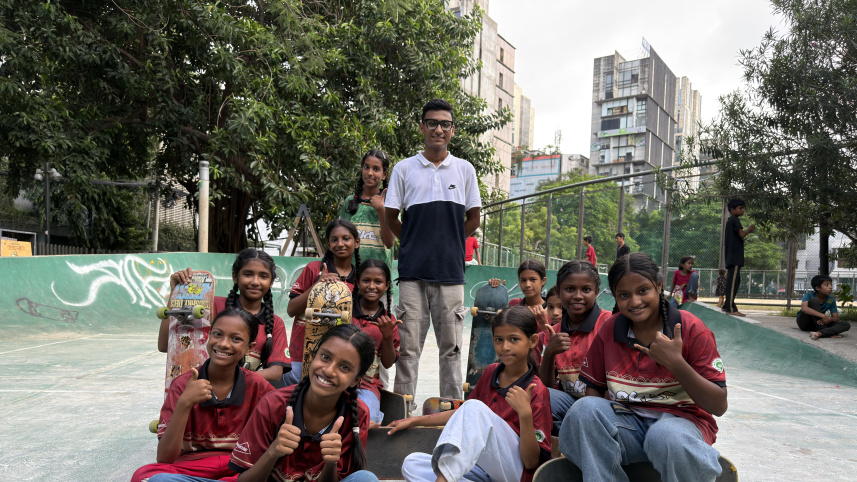
Two decades ago, before smartphones and wireless internet became part of daily life in Bangladesh, cable television was our main passage into pop culture. It was an escape and a window into people, habits, and sports that had no obvious place in our own lives. That was how I came across Tony Hawk. His gravity-defying tricks down a ramp looked nothing less than superhuman.
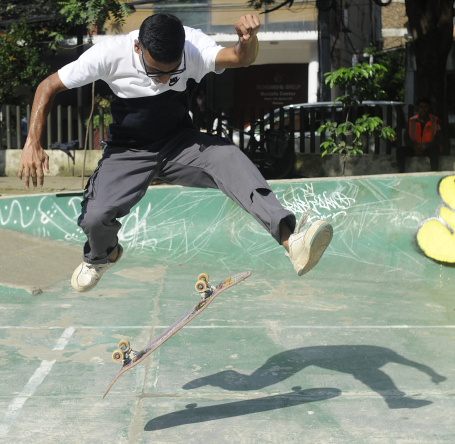

At an impressionable age, I was easily taken by both the man and the sport. Still, I knew learning to skateboard in Bangladesh was practically impossible. Decades later, I discovered that skateboarding had found a place here anyway. Not because conditions had improved enough to welcome it, but because a group of children refused to wait for permission. The board had come off the television and landed on Dhaka concrete.
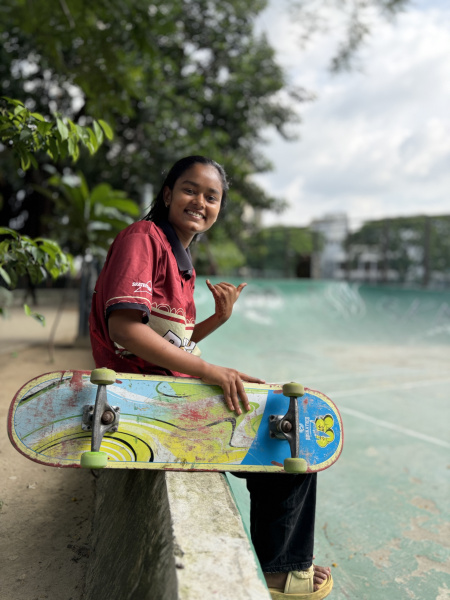
From the streets to the skateboard
Reshma Akter’s story makes the idea difficult to dismiss. Before becoming a part of BSKA (Bangladesh Street Kids Aid), she was a child surviving on the street, living day to day. Until one day, she met the founder, Susie Halsell, who encouraged her to skate and stay away from drugs.
Reshma kept turning up even as others left. Some friends were married young, some now have children, and others disappeared. Now, years later, Reshma teaches other underprivileged children how to skateboard as one of the coaches of BSKA.
“I wanted to discover what might be possible through skateboarding, so I stayed with it,” she says. “I want every girl who comes to skate to stay away from drugs and not be married off at a young age,” she expresses as she draws a parallel between the beginning of those girls and her own.
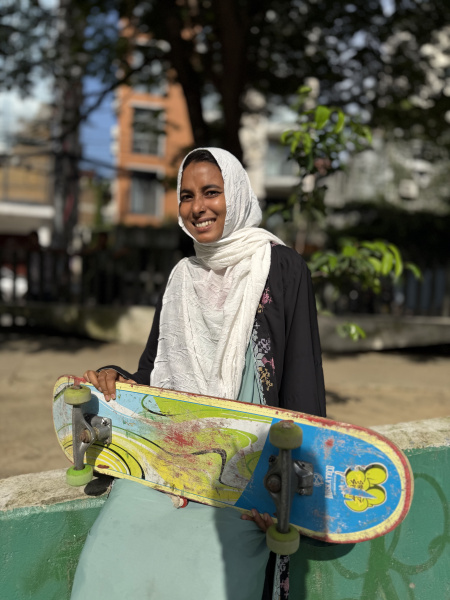
Today, Reshma teaches beginners to stand on the board and move slowly before trying tricks. She also teaches them to fall safely and get up again. It is tempting to turn that into a grand metaphor, but it works perfectly well as a practical lesson. Falling is guaranteed. Serious injury should not be.
For a girl in Bangladesh, getting on the board also means negotiating the people watching.
Head Coach and Senior Instructor, Silvanus Ishmam Talukder, says that society is often the first obstacle, especially for girls attempting tricks in public. However, Reshma’s answer is less diplomatic: “Those people will not even provide me with one meal. I have to make my own choices.”
Silvanus Talukder taught himself around Hatirjheel and joined BSKA after Susie Halsell saw him practising. He describes finally landing a trick after repeated falls as something close to flying. He also sees competitive potential.
Talukder’s student Rimi once landed a trick called an axle stall on her first attempt. That was when he realised how far she could go with proper training.
“The trouble is that this potential is practising on compromised ground. In Dhaka, children have little more than a basic flat surface. A proper skatepark exists in Gazipur, but going there regularly costs money, and Dhaka traffic turns the journey itself into an ordeal,” Talukder expresses his dismay.
The people who keep the wheels turning
The coaches may teach the children how to skate, but a programme like BSKA depends on a much wider circle of people to keep them coming back.
Along with the coaches, volunteers help navigate the practical realities surrounding training, from maintaining access to practice spaces to making sure children have food, encouragement and the support they need beyond the skateboard.
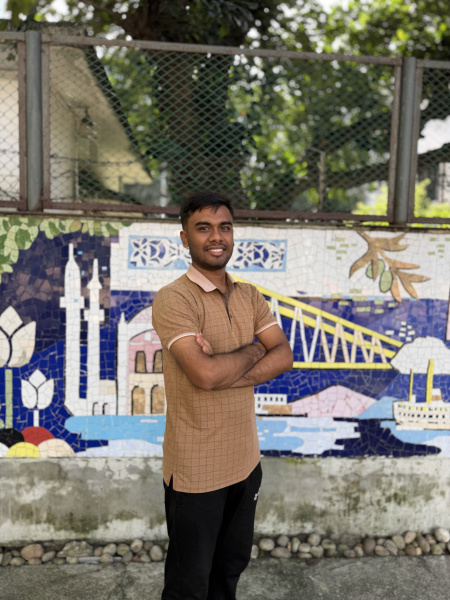
Nayon Sorkar says that even their skateboarding space at Banani field is not assured. The park is sometimes rented for fairs and concerts, with structures occupying the skating area. “We try to maintain communications with the officials, but that too has its own limit. We try to make the most out of it for the children.”
Sharafat Karim, another volunteer, brings the conversation back to an even more immediate problem.
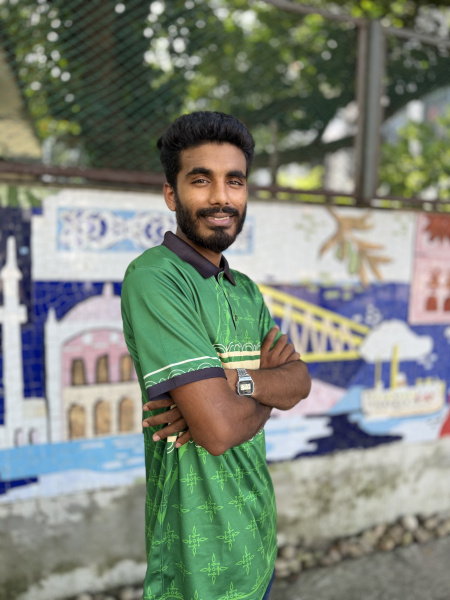
“Some children arrive without having eaten and may still miss lunch. The ground is unsuitable, accidents happen, and the support available is limited. If they stay on the right path, and if volunteers and well-wishers give them proper guidance and invest time, effort and resources, they can go very far,” shares Karim.
 For all latest news, follow The Daily Star's Google News channel.
 A child who spends two hours away from glue, returns to school, avoids child marriage, learns to trust a coach, or becomes a coach like Reshma has already travelled a considerable distance. That is not a consolation prize. It is the substance of the programme, whether or not a podium ever enters the picture.
However, goodwill alone cannot substitute for infrastructure. A board needs safe ground. A young athlete needs food, transport, equipment, medical care and uninterrupted practice. Volunteers can fill gaps, but they cannot build a national sporting system by themselves.
Back when I watched Tony Hawk on cable, skateboarding felt imported, almost fictional. These children are skating anyway, on borrowed ground, between closures, traffic, school and lives that demand far too much from them too early. They fall. They stand. Then they push again.
Comments