


Eza Chowdhury explains how yoga supports emotional healing
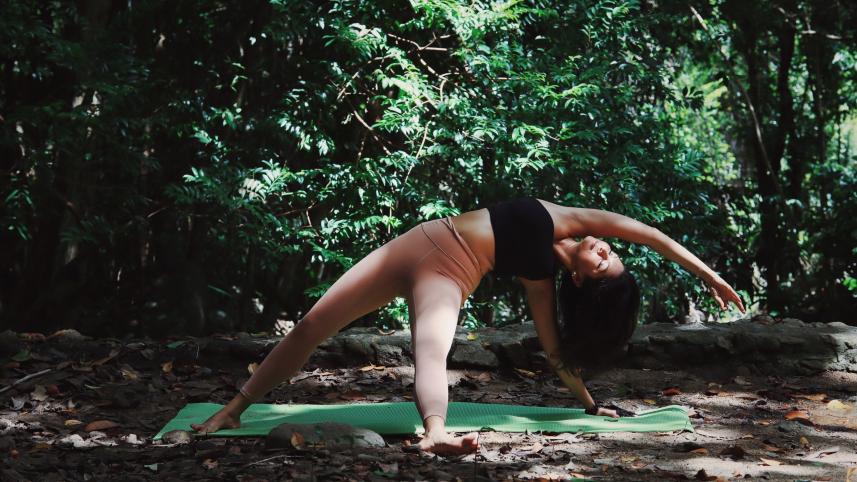
At one point, Eza Chowdhury was trusted with other people’s futures in the most literal sense. As a financial planner in Canada, she had full authority over clients’ life savings — the power to move money, reshape portfolios, and make decisions that could alter entire financial trajectories.
But somewhere between managing capital and managing expectations, something stopped aligning.

“I would walk out of yoga classes and feel a shift,” she recalls. “Something was happening to me, but I didn’t understand what it was.” That question became more urgent after personal losses that money, status, or structure could not absorb. What followed was not a dramatic exit, but a slow unravelling of certainty.
The body has a memory
Today, Chowdhury is a certified yoga teacher, trauma-informed facilitator, and energy healer based in Bangladesh. She’s also the founder of Samadi Wellness, and host of the widely-followed podcast ‘Flow with Eza.’ But her understanding of yoga is grounded in both lineage and realism.
“Yoga didn’t begin as a fitness routine,” she explains. “In our part of the world, it was always a spiritual discipline. The West picked it up, filtered it through the gym lens, and made it physical. But even if you start with the body, it’s a start. That’s fine.”
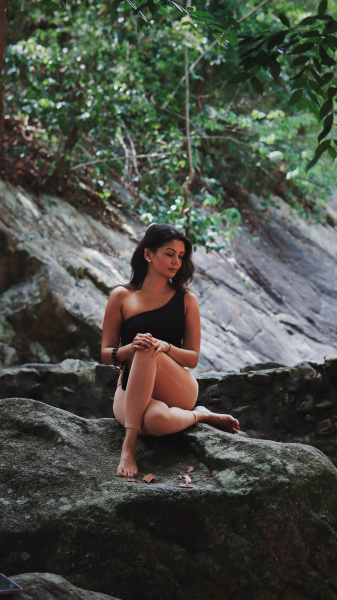
She views the physical movements of yoga (asana) as doorways, not destinations. “When the body moves, energy moves,” she says. “Stuck emotions begin to shift. The body has a memory — of pain, of trauma. You can’t override it with logic.”
This isn’t theory. It’s practice, something she saw play out in her own life after the loss of her father and a divorce that followed. “There was a mismatch between what I was doing and what I truly wanted. That dissonance became impossible to ignore.”
So, she followed the curiosity. It led her to teacher training in Thailand. Then to Rishikesh. Then to trauma studies, breathwork, Reiki, and the kind of slow transformation that doesn’t show up on a résumé but changes everything.

The real practice begins off the mat
In a wellness industry increasingly defined by aesthetics, Chowdhury’s approach is quiet but cutting. She doesn’t romanticise yoga, nor does she oversimplify it. “If you want abs or long limbs, join a gym,” she says. “Yoga is about your relationship with yourself — your thoughts, your habits, your healing.”
She walks students through the full eight limbs of yoga — starting with Yama and Niyama (ethical principles) before even touching physical postures. “Asana is just one part. The rest — breathwork, focus, meditation, inner discipline — that’s where the real shift happens.”
But she also knows you can’t sell spiritual work in abstract terms. That’s why she plans to launch a 10-minute yoga series on her YouTube channel. “No more excuses,” she says. “Everyone has ten minutes. These videos cover everything from back pain to strength building, from kids to beginners. Just start.”
When unhealed people run the world
Chowdhury’s recent podcast episodes and her growing social commentary reflect her concern for a society ‘full of unprocessed grief, rage, and pain.’
“Why are we seeing so much public anger?” she asks. “Because we’re not well. We’re spiritually and emotionally unwell, and it’s spilling into everything — our politics, our homes, our online behaviour.”
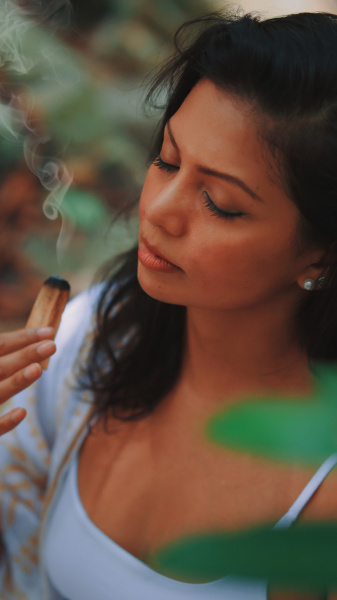
She sees mindfulness not as a luxury but a survival skill. “We’ve normalised doomscrolling. My mother does it. Everyone’s anxious, but no one’s healing. You don't need to call it yoga. Call it whatever you want. But do something mindfully. Drink your tea with presence. Sit with your food. Just stop splitting your attention.”
Holding space in a noisy world
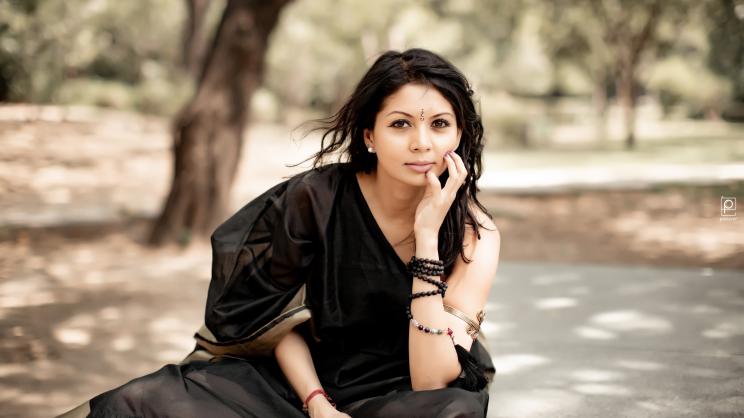
Her podcast, Flow with Eza, wasn’t intended to be a spiritual archive. It evolved into one. “I kept meeting people with incredible stories — trauma, resilience, transformation,” she says. “They needed a space to be heard.”
The podcast has hosted everyone from startup founders to spiritual seekers. She recounts one guest — a woman from Barishal who grew up orphaned and today, runs one of Bangladesh’s fastest-growing startups. “People like her deserve to be seen,” Chowdhury says. “It’s not just about ‘success.’ It’s about who you became to get there.”
No five-year plan
Ask Chowdhury what’s next, and the answer is unscripted. “I just want to live as clean a karmic life as I can,” she says. “If I’m learning something, I want to share it. That’s it. No grand strategy.”
She knows she could scale Samadi Wellness. She knows she could monetise more. But she’s not interested in empire-building. She’s interested in transmission.
“Sometimes you’re angry, you fight with your spouse, you yell at your kids. Then maybe one day, you do five minutes of breathwork. And you don’t yell. That’s change. That’s yoga.”
 For all latest news, follow The Daily Star's Google News channel.
 Photo: Courtesy
Comments