


How one artist is reviving Bangladesh’s lost clay culture
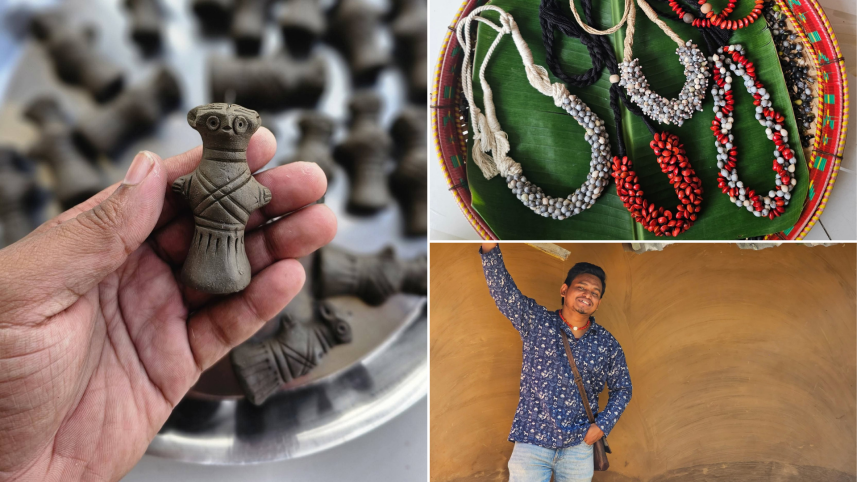
Clay often enters our lives unnoticed. It sits quietly in riverbanks, sticks to shoes after rain, and forms the base of houses in rural Bengal. Yet, in the world of contemporary design, it has been pushed aside by plastic, factory-made décor, and synthetic materials. Through Aadim, designer Chandra Manik is attempting something simple yet radical. He is bringing clay back into everyday life.
Aadim produces handmade ceramics, pottery, and fashion accessories rooted in natural materials. However, behind the brand is a personal journey shaped by childhood curiosity, observation, and a long-standing relationship with clay.

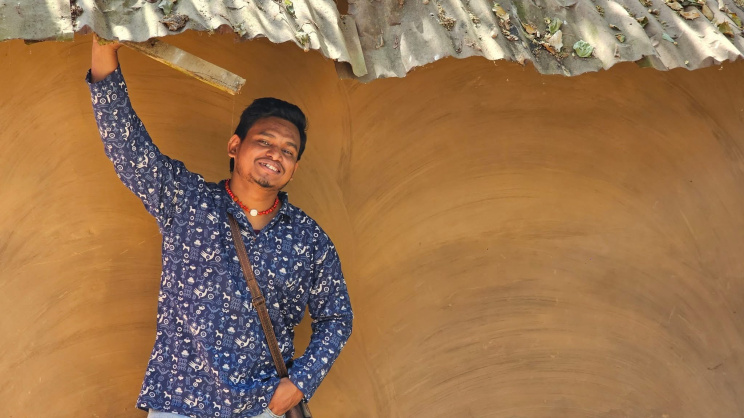
When clay was just a childhood toy
Manik’s relationship with clay began long before Aadim existed. During the monsoon, his mother used to collect clay from the riverbank to plaster their home. For children in the household, that clay quickly became something else.
“We used to play with that clay and make dolls,” he recalls. “During festivals, when idols were being made at home, I would compete with the professional idol-makers and play with the clay.” Those moments were not formal art lessons. They were simply childhood play. They planted something that stayed with him.
Although Manik eventually pursued engineering as his academic field, his interest never moved away from creative work. Drawing and writing poetry remained constant habits.
“I actually wanted to study Fine Arts,” he says. “I didn’t get the time or opportunity. Still, I kept practising.”
That quiet practice eventually became the foundation of his work.
The birth of Aadim
Before it became a brand, Manik worked independently. People who encountered his work online would contact him directly to collect pieces. The formal launch of Aadim happened only about two years ago.
“The journey began recently,” he explains. “Before that, I worked individually. People would collect whatever they liked from my personal profile. Then Aadim was formed, and now I work regularly.”
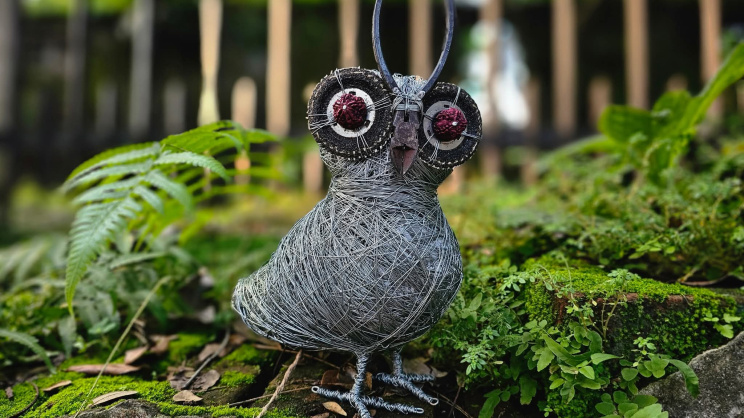
The name itself reflects a philosophy. “Aadim” suggests something primal or original. The brand embraces simple materials and forms that echo early human creativity.
Designing with nature in mind
For Manik, the idea is closely tied to nature.
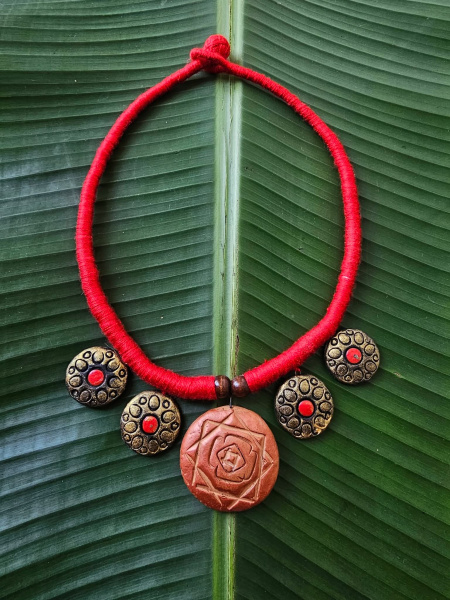
“I consider myself a child of nature,” he says. “Through a bit of clay or a seed, I want people to stay close to nature even in this mechanical life.” Many of the pieces are intentionally small and intimate. Clay jewellery, pins, garlands, and decorative items carry traces of seeds, natural forms, and handmade textures.
The objects are not meant to dominate attention. Instead, they quietly accompany the person wearing or holding them. Manik describes his design philosophy through an unusual image.
“I see the entire human body as a canvas,” he says. “Whether it’s a piece of jewellery or a small pin, it becomes part of that picture. The human body is the canvas, and ornaments are small elements of it.”
Working alone, experimenting freely
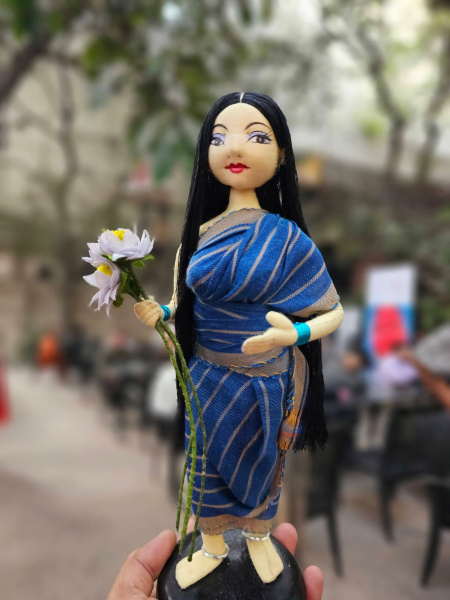
“From designing to stringing the beads and drilling, everything is done by me.” Some days he works with clay. On others, he experiments with seeds or cloth. The direction often depends on mood as much as demand.
 For all latest news, follow The Daily Star's Google News channel.
 “Whenever I get the chance, I sit with clay,” he says. “Sometimes I work on things people want. And sometimes I keep time for myself to create whatever I feel like.”
Manik’s training did not come primarily from institutions. Instead, it came from observation. While studying away from home, he lived near a traditional potter’s house. Every day, he watched the idol-makers work.
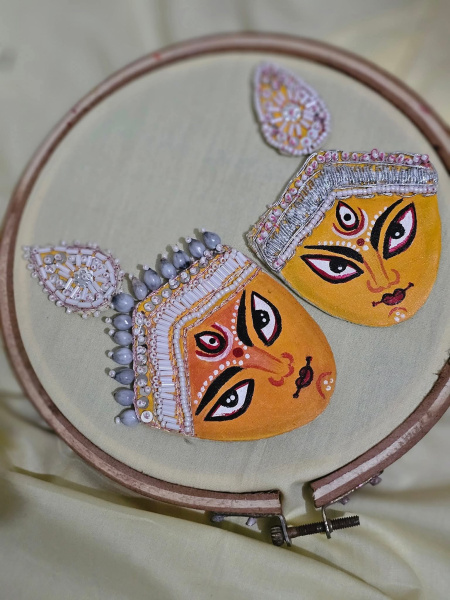
“I would watch them from tying the straw structure to the first layer of clay and finally painting the eyes,” he recalls. “I would stare and ask questions.”
Later, while spending time in Kuwait, his interest in ceramics grew even deeper. “That’s where my attraction to clay increased,” he says. “I learned more about processing clay and different techniques.”
After returning to Bangladesh, he continued refining his craft and later took training in cloth doll-making through Bangladesh Small and Cottage Industries Corporation, BSCIC.
A tradition under pressure
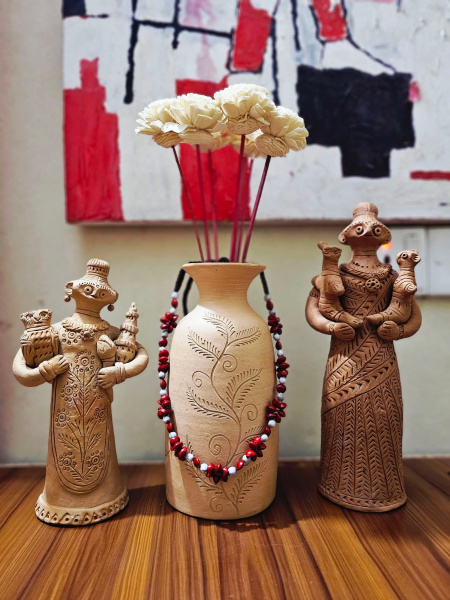
Clay dolls and toys once played a significant role in village fairs across Bengal. Children would return home from fairs with small handmade figures. Today, those spaces are disappearing.
“There used to be month-long fairs in villages where clay toys were everywhere,” Manik says. “Now they happen for a day or a few hours.” At the same time, plastic toys and Western-style dolls dominate the market.
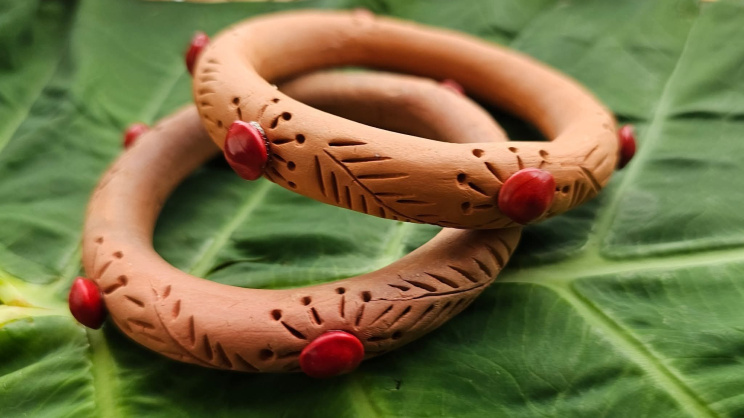
“There is definitely a challenge,” he admits. “People are working with many different materials now.” Yet, he remains optimistic about the place of clay.
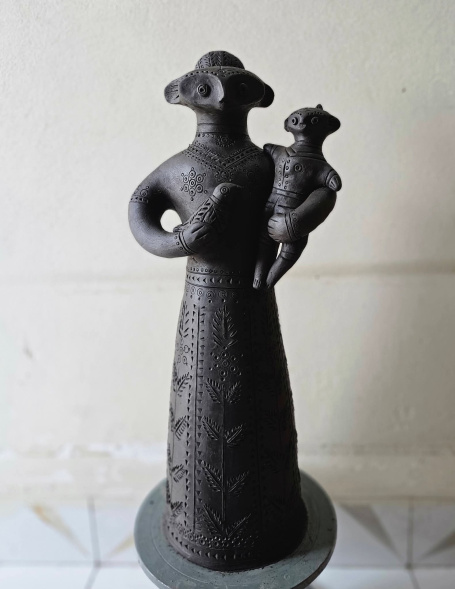
“We are creating characters based on heritage and tradition,” he says. “People look at them with interest, ask about them, and sometimes want to own them. That interest itself is valuable.”
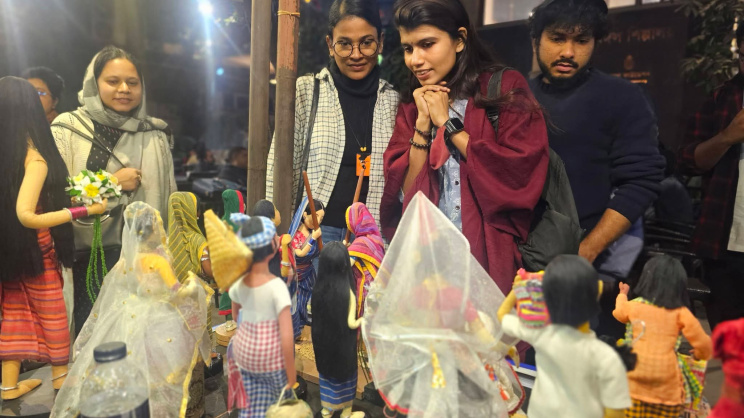
Keeping art alive
For Manik, sustaining crafts like clay pottery requires more than individual effort. Public engagement is essential.
“First, people must feel an attraction toward art,” he says. “Whether they collect it or simply appreciate it.” He hopes to organise workshops and training programmes to encourage younger people to learn these crafts.
“We want the next generation to know that this is part of our tradition,” he says. Media support also plays a role. “One person cannot create, promote, and reach people,” he notes. “We need cooperation.”
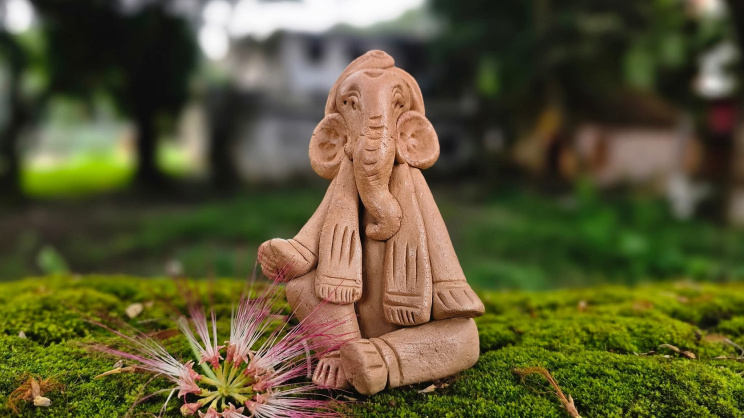
Today, Manik continues working primarily from his home in Comilla, occasionally travelling to Dhaka for exhibitions or collaborations.
Through Aadim, he creates objects that reconnect people with materials that once shaped everyday life. For him, art is not something fragile that disappears easily.
“Art has no religion,” he says. “A country’s identity is carried through its art and culture.”
And despite changing times, he remains certain of one thing. “Art is like a flowing life,” Manik says. “There will be struggles, but art will continue.”
Photo: Courtesy
Comments