


Iftar regrets we all know too well (and can't avoid)

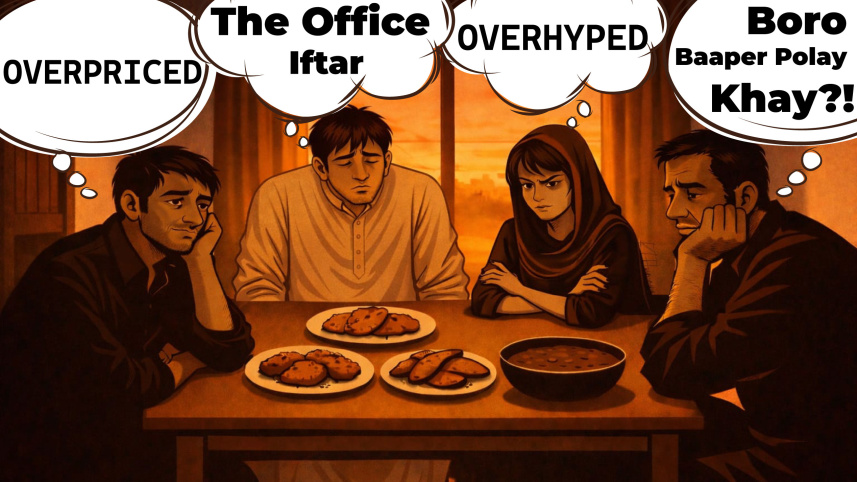
Ramadan is all about restraint and spiritual discipline. We know it. We say it with conviction. We post about it. We even forward WhatsApp messages about it. But how many of us actually manage to restrain ourselves during iftar?
Yes, of course, we fast the whole day. We do not drink a single drop of water. We heroically ignore the office tea at 3 PM. We scroll through food reels as a test of character. We almost become saints in daylight.

But then maghrib happens.
The azan has not even finished echoing across Dhaka, and we are already elbow-deep in oil.
And somehow, it is always during iftar that we “explore” the most food items, despite preaching abstention the whole day. However, “explore” is a noble word. What we really do is overestimate ourselves. And sometimes, while overestimating, we get humbled — by a beguni that tastes like regret, or by a bowl of haleem that costs more than our self-respect.
So, we asked a few explorers — people who promise to restrain themselves every year, but somehow fail with remarkable consistency.
Tanvir Ahmed, a development worker and fervent food enthusiast, sighs the sigh of a man who has queued before.
“I had always heard about Puran Dhaka and Chawkbazar. I was so excited to go there and ‘live the experience’, explore the food. But, good God — the number of people who gush there, one can barely stand or breathe.”
He pauses, then continues.
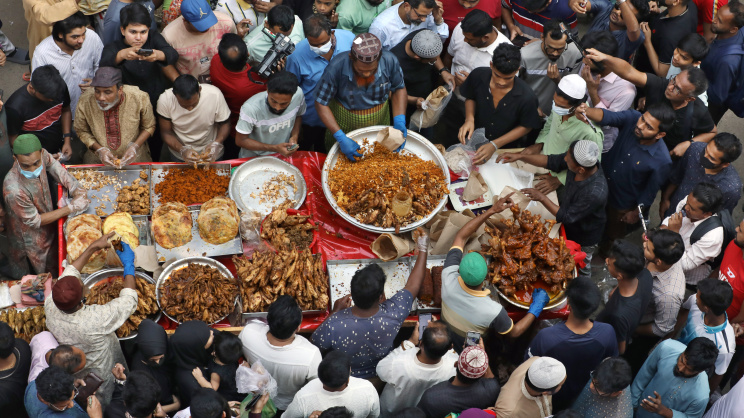
“And that thing called Boro Baper Polay Khay is a total scam. I genuinely wonder why a rich man’s son would eat that at iftar. I wish I could meet this son,” he says dryly. “Because if this is what he eats, I would prefer to be poor and eat something else.”
A banker from Gulshan, who wishes to remain anonymous “for financial recovery reasons,” recalls his tryst with premium haleem.
“My colleague suggested it. There was a 45-minute queue. I assumed it would change my life. It did. I now trust nobody.”
He describes the texture as “ambitious cement.”
“For Tk 400, I expected poetry. I received lentil paste.”
Then there is Sadia, 23, who attempted what she sadly calls “the office iftar.”
“Look,” she groans, “my boss hyped it like it was some sort of spiritual reunion. He said, ‘You’ll love it! It’s a vibe!’ — which is corporate speak for ‘You will be trapped here eating questionable piyajus with people you barely tolerate.’ I see these colleagues eight hours a day. And now I am supposed to bond with them while I am starving and cranky? No way — I would prefer to go home.”
Shanto, a painter, thought he had outwitted Ramadan traffic.
“I ordered delivery food at 4:30 PM. The app said 30 minutes.”
He pauses, then continues, “At 5:55 PM, the rider was ‘nearby.’ That day I realised ‘nearby’ means the same country in these apps.”
 For all latest news, follow The Daily Star's Google News channel.
 The food arrived at 6:41 pm, all cold.
“I ate it anyway. Hunger reduced my standards and my personality.”
Dhaka, however, will not let you rest. We will continue to treat the iftar queues of Puran Dhaka as pilgrimages we are duty-bound to complete, convince ourselves that overpaying is culture, and insist that restraint is a virtue we deeply admire but rarely practise.
We will order too much, photograph everything, chew hurriedly, sigh theatrically, and overhype without hesitation — only to repeat the ritual next year as though hunger has taught us nothing at all.
Comments