


The first Korean filmmaker to lead Cannes Jury: Who is Park Chan-Wook?
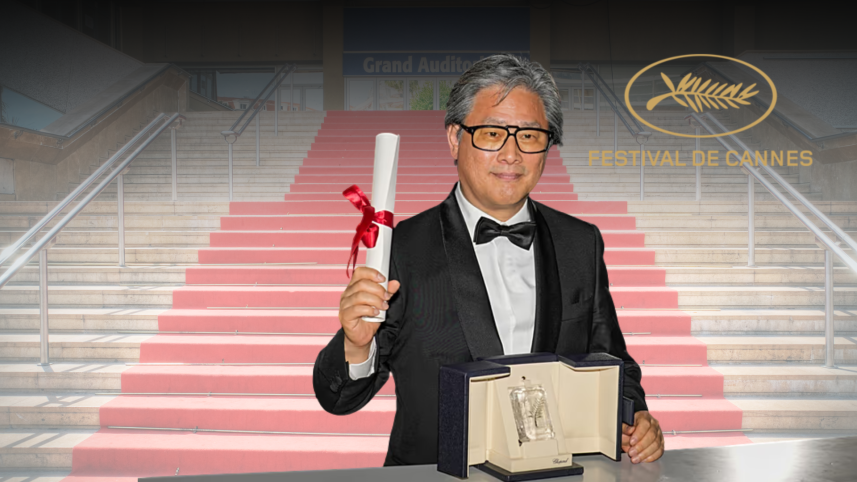
For the first time in the 79-year history of the Cannes Film Festival, a Korean filmmaker is sitting at the prestigious jury table, and somehow it felt long overdue. Park Chan-Wook, the visionary director behind some of the psychologically intense and visually exceptional films of modern cinema, has officially become the president of the 79th Cannes Film Festival.
He is making history as the first Korean filmmaker and the second Asian filmmaker after Wong Kar-wai (in 2006) to hold the most influential seat in international cinema.

For many of us who grew up hearing the cult classic movie Oldboy through film discussions, different internet forums, or even K-pop references, this moment feels bigger than just an award title to us. The recognition of Park Chan-Wook's style of storytelling that reshaped what world cinema can look for decades feels personal.
Park Chan-Wook is not the kind of filmmaker who makes “easy” movies. His films are psychological, dark, emotional, stylish, and often, uncomfortable. But the discomfort he brings in his films is exactly what makes his films iconic, which will stay with us long after the credits roll.
Through his cinemas, he shows us how to confront revenge, loneliness, violence, class inequality, and power in society in a way that feels disturbingly human. And that is the reason why his recent statement at the 79th Cannes immediately caught a lot of attention around the world.
At Cannes 2026's opening press conference, Park said, “Politics and art should not be divided." He explained how strange it is to think politics and art are enemies of each other and films that show political messages should not be dismissed just because they are political.
He further warned that if political ideas are not expressed artistically, they become propaganda instead of cinema.
What makes this quote so powerful is that Park’s own filmography has always been guided by that belief. His movies never scream social criticism directly to us; instead, they tug us into emotionally chaotic worlds where societal problems silently reveal themselves beneath the mystery, romance, and violence.
If we talk about Oldboy, which is arguably his most legendary film and a cult classic around the world, it is a revenge thriller about a man who is imprisoned without any explanation. But beneath the shocking twists and harsh action lies a deeper exploration of media manipulation, isolation, trauma, and the vicious cycle of violence.
The film was so impactful that even over twenty years later, it continues to influence pop culture. Recently, BTS shared that they took visual inspiration from the Oldboy movie for one of their music videos, also introducing this generation to Park’s iconic cinematic world.
Decision to Leave is another film where he demonstrates that he can evolve without losing his identity. In this movie, he expresses loneliness and emotional repression through the story of a detective falling for a murder suspect.
This film earned him the Best Director award at Cannes and proved that he is not trapped in one genre or filmmaking style.
Before being a juror in Cannes, he built a deep relationship with Cannes over the years. Oldboy won the Grand Prix in 2004, Thirst received the Jury Prize in 2009, and Decision to Leave won Best Director in 2022.
Cannes did not discover him out of the blue in 2026; this appointment to the jury became more like the festival finally acknowledging real talent who has shaped the world of cinema for decades.
 For all latest news, follow The Daily Star's Google News channel.
Comments