


Vinicius Jr and Raphinha: How football's fiercest rivals become best friends
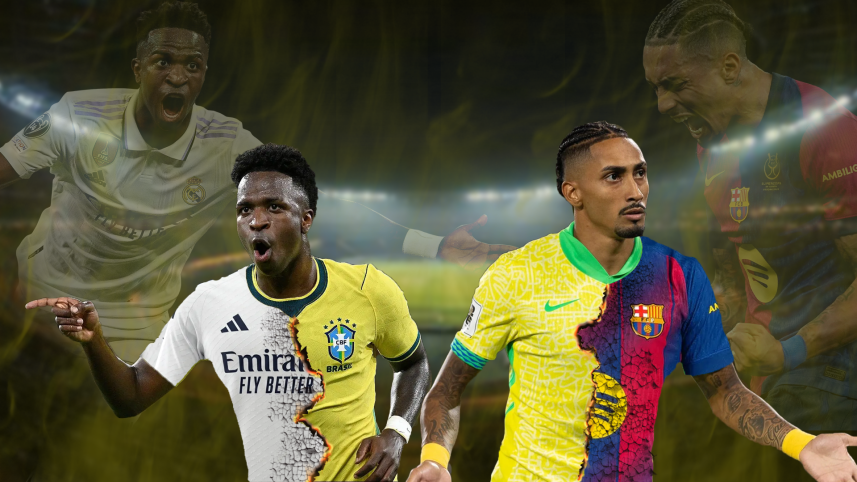
Imagine sitting across from your fiercest rival at a dinner table, sharing food, laughing at the same jokes, and then going to battle together the next morning. Sounds odd, right? Welcome to the life of Vinicius Jr and Raphinha. At club level, these two could not be more different in allegiance. Vinicius plays for Real Madrid. Raphinha plays for Barcelona.
For those unfamiliar, this is not just a regular rivalry. It is El Clasico, arguably the most intense club rivalry in world football, a fixture loaded with history, ego and drama, so much so that entire nations stop breathing when it happens. These two men spend most of their season trying to outshine each other on opposite sides of that rivalry.

And then the national team call comes. The yellow and green of Brazil go on, and suddenly the two biggest enemies in Spanish football are sharing a dressing room, cracking jokes at training and plotting together. It is almost poetic, really. Like two politicians who spend all year arguing in parliament and then go for tea together afterwards.
The warmth between them is not only for the cameras, but it also goes beyond that.
When Vinicius faced vile racist abuse during a club match, Raphinha was substituted in Barcelona's game the same week and revealed a t-shirt that read: "As long as the colour of the skin is more important than the brightness of the eyes, there will be war. We are with you, Vini."
Vinicius reposted it immediately with two heart emojis. No club badge in sight.
There is actually a life lesson buried in all of this.
Competition and camaraderie are not opposites. The healthiest rivalries are the ones where two people push each other to be better without letting it turn ugly.
Vinicius and Raphinha fight hard in El Clásico and then stand together for something bigger when it matters. Most of us have a version of this in our own lives, whether it is a colleague, a classmate, or a friend who always seems to be one step ahead.
The trick, apparently, is knowing when to put the club badge down.
Brazil have not won a World Cup since 2002. The pressure on both players is enormous. But if the two most naturally competitive men in Brazilian football can set aside their differences for a shared dream, perhaps there is hope for the rest of us as well.
 For all latest news, follow The Daily Star's Google News channel.
Comments