


What happens to the buses that are not pink?

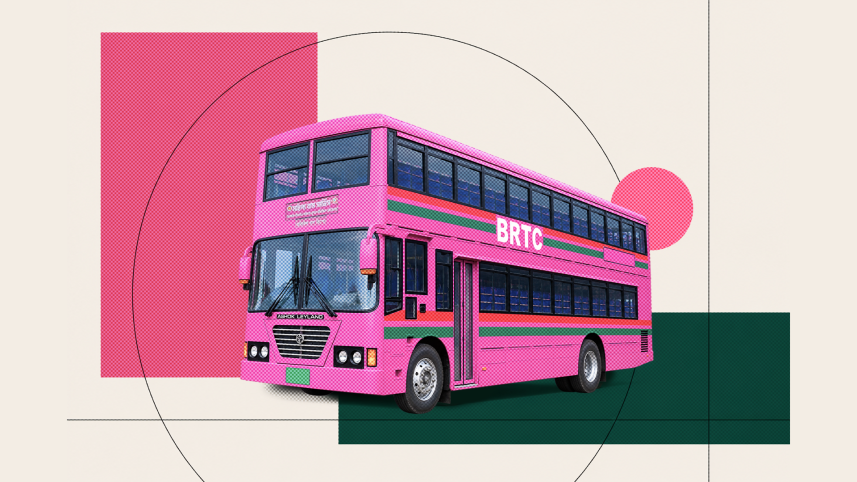
On paper, the Pink Bus is a good idea.
Research has repeatedly shown how unsafe public transport can feel for Bangladeshi women, with harassment, overcrowding and inappropriate physical contact among the reasons many avoid buses altogether.

A women-only bus, operated by women drivers and conductors, could give women who routinely face harassment on public transport a safer and more comfortable way to travel.
But there is a bigger problem that nobody seems to be talking about: What happens to the buses that are not pink?
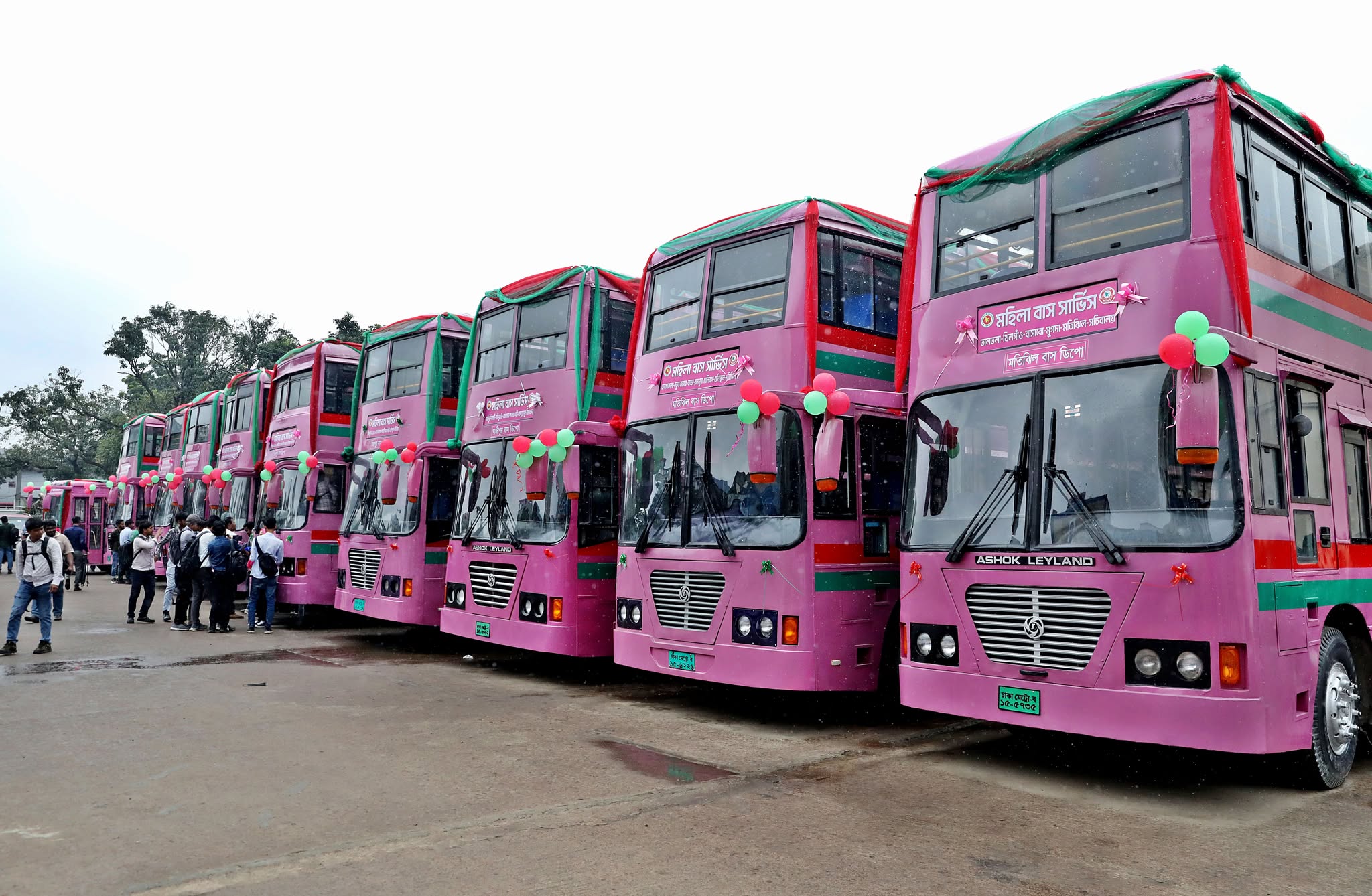
It is important, because the number of Pink Buses being introduced is nowhere near enough to serve the growing number of women who have to leave home every day and depend on public transport.
Even with a women-only service, thousands of women will still have to use ordinary buses.
That is why we need to think about what happens to the buses that are not specifically for women.
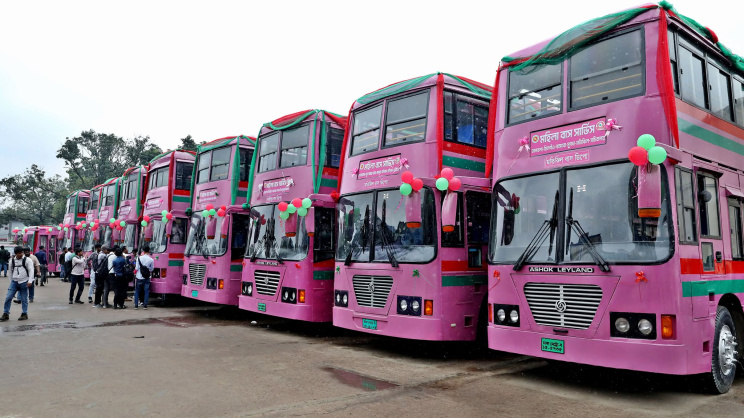
In a deeply patriarchal society like ours, the introduction of a women-only bus could unintentionally create a new social rule: if a bus is not designated exclusively for women, it is for men.
It is not difficult to imagine how this will play out from tomorrow. A woman boards a regular bus and a male driver, helper or passenger tells her: “What are you doing on this bus? Go take the Pink Bus.”
That may sound absurd. But we already have a version of this mentality.
On ordinary public buses, men frequently treat seats not reserved for women as if they automatically belong only to men. Even when a woman has every right to sit there, she can be made to feel as though she is occupying someone else's space.
We saw a similar mindset recently when a Dhaka University teacher described the coaches of the metro rail other than the women's compartment as “men's compartments”.
If a university teacher casually frames public transport in such explicitly gendered terms, it is not difficult to imagine how the idea could spread among ordinary commuters.
And this is where the Pink Bus could become counterproductive.
Many women already avoid buses because they do not feel safe. Instead, they pay substantially more for CNGs, rickshaws and ride-sharing services.
If regular buses become even more socially hostile to women after the introduction of a women-only alternative, more women could simply stop using them.
A service introduced to improve women's mobility could end up further segregating public transport and making mobility more expensive for those who cannot access the Pink Bus.
There is another risk here.
Following the introduction of women-only spaces, some may shift the burden of avoiding harassment onto women, asking why they chose a regular bus when a Pink Bus was available to them.
 For all latest news, follow The Daily Star's Google News channel.
 In that environment, addressing harassment on ordinary buses and in other public spaces could become less of a priority, because women are seen as having been given an alternative.
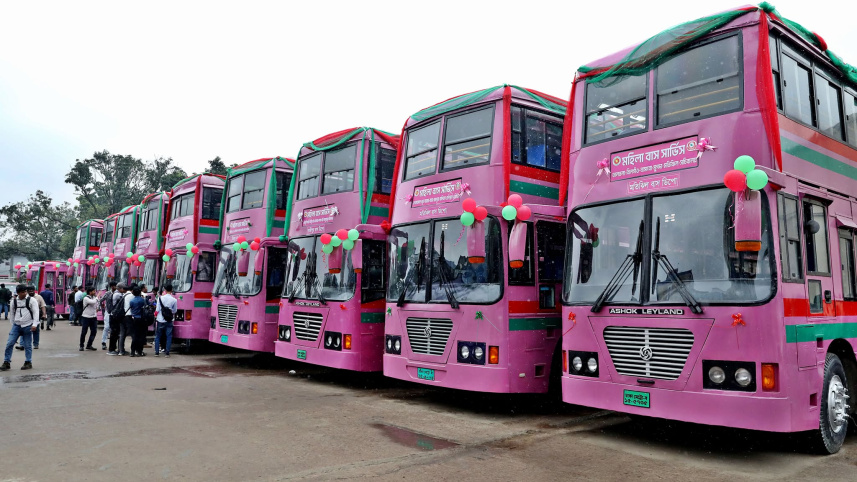
None of this means the Pink Bus should not exist. It should.
But it must be presented as an additional choice, not as a separate transport system women are pressured to use by default.
The government also needs to fix all the buses on our streets to make them women-friendly, enforce laws against harassment, hold drivers and helpers accountable, improve lighting and CCTV coverage, establish functioning complaint mechanisms and provide gender-sensitivity training for transport workers.
The World Bank has similarly called for measures including gender-sensitivity training for drivers, helpers and conductors, CCTV, improvements to vehicle design and preferential seating for women.
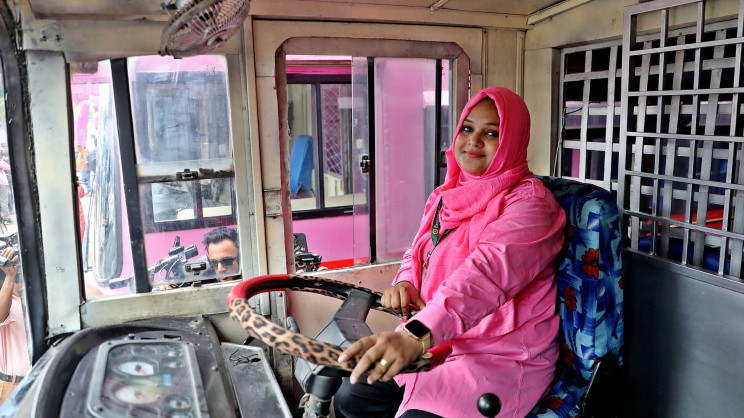
The ultimate objective should not be to create a pink corner of public transport where some women can feel safe.
It should be to make all public transport safe enough that women do not need one.
The Pink Bus can be a useful beginning. But it cannot carry every woman who needs to commute, and it must not become an excuse to make regular buses even less welcoming to women.
If that happens, Bangladesh will not have solved the challenges women face in getting around. It will simply have painted one small part of a much larger issue pink.
Comments