


Urban planners urge long‑term strategy to make Dhaka liveable
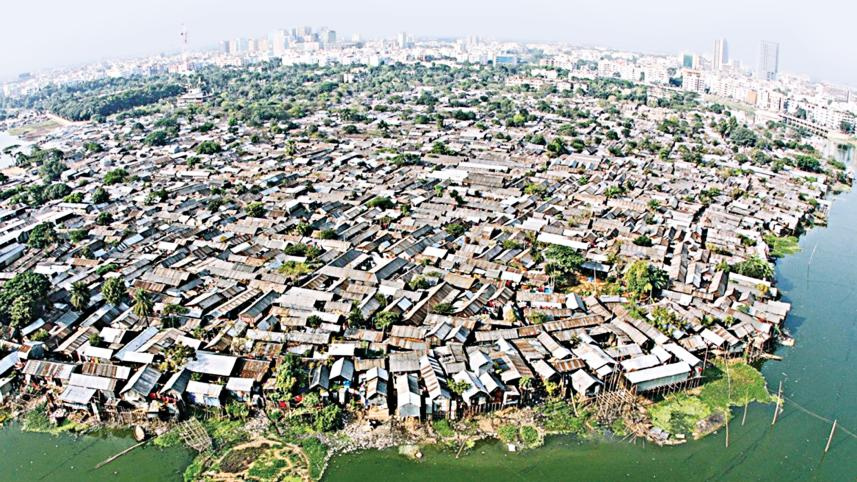
Urban planners today called for long‑term, coordinated planning to tackle Dhaka’s problems, including pollution, waterlogging and traffic congestion.
They urged the continuation and full implementation of existing plans regardless of political or administrative changes, warning against altering or cancelling approved frameworks for commercial or personal gain.

They called for reviewing plans every five years, retaining core goals and including input from planners, experts, agencies and local stakeholders.
They made the demands at a press conference titled, “Liveability of Dhaka City: Challenges and a Roadmap for Planned Solutions”, at the BIP Conference Hall at Planners Tower in the capital. The Bangladesh Institute of Planners (BIP) organised the event.
Among its seven demands, BIP urged that no project be undertaken in wetlands, farmland, water bodies or other sensitive areas unless consistent with approved plans. Development, it said, should follow long‑term, plan‑based strategies that balance future urban and regional needs, environmental protection and the interests of future generations.
BIP President Dr Muhammad Ariful Islam said Dhaka’s poor global liveability ranking was a key reason for raising the issue.
Ariful stressed the need to preserve green and open spaces, noting that only about 8 percent of Dhaka’s nearly 100-square-kilometre area is green space, which he said was insufficient for a liveable city.
Dhaka ranks 171st among 173 cities, he said, describing the situation as deeply concerning. Transport, air and noise pollution, waterlogging, green and open spaces, public health, safety and social inclusion are all directly linked to urban planning, he added.
“Dhaka is becoming increasingly unliveable because planned infrastructure and services have not kept pace with rapid urbanisation,” he said.
Ariful said Dhaka also ranks 18th among the world’s most polluted cities. He noted that the capital once had around 56 canals, but 26 no longer exist, while 48 areas have been identified as vulnerable to waterlogging. Unplanned urbanisation, encroachment on canals and water bodies, and inadequate drainage are among the main causes, he said.
He also raised concerns over noise, visual and light pollution, saying unplanned signboards, billboards and lighting were damaging the city’s aesthetics, environment and road safety.
On transport, he said traffic congestion causes a loss of 50 lakh working hours every year, resulting in an estimated economic loss of Tk 37,000 crore.
Planner Dr Adil Muhammed Khan said the government should assess what it had actually done over the past six months to improve the city’s liveability and how effective and visible those initiatives had been.
He expressed concern over occupied footpaths, illegal businesses, extortion and political influence in urban management. Regarding canal restoration, he said the initiative was positive but authorities must identify who had occupied the canals and how the encroachment occurred.
He also called for an investigation into the failure to implement the Detailed Area Plan (DAP) and criticised the lack of effective consultation with planners.
He also said there were insufficient concrete initiatives to preserve and reopen parks and playgrounds.
BIP General Secretary Prof Dr Md Mosleh Uddin Hasan said the Gazipur-Dhaka BRT should be launched quickly, with additional BRT routes considered for Dhaka. Authorities, he said, should focus not only on large projects but also on smaller, urgent urban problems.
Planner AKM Riaz Uddin said Dhaka’s liveability problems could not be solved without addressing development gaps across the country. People continue to move to the capital because other regions lack employment, services and opportunities, he said.
 For all latest news, follow The Daily Star's Google News channel.
Comments