


Corals show El Nino intensifying as planet warms: study
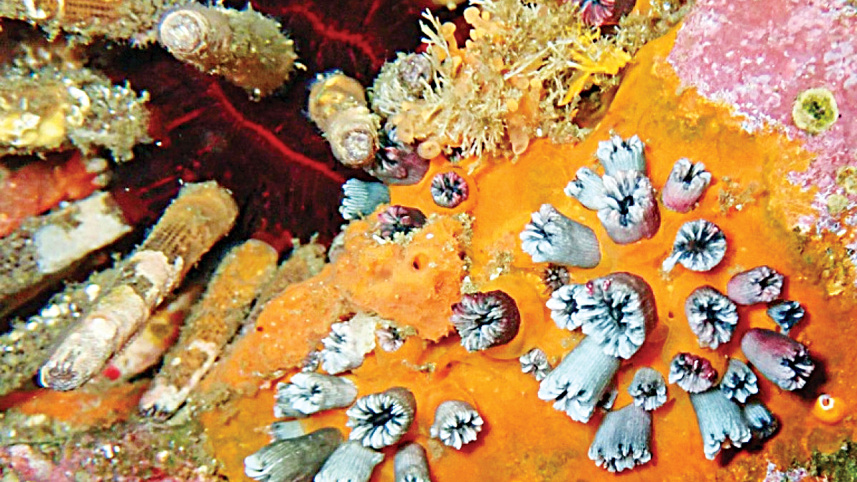
Coral skeleton records stretching back 1,000 years show El Nino episodes are intensifying as the planet warms, carrying major implications for a future under climate change, according to a new study Thursday.
Published in Science, the research comes at a timely moment: a strengthening El Nino in the equatorial Pacific is projected to become the strongest ever recorded, surpassing other major years including 2015, 1997, and 1982.

Expected to peak towards the end of the year and bring record global heat in 2027, its consequences are already being felt from drought-hit Central America to Indonesia where it is fueling intense wildfires.
“We didn’t know that before this study, but now we know that in the Eastern Pacific, these very strong El Ninos are unusual in the context of the last 1,000 years, and stand well above the pre‑industrial level,” the paper’s first author Julia Cole, a professor at the University of Michigan, told AFP.
Scientists broadly agree that the globalised weather impacts of El Nino stack on top of climate change -- exacerbating rainfall in some places, drought and heat in others.
But there has not been a similar consensus on whether a warming planet is itself amplifying the El Nino-Southern Oscillation (ENSO) -- the cycle of warm El Nino and cool La Nina episodes in the tropical Pacific, responsible for drastic variation in global weather patterns.
Although there have been many strong El Ninos in the late 20th and early 21st century, the satellite record only goes back until the early 1980s and there is sparse ship-based data before that, explained Cole.
 For all latest news, follow The Daily Star's Google News channel.
Comments