


Save Dhaka from recurring waterlogging
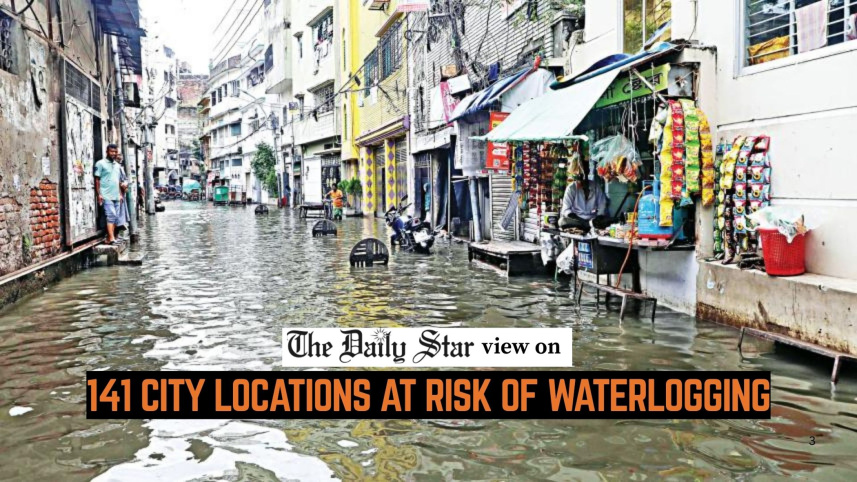
It is completely unacceptable that after years of projects, promises, and public spending, Dhaka still remains unprepared to tackle waterlogging. With the monsoon season approaching, the city authorities have identified 141 locations vulnerable to waterlogging—108 in Dhaka North (DNCC) and 33 in Dhaka South (DSCC). While identifying these hotspots is a necessary first step towards reducing the risks, it also reveals the long-standing failure of the authorities to deliver a lasting solution.
As urban planners have pointed out time and again, stormwater cannot drain properly in Dhaka because secondary and tertiary drainage channels remain poorly connected to the city’s primary discharge points. In many areas, there is simply no effective route for water to flow into rivers or retention ponds. Even where canals have been partially restored, fresh encroachment and poor maintenance continue to undermine progress. DNCC officials have admitted that several areas, including Ashkona, Dakshinkhan, and Uttarkhan, lack proper drainage outlets because canals and wetlands have been encroached upon. DSCC officials, meanwhile, have linked the worsening waterlogging in New Market and surrounding areas to blocked drainage routes. Unfortunately, despite being fully aware of the causes, the authorities’ response remains largely reactive and fragmented. Short-term steps such as cleaning drains, excavating canals, deploying pumps, and setting up emergency response teams may ease immediate grievances, but they are no substitute for a comprehensive and sustainable drainage plan.

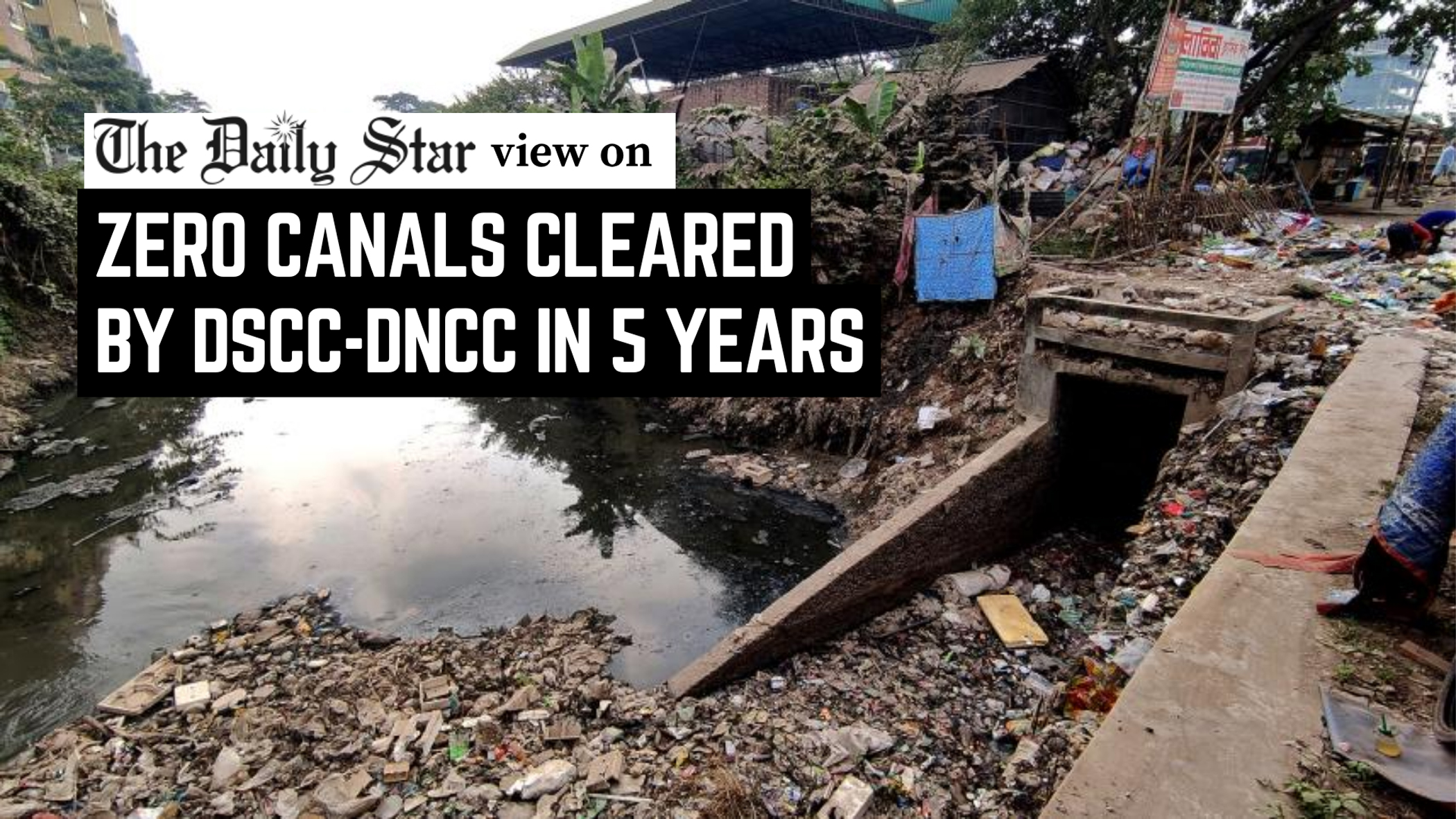
And city residents are paying a heavy price for this failure. Even short spells of rainfall now routinely inundate roads, disrupt traffic, and make daily commuting miserable. Waterlogging has already become common in many parts of the city even before the monsoon begins, increasing the risk of dengue outbreaks. At the same time, pre-monsoon road digging has added to public suffering, making everyday movement across the city even more difficult. Meanwhile, the DSCC has proposed another Tk 250-300 crore project to improve drainage connectivity in Dhanmondi, New Market, and Bakshibazar areas, while DNCC has set a target of bringing Mirpur under near zero-flooding conditions. The question, however, is whether these initiatives will finally deliver results.
Dhaka’s waterlogging crisis cannot be resolved through isolated projects undertaken separately by the two city corporations. An integrated drainage master plan, based on scientific assessment, proper canal restoration, and coordinated water management across the entire city, is urgently needed. The authorities must prioritise reconnecting canals and drainage lines, recovering encroached waterways and wetlands, and ensuring regular maintenance of the drainage network. Public awareness campaigns are also essential to prevent indiscriminate dumping of waste into drains and canals. Above all, policymakers must recognise that waterlogging is a major urban governance failure that requires a permanent solution.
 For all latest news, follow The Daily Star's Google News channel.
Comments