


Good teaching still matters, but it’s no longer enough


Student satisfaction is still one of the most widely used indicators of education quality, shaping expectations for what effective teaching must deliver. There’s a long-held belief in this regard about three core attributes of good education: that if teachers are knowledgeable, teach well, and connect meaningfully with students, satisfaction will follow. That belief is not wrong. But today, it is no longer enough.
From over two decades of research on student satisfaction, evidence suggests that there is a decoupling underway in the education landscape: the relationship between the three core attributes and student satisfaction has weakened substantially, not because these attributes have lost their intrinsic value, but because the locus of value creation in higher education has fundamentally shifted from an instructor-centred model to a broader, more complex ecosystem-based model.

In Bangladesh, for example, the classroom is no longer the sole centre of learning. Students today are shaped by a widening and expanding ecosystem that extends far beyond the teacher. Private coaching still plays a significant role, especially in Bangladesh’s dispersed colleges under the National University system, in translating classroom material into exam success, often becoming the space where students feel they truly “learn.” YouTube lectures, Facebook groups, Massive Open Online Courses (Coursera, edX, Udemy, Khan Academy), and informal peer networks have also become integral to how students understand and pursue their coursework. AI (ChatGPT, Claude, Google, etc.) has entered public and private universities to “assist” students in thinking and writing creatively, but also often to shortcut the process!
At the same time, institutional systems—registration processes, advising structures, career counselling, mental health support, cocurricular and extracurricular activities, campus facilities—also shape students’ daily experience in ways that influence how they ultimately evaluate their education.

This broader context plays out differently across public and private universities, but the underlying pattern is similar. In many public universities, large class sizes and limited resources mean that even highly capable teachers must work within constraints that push students towards external support systems that often become essential complements to formal instruction. In private universities, where smaller class sizes and more structured teaching environments are common, students increasingly evaluate their experience through a different lens that values service quality, administrative responsiveness, and, crucially, career outcomes. In both settings, the teacher remains important, but no longer the singularly decisive factor.
When we observe students over time, a clear pattern emerges. Earlier, core teaching practices used to strongly predict satisfaction. Over time, that relationship has become weaker. Today, even strong teaching will not reliably guarantee satisfaction. This does not mean that teachers are doing less, although some in fact are skimping on diligence; it means that students are expecting and experiencing more. Their judgments are shaped not only by what happens in the classroom, but also by whether their degree feels relevant to the job market, whether institutional systems are efficient and supportive, and whether the overall experience justifies the investment they are making in their education.
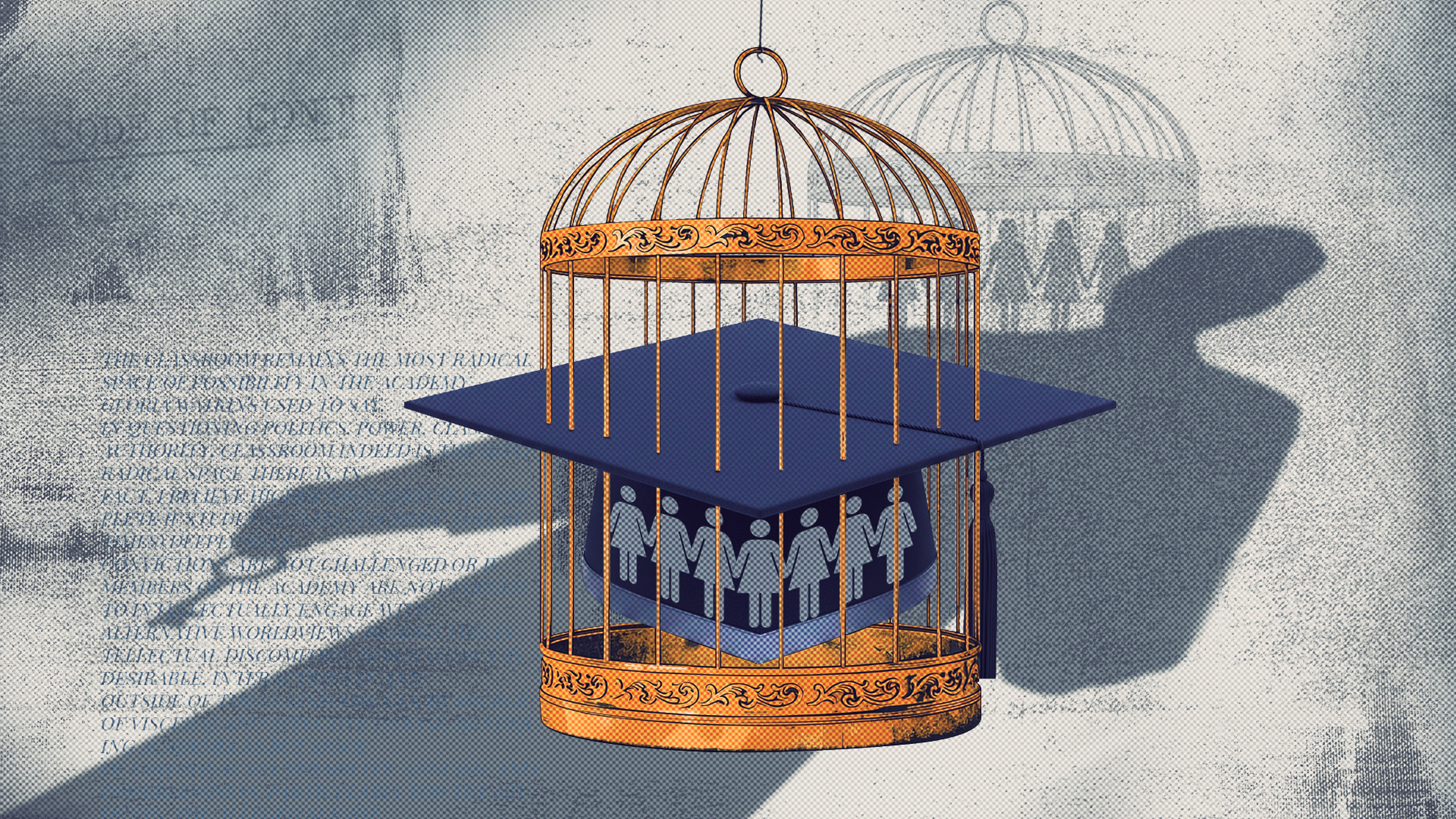
One unique dimension of Bangladeshi education is the entrenched coaching culture. When students come to rely on external coaching to perform well in a course, the perceived value of classroom teaching inevitably changes. A teacher may be competent, even excellent, but if the “real learning” is seen to occur outside the classroom, the link between in-class teaching and satisfaction weakens. This creates a quiet paradox in the system: students may respect their teachers, yet feel dissatisfied with their educational experience.
We must therefore be clear about what is changing and what is not. Good teaching remains indispensable. Without it, the system would quickly collapse. But it is no longer sufficient on its own. A strong and well-crafted lecture cannot compensate for administrative inefficiencies, outdated curricula, weak links to the job market, or a system that does not adequately support students as they navigate their academic journey. Students today are not only evaluating their teachers; they are evaluating their entire educational experience.
This shift calls for a rethinking of the teacher’s role. The teacher is no longer the sole source of knowledge, but they are also not marginal. Instead, the teacher can serve as a central node within a wider network of learning, one that includes technology, peers, emerging institutions, and external influences. The challenge is not to resist this change, but to engage with it by integrating new forms of learning into teaching, to connect course content more explicitly to real-world applications, and to recognise that learning now unfolds across multiple, overlapping spaces.
At the same time, the burden of student satisfaction can no longer rest solely on the shoulders of teachers. Universities—both public and private—must take responsibility for the full ecosystem in which learning takes place. Academic quality must be matched by administrative efficiency, relevant curricula, meaningful career pathways, and robust student support systems. Improving teaching is necessary, but improving the academic ecosystem has become equally critical. Bad political influence (in teacher selection, promotion, and administrative positions) is also an indirect but potent disruptor of student satisfaction.
The emerging truth is important for academia: good teaching, often emphasised and driven by external intervention (Higher Education Quality Enhancement Project, Higher Education Acceleration and Transformation, Institutional Quality Assurance Celland other agency programmes), has not become less important—but it has become less sufficient. Recognising this is important as it is an invitation to rethink how we design and deliver education in Bangladesh.
In the end, the goal is not simply to teach better, but to ensure that students learn more effectively and are better prepared for the world beyond the classroom.
Dr Syed Saad Andaleeb is distinguished professor emeritus at the Pennsylvania State University in the US, and former vice-chancellor of BRAC University.
Views expressed in this article are the author's own.
Follow The Daily Star Opinion on Facebook for the latest opinions, commentaries, and analyses by experts and professionals. To contribute your article or letter to The Daily Star Opinion, see our guidelines for submission.
 For all latest news, follow The Daily Star's Google News channel.
Comments