


Violent crime cannot become the norm
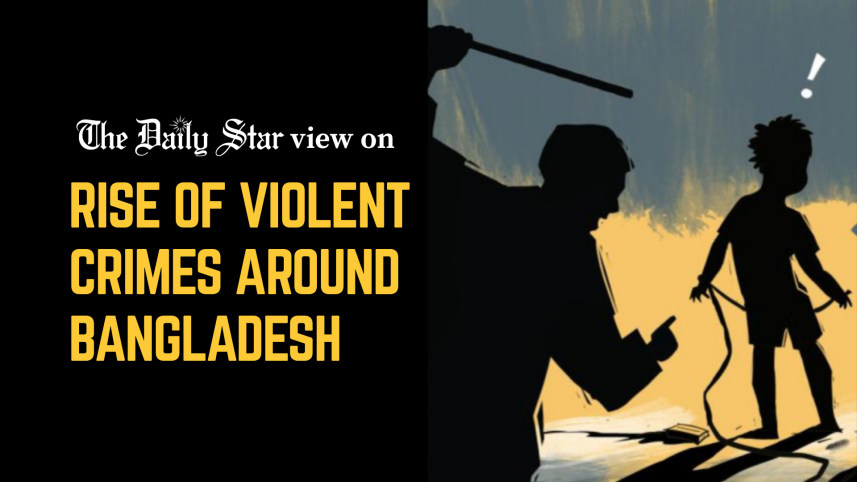
It is deeply distressing to see how violent crimes continue to take place around the country despite the government and police reassuring us that steps are being taken to curb the menace. Two reports published by this daily on Sunday reveal something disturbing: killing—often in broad daylight—seems to be gradually becoming commonplace. Meanwhile, ordinary people have been living in constant fear for their safety. It makes us wonder: how much longer must we endure this?
According to one of the reports, police reported four murders and the recovery of four bodies in separate incidents taking place in four districts, between Friday evening and Saturday afternoon. The victims include a 40-year-old poultry trader stabbed to death by unidentified criminals, a 70-year-old banana trader who was hacked to death by his son-in-law, a 25-year-old man killed allegedly by his cousin over land dispute, and a 55-year-old auto-rickshaw driver whose throat was allegedly slit to steal his vehicle. Meanwhile, the other report describes how a 56-year-old school principal fell to her death from her rickshaw near the Jatiya Sangsad building when muggers snatched away her handbag. These reports come on the back of the horrifying murder of a couple and their two children in Rangpur, discovered just over a week ago.


In Dhaka and around Bangladesh, law and order has been in a precarious state for more than two years. When BNP came to power through the February national election, the general expectation was that it would fix the situation and bring the much-awaited relief to the people who have been living in fear for months. Unfortunately, that has not been the case. Police’s own statistics show that at least 915 murder cases were filed in the country between March and May this year. More recently, an overview of law and order in the first six months of the BNP government revealed a 2.5 percent rise in the number of criminal cases from those recorded during the same period last year, with a hint that the actual scenario may be worse.
A recent comment by the home minister only adds to the worry. He said that the ongoing energy crisis and its impact on electricity and industrial production may further destabilise the situation, adding that the police have been instructed to stay alert to prevent further deterioration. But can the police function to their full capacity when fear and uncertainty still grip them? Clearly not, judging by the recent trends of crimes and police activity.
To overcome this situation, we strongly urge the government to revisit the police reform recommendations. Without meaningful reform, the institutional weaknesses within the police and other agencies cannot be eradicated. And without a strong and accountable police force, crimes may not go down anytime soon. Ensuring basic security for the people must be among the government’s top priorities right now. Crime cannot simply become another risk that citizens learn to live with.
 For all latest news, follow The Daily Star's Google News channel.
Comments