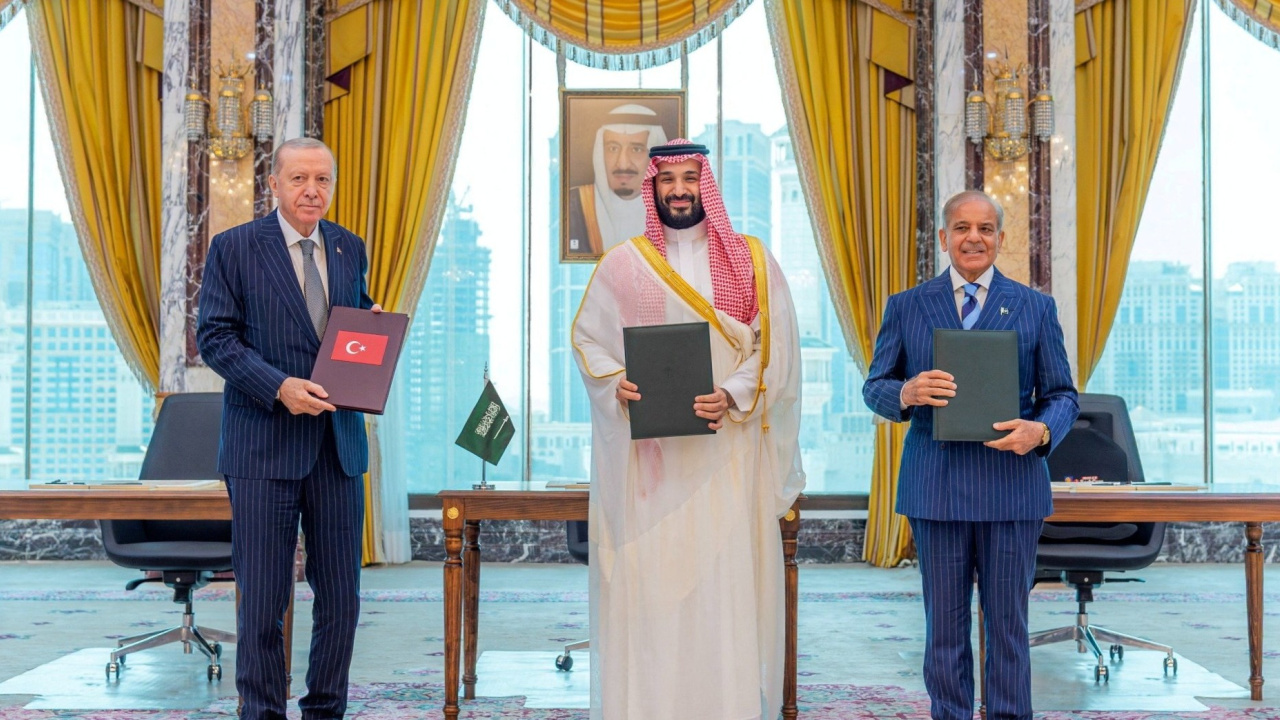
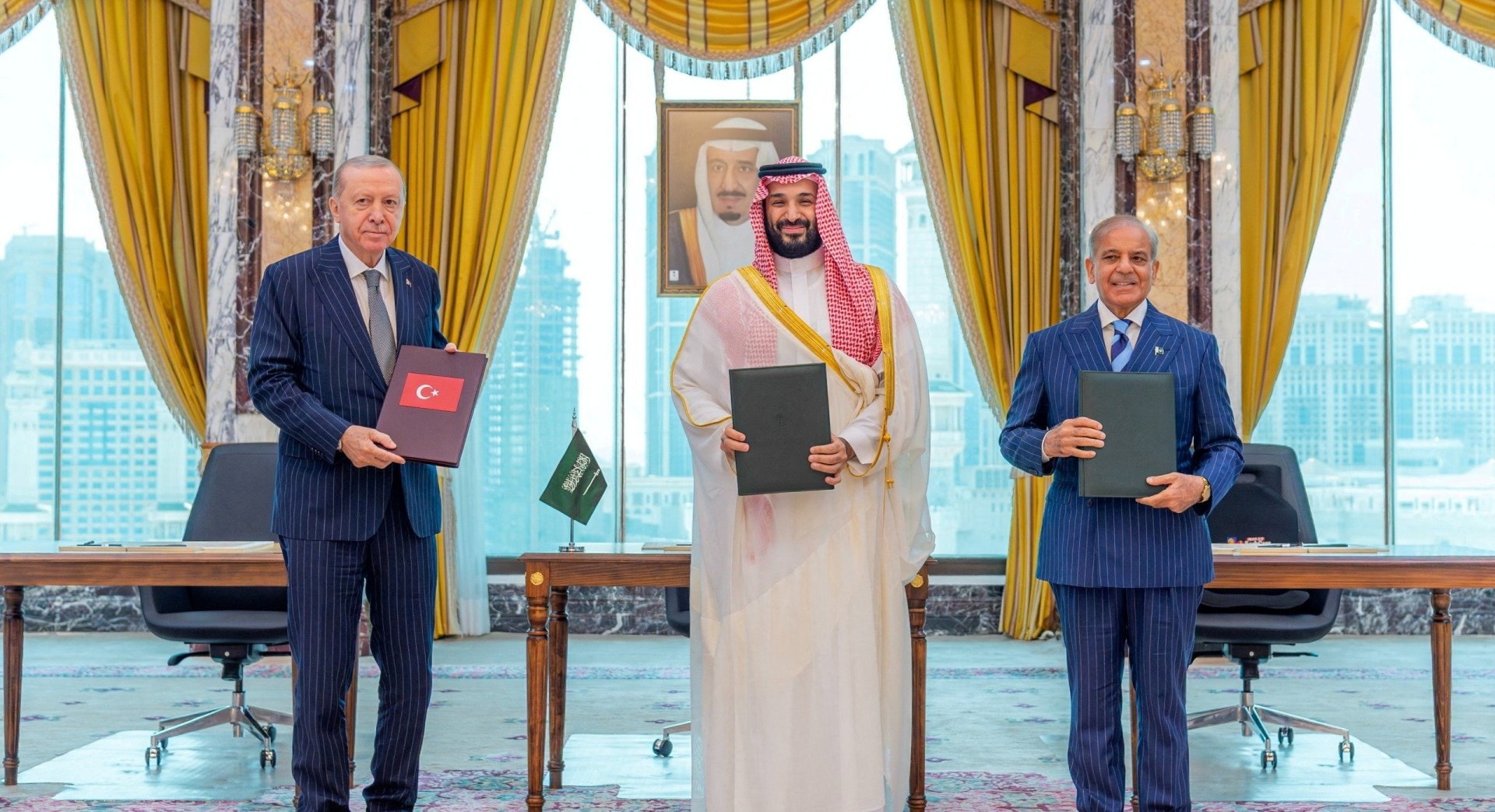
The Mecca Pact: Deterrence, Israel, and the new Gulf security equation

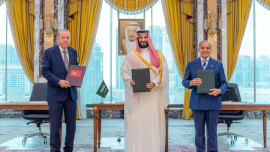
The joint defence agreement signed in Mecca by Saudi Arabia, Türkiye and Pakistan raises an immediate question: why was a new pact necessary when Pakistan and Saudi Arabia already had a longstanding defence relationship?
Some assume the pact is aimed at Iran. I do not share that view. My understanding is that Saudi and Pakistani interlocutors spoke with Tehran before the signing and conveyed that the agreement was not directed against Iran. There have also been unconfirmed media reports that Iran was invited to join, though Tehran has neither confirmed nor denied this.
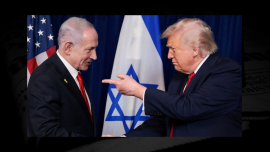
The deeper reason is that the Gulf’s security equation has shifted. Many Gulf states and Türkiye increasingly view Israel as an unpredictable “lone wolf” rogue actor, driven by openly stated territorial ambitions to expand its current frontiers into a “Greater Israel” configuration, and willing to act beyond the limits of, and even in defiance of, American restraint. In this context, Riyadh, in consultation with Islamabad, appears to have brought Ankara into a wider deterrent framework.
For decades, the Gulf monarchies relied on the United States as their principal external security guarantor. American bases were meant to protect small, wealthy states with limited indigenous defence capacity. At the same time, these bases enabled Washington to project power, protect its own strategic assets and secure the economic supply lines on which much of the world depends.
Relations between Iran and the Arab Gulf states remain historically complex, shaped by Persian-Arab rivalry, Sunni-Shia tensions and competing regional ambitions. For years, many Gulf rulers saw Iran—not Israel—as the more immediate threat and trusted Washington to contain it.
The deeper reason is that the Gulf’s security equation has shifted. Many Gulf states and Türkiye increasingly view Israel as an unpredictable “lone wolf” rogue actor, driven by openly stated territorial ambitions to expand its current frontiers into a “Greater Israel” configuration, and willing to act beyond the limits of, and even in defiance of, American restraint. In this context, Riyadh, in consultation with Islamabad, appears to have brought Ankara into a wider deterrent framework.
That assumption has now been shaken to the core. Iran has palpably demonstrated that it can make the American military presence in the Gulf costly and vulnerable by threatening or striking infrastructure at will, including radar, air-defence and logistical facilities. Tehran has also warned Gulf states that allowing their territory to be used for attacks on Iran could invite retaliation against their vital energy and public infrastructure, which is critically important for the survival not just of their current ruling regimes but of their states themselves.
This has forced Gulf leaders to reassess their survival strategy. During the conflict, Iranian diplomacy intensified with Moscow and Beijing. China called for a comprehensive Gulf security architecture, while Russia deepened strategic coordination with Tehran. The old framework, in which the United States functioned as the dominant guarantor, is being robustly contested by a new and more multipolar order.
From the beginning of this conflict, I have argued that Iran, drawing on its ancient civilisational memories and cultural resilience, could emerge as the dominant regional power, compelling neighbouring states to recalibrate their security policies around Tehran. I still see that scenario unfolding.
However, a most dangerous wild card still exists—the reported contemplation of using tactical nuclear weapons against Iran, since conventional military power has so abjectly failed and American and Israeli arsenals have been perilously depleted. Should America or Israel desperately resort to using tactical nuclear weapons against Iran, it could very likely tip the region into uncontrollable escalation and accelerate nuclear ambitions elsewhere.
Short of that, Iran may emerge stronger. Israel does not want this. It regards Iran as an existential threat and increasingly views Türkiye’s expanding regional role, especially in Syria, as a serious security challenge.
Türkiye now finds itself increasingly at odds with Israeli intentions. Tensions in Syria already point to the risk of direct confrontation. Ankara can no longer assume that Israel will behave as a restrained or rational actor; nor can it assume that NATO solidarity would operate normally if Israel and Türkiye came to blows. The United States, because of its deep and abiding political attachment to Israel, would be pulled towards Israel rather than its NATO ally. NATO’s other European members are also likely to weigh in more towards Israel than come to the aid of fellow member Türkiye, completely upending NATO’s continuing relevance or viability.
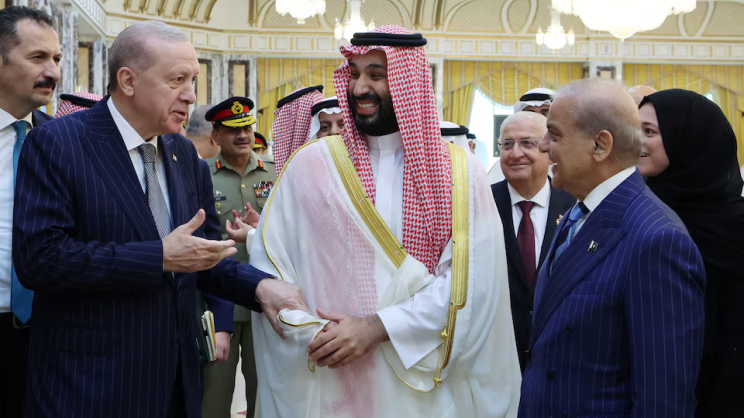
This is where the Mecca Pact assumes significance. It is best understood as an insurance policy for a new security environment in which Iran may be neither adversary nor ally, but an inescapable and powerful state with which Gulf states must deal and come to terms. Better, therefore, to engage Tehran from a position of balance than from one of hostility and dependence.
Saudi Arabia, Qatar and others are already talking to Iran, encouraged by China and Russia. These conversations have elevated Iran’s geopolitical profile. Alongside Iran’s ties with Beijing and Moscow, the Saudi-Turkish-Pakistani arrangement signals a new regional configuration.
This is why I believe the pact is directed less against Iran than against unpredictable Israeli action. Its purpose is deterrence: to discourage sudden moves that could destabilise the region. The fact that a Houthi attack on a Saudi asset after the pact did not trigger alliance retaliation further suggests that the agreement was not designed as an anti-Iranian instrument.
The three partners bring different strengths and vulnerabilities.
Saudi Arabia is the wealthiest of the three and can finance defence and strategic investment. Yet its oil-dependent economy and energy infrastructure remain exposed, and its armed forces are relatively small.
Türkiye, by contrast, has one of NATO’s largest standing armies and an advanced defence-industrial base. But NATO membership may not protect it in a confrontation involving Israel. Ankara therefore has reason to seek additional deterrence outside the traditional alliance structure.
If Iran emerges as the region’s major power, Bangladesh will need constructive ties with Tehran. If Türkiye, Saudi Arabia and Pakistan shape a parallel security bloc, we will also need working relations with them.
Pakistan adds the third pillar: a longstanding security relationship with Saudi Arabia and the only known nuclear capability among Muslim-majority states. That nuclear lever, even if never explicitly invoked, strengthens deterrence and may extend political reassurance to Türkiye as well.
Seen together, the Saudi purse, Turkish military capacity and Pakistani nuclear deterrent form a defensive alliance meant to discourage adventurism, especially by Israel. It also reflects the recognition that Iran, backed by Russia and China, cannot simply be contained through the old American security umbrella.
For Bangladesh, the lesson is cautionary, with the regional picture continuing to be kaleidoscopically fluid, its final shape still highly unpredictable. Our best option is to keep all doors open, maintain good bilateral relations with all sides, and avoid any arrangement that could place us disastrously on the wrong side of history. Such a mistake would be strategically costly and would worsen socio-economic pressures at home.
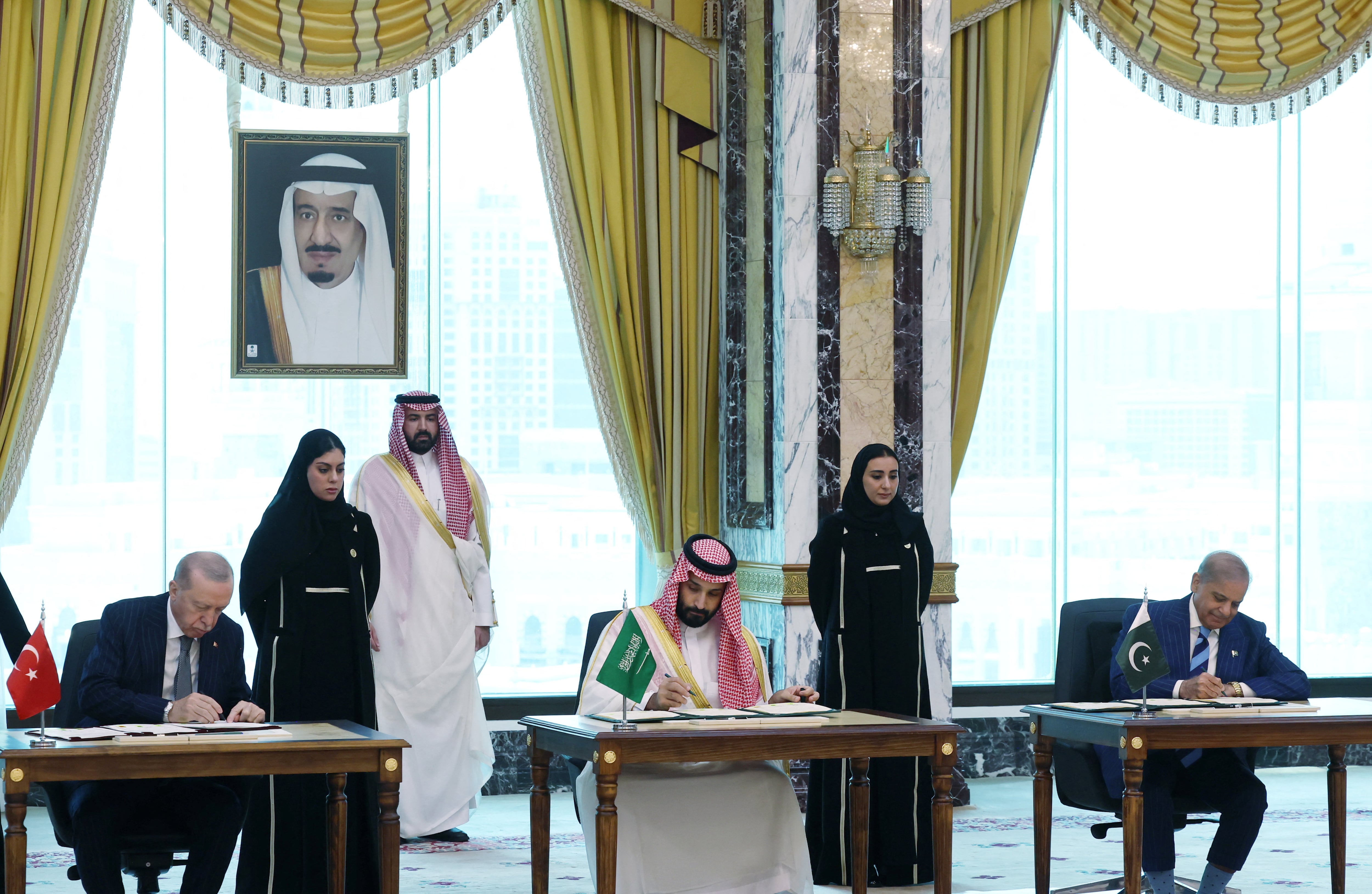
If Iran emerges as the region’s major power, Bangladesh will need constructive ties with Tehran. If Türkiye, Saudi Arabia and Pakistan shape a parallel security bloc, we will also need working relations with them.
We are not so powerful or richly endowed that we can afford rigid alignments. Bangladesh’s safest course is strategic autonomy and active neutrality: not joining either side when partners are in conflict, while continuing to engage constructively with all to safeguard our own national interest.
In a Middle East entering a new and uncertain phase, that is how Bangladesh can best protect its interests while preserving room for flexibility of action.
Ambassador (Retired) Tariq Karim, a former career diplomat who served as Ambassador/High Commissioner of Bangladesh to Iran and Lebanon, South Africa, the United States and India. He is currently Adviser to the School of Liberal Arts and Social Sciences and the Bay of Bengal Studies Centre at Independent University, Bangladesh, and concurrently a Distinguished Visiting Research Fellow at the Institute of South Asian Studies at the National University of Singapore.
The article was transcribed by Ystiaque Ahmed of Slow Reads.
Send your articles for Slow Reads to slowreads@thedailystar.net. Check out our submission guidelines for details.
An anti-West network is emerging: How should Bangladesh respond?

What Nepal’s flood devastation means for Bangladesh, India and China
Five reasons why Bangladesh shouldn’t join the Mecca Pact
Why Gaza peace deals keep falling apart
Rohingya genocide: Will the ICJ verdict bring justice?
Should Bangladesh join the Mecca Pact?

Documenting Rohingya history / Rohingya repatriation needs more than diplomacy

Nine years on, Rohingya refugees need more than shelter
Myanmar’s partial Rohingya repatriation plan: Another attempt to mislead Bangladesh?