An anti-West network is emerging: How should Bangladesh respond?

Military, economic and diplomatic ties among China, Russia, Belarus, Iran and North Korea have deepened considerably in recent years. Yet despite their growing cooperation, there is little evidence to suggest that these countries are forming an alliance.
Instead, they are developing systems through which they can reinforce one another: trade networks that blunt the impact of sanctions; payment mechanisms that reduce reliance on the dollar; military supply chains; diplomatic support at the United Nations; surveillance and policing systems; and a conception of sovereignty that seeks to insulate states from outside interference.
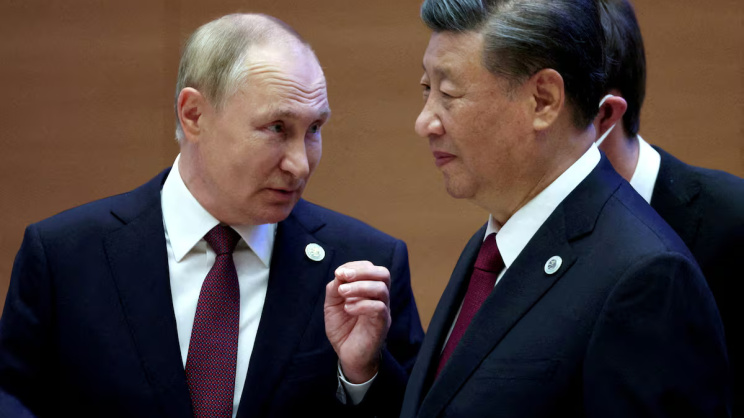
The China-Russia relationship illustrates this dynamic well. The leaders of the two countries describe their relationship as a "comprehensive strategic partnership", coordinate their positions on global governance and conduct joint military exercises. Since Russia's full-scale invasion of Ukraine, China has become an indispensable partner for Moscow. According to Chinese customs data, bilateral trade reached around $234 billion in 2025, slightly below the previous year's record but far above pre-war levels. Russia sells oil, gas and other commodities to China, often at discounted prices, while China supplies Russia with machinery and industrial inputs.
This does not mean that Beijing endorses every Russian action. China denies participating in the war and maintains that it does not provide lethal weapons to Russia. Nevertheless, the US and the EU have imposed sanctions on Chinese- and Hong Kong-based companies accused of supplying dual-use goods to Russia's military-industrial sector.
The China-Russia relationship illustrates this dynamic well. The leaders of the two countries describe their relationship as a "comprehensive strategic partnership", coordinate their positions on global governance and conduct joint military exercises. Since Russia's full-scale invasion of Ukraine, China has become an indispensable partner for Moscow. According to Chinese customs data, bilateral trade reached around $234 billion in 2025, slightly below the previous year's record but far above pre-war levels.
While China's support for Russia has its limits, Moscow's ties with Iran and North Korea involve more direct forms of military cooperation. Russia's use of Iranian-designed Shahed drones illustrates the extent of these ties, although Tehran maintains that it supplied some drones before 2022 and denies making subsequent deliveries.
In the case of North Korea, what began with reports of Pyongyang supplying ammunition and ballistic missiles to Russia has since developed into much broader military cooperation. It is alleged that Pyongyang has also deployed troops to fight alongside Russian forces.
These relationships serve the interests of all the countries involved. Russia gains relatively inexpensive military supplies, drones and manpower; Iran earns revenue, acquires battlefield experience and potentially gains access to advanced military technology; while North Korea receives food, fuel, foreign currency and possibly technical expertise, while also reducing its diplomatic isolation. Belarus, meanwhile, provides Moscow with territory, logistical facilities and diplomatic support. Taken together, these exchanges weaken the effectiveness of sanctions and enable each government to withstand pressures that would be considerably more difficult to absorb alone.
Financial and commercial adaptations reinforce this trend. Russia increasingly pays for imports in roubles and yuan, promotes its Mir payment system, and relies on third-country banks, intermediaries, cryptocurrencies and a so-called shadow fleet to sustain its trade. Iran uses its long-established shipping networks, the reflagging of vessels, ship-to-ship transfers and intermediaries to sell oil, a significant share of which goes to China. North Korea, meanwhile, relies on informal procurement networks and cyber activities to secure resources and circumvent restrictions. These activities are not centrally directed but form overlapping networks of brokers and jurisdictions, creating an ecosystem of evasion rather than a coordinated master plan.
Beyond military and economic cooperation lies an important political and technological dimension. Chinese companies now export cameras, telecommunications systems, data platforms and "safe cities" packages across much of the developing world. In some countries, these technologies have been associated with intrusive surveillance and tighter control over digital space. Yet the technology itself is not inherently authoritarian. Similar systems are produced elsewhere and can legitimately enhance urban security. Their political consequences depend less on the hardware than on legislation, institutional oversight, procurement rules, data governance and the authorities that operate them.
Cooperation also extends into policing, cybersecurity and political governance. Governments exchange practices on content regulation, cyber policy, protest management and the regulation of civil society. State media reinforce one another's narratives, particularly on Ukraine, sanctions and what they describe as Western double standards. At the United Nations, China and Russia frequently use their permanent seats on the Security Council to block initiatives they regard as intrusive, while Belarus, Iran and North Korea generally align with Russia on Ukraine-related votes. Even so, the pattern is not one of automatic solidarity.
Unlike NATO, they lack a formal organisational structure, centralised command or an integrated economic area. China is vastly stronger economically than the others and remains cautious about becoming entangled in their conflicts. It competes with Russia for influence in Central Asia, drives hard bargains in energy negotiations and continues to value trade with Europe and the United States far more than trade with Russia alone. Moscow's growing dependence on North Korea also creates discomfort for Beijing, whose overriding priority on the Korean Peninsula remains stability. Iran and Russia cooperate in some theatres while simultaneously competing over energy markets and regional influence.
Ideology alone cannot explain these relationships either. The five states differ markedly in their political systems, strategic ambitions and geopolitical cultures. Their cooperation is overwhelmingly transactional, driven by sanctions, conflict, regime security and economic necessity rather than by a shared worldview. This kind of interest-driven cooperation is not unique to these countries. Western powers have also armed, financed and supported authoritarian governments when it has served their strategic interests. This suggests that contemporary geopolitics cannot simply be understood as a contest between democracies and autocracies;
As the international system becomes more fragmented, Bangladesh may have greater room to negotiate with competing powers. At the same time, it will face growing risks, including economic constraints, technological incompatibilities, debt dependence and geopolitical pressure.
For Bangladesh, the real question is not which camp to join but how much room for manoeuvre it can preserve. Dhaka depends on multiple strategic relationships. China is its largest partner in trade, infrastructure and defence; Russia is central to the Rooppur nuclear power project; India remains an indispensable neighbour; while the United States, Japan and the European Union are critical for exports, finance, technology and development. As the international system becomes more fragmented, Bangladesh may have greater room to negotiate with competing powers. At the same time, it will face growing risks, including economic constraints, technological incompatibilities, debt dependence and geopolitical pressure.
Bangladesh should therefore position itself as an independent strategic actor rather than simply a battleground for great-power competition. Genuine strategic autonomy requires diversified partnerships, transparent procurement, competitive tendering, parliamentary and regulatory oversight, and rigorous assessment of both debt sustainability and security consequences. Nowhere is this more important than in digital infrastructure. Contracts should clearly define data ownership, access rights, storage requirements, cybersecurity testing and independent oversight. Likewise, defence procurement should avoid dependence on any single supplier, while development finance should be evaluated on cost-effectiveness, quality and national need rather than geopolitical alignment.
For Bangladesh, navigating this changing global order will require strategic autonomy, diversified partnerships and strong institutions that allow it to engage with all major powers without becoming excessively dependent on any one of them.
Zillur Rahman is a political analyst and President of the Centre for Governance Studies (CGS). He hosts Tritiyo Matra on Channel i and writes on geopolitics, strategic affairs and governance. Follow him on X: @zillur.
Send your articles for Slow Reads to slowreads@thedailystar.net. Check out our submission guidelines for details.
The Mecca Pact: Deterrence, Israel, and the new Gulf security equation

What Nepal’s flood devastation means for Bangladesh, India and China
Five reasons why Bangladesh shouldn’t join the Mecca Pact
Why Gaza peace deals keep falling apart

Rohingya genocide: Will the ICJ verdict bring justice?
Should Bangladesh join the Mecca Pact?

Documenting Rohingya history / Rohingya repatriation needs more than diplomacy

Nine years on, Rohingya refugees need more than shelter
Myanmar’s partial Rohingya repatriation plan: Another attempt to mislead Bangladesh?