


1,000 measles deaths: What are we failing to learn?

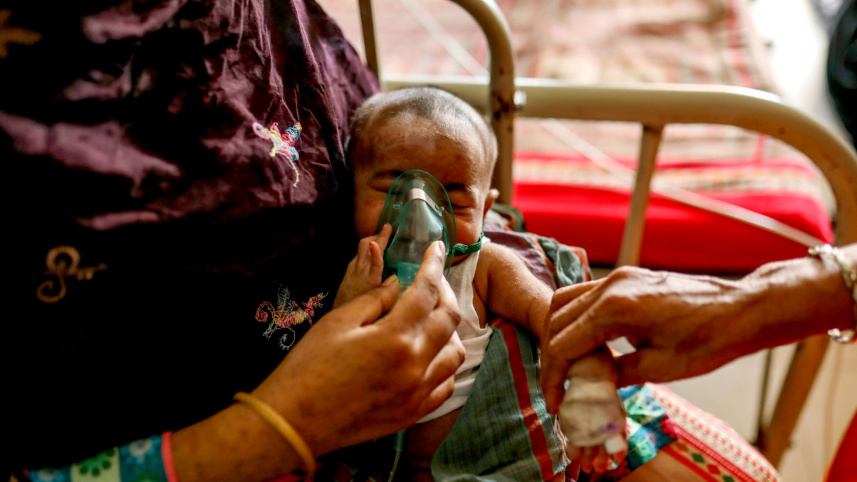
When we see news reports that measles deaths have crossed 1,000, we pause, express concern, and discuss what should be done. A few days later, however, another story takes over. But for a mother who has lost her child or a father who has buried a son or daughter, that death can never be just a number. One thousand deaths mean 1,000 people, a thousand families and an extraordinary number of unfinished futures. Behind every death is a face, a family, and a story. Yet public-health discussions can reduce these lives to mere statistics. The more important question is not how high the number will rise, but how many of these deaths could have been prevented in the first place?
As measles infections and deaths continue despite vaccination, there of course is a gap somewhere in the system. Not every eligible child may be receiving vaccines on time, while some infected children may not be getting timely and appropriate treatment. Family awareness, financial hardship, delays in seeking care, and limitations in the availability or quality of health services may all play a role. Severe malnutrition among affected children may further increase the risk of death. Reducing measles deaths, therefore, requires more than increasing vaccination coverage. Children who have been missed by vaccination programmes must be identified and actively reached, while infected children need timely and appropriate care. Vaccination is not the responsibility of health workers alone; families, communities, local administrations, educational institutions, and the health system all have a role to play.

We need to know where children are being missed, which communities are most at risk, and why some families cannot access vaccination. Such information should be regularly analysed and translated into action. At the same time, children who develop measles must be able to access appropriate facilities without delay and receive quality treatment. Here, prevention and treatment must go hand in hand.
When a child dies, the family does not want to know which government agency was responsible for which part of the process. All they want to know is why is that their child could not be saved? There is no simple answer. Not every death has the same cause. Some patients may have arrived too late, some may have had complications, and in other cases, limitations in access to quality healthcare may have been the contributing factor. It would therefore be unfair to blame a single person or institution simply because deaths have occurred. But unless the circumstances behind these deaths are systematically examined, the same problems will continue to persist. The same concern applies to dengue. So far this year, deaths have already crossed 140 and it is projected to rise. If we were to go by precedence, we will receive the updated figures, they will make headlines, social media will be filled with discussions, and officials will express concern. And in time, another issue will soon replace it. The question here is…are we simply going to keep counting the deaths?
Dengue control cannot be reduced to mosquito-control campaigns during the monsoon. It requires year-round surveillance, elimination of breeding sites, environmental management, identification of high-risk areas, public awareness and timely treatment. These components must function together if deaths are to be reduced. Most importantly, every death from measles or dengue should trigger a death audit or mortality review. In dengue cases, we should examine when symptoms began, when treatment was first sought, where care was received, when the patient was admitted, whether warning signs were recognised, and whether necessary investigations and treatment were provided promptly.
For measles, we should examine whether the child had received the required vaccination and, if not, why. We should also assess access to healthcare and the treatment provided after diagnosis. The purpose of such reviews should not be punishment, but prevention. Each death should provide lessons that can help save the next life. Mortality statistics are also a mirror of our health system. A child may be recorded as “one” in a national statistic, but to that family, that child was their entire world. This is why we need not a politics of blame, but a culture of accountability.
First, measles vaccination gaps should be identified down to the union and ward levels. Missed children should be actively traced, with services brought closer to families. Second, dengue surveillance and mosquito-control activities must continue throughout the year. Rising cases, mosquito density, and breeding sites should be detected early so that action can begin before transmission intensifies. Third, primary health facilities and hospitals need better preparedness for dengue. Health workers should be able to recognise warning signs, conduct necessary investigations, follow standard treatment protocols, and refer patients promptly when required. Fourth, epidemiological surveillance needs strengthening. It is not enough to publish numbers after an outbreak has already intensified. Data should provide early warning and be directly linked to decisions and rapid response. Fifth, local government, health authorities, educational institutions, city corporations, the media, and civil society must work together. After all, measles and dengue are not problems for one ministry; they are wider public-health challenges requiring coordinated action.
Our experience during Covid also offers useful lessons. Depending on the situation, selected facilities including upazila health complex, district hospital, and children’s hospitals could be prepared on an emergency basis to manage measles and dengue cases. Health workers and telemedicine platforms such as Shastho Batayon could also support early detection, counselling, and referral. People developing symptoms should be encouraged to seek advice promptly and reach an appropriate facility when necessary. Above all, political and administrative commitment is essential. Public health requires sustained investment. Essential services should not disappear simply because a particular project or funding cycle has ended. Disease prevention cannot depend solely on seasonal campaigns or short-term projects. Perhaps it might help to be more in touch with something even more fundamental: our sense of humanity. Have we become so accustomed to death that we express sadness for a while and then return to our normal lives? Are we becoming a society where one death is a tragedy, ten deaths a news, and 1,000 deaths are merely a statistic? It should not be so.
The fundamental responsibility of the state and society is to protect human life, more so when it comes to children. There is still time to change course. We can prevent further measles deaths and reverse the rising trend of dengue mortality, but only if we move beyond counting and begin learning from every death. When the DGHS announces the next number of deaths, let us ask more than just how many we have lost, but rather why we have lost them. Where did the system fail? And most importantly, how can we save the next child?
It is crucial not to forget that public health success is not measured only by vaccination numbers, patients treated, meetings held, or campaigns conducted—but by lives saved. This is therefore not the time simply to count deaths. It is time to see the human beings behind every number, identify preventable failures, and demand accountability. Above all, it is time to stop counting deaths and start preventing them.
Dr Syed Abdul Hamid is professor at the Institute of Health Economics in the University of Dhaka and convener of Alliance for Health Reforms Bangladesh (AHRB).
Views expressed in this article are the author's own.
Follow The Daily Star Opinion on Facebook for the latest opinions, commentaries, and analyses by experts and professionals. To contribute your article or letter to The Daily Star Opinion, see our guidelines for submission.
 For all latest news, follow The Daily Star's Google News channel.
Comments