


The price of putting childhood on display on social media

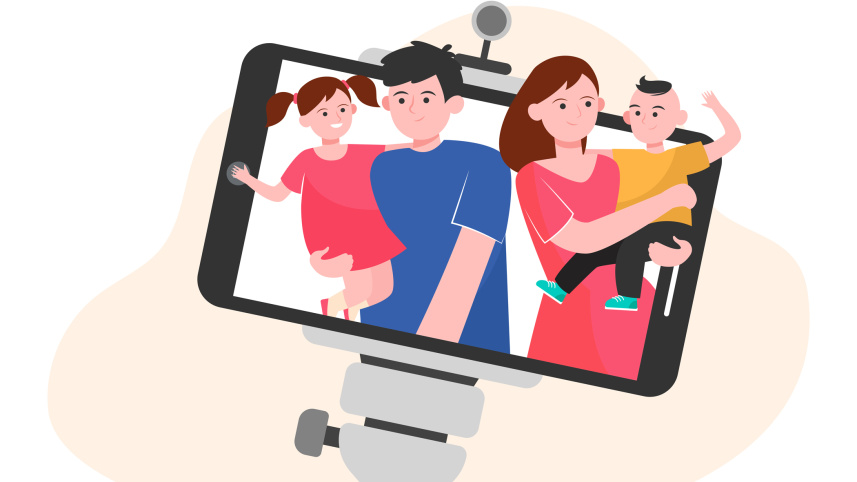
Scroll through Facebook, Instagram, TikTok or YouTube, and you will rarely go far without seeing a baby. A parent is filming what their child is eating, playing with, or doing for the first time. Sometimes it is sweet and useful for other parents. But sometimes, it is also a business.
Those who use social media to help new and prospective parents talk about the realities of raising children, share lessons, or document the joy and exhaustion that come with parenthood are admirable. Such content can serve a real public purpose. The problem begins when the child itself becomes the content. Parenthood, once sacred and largely private, is increasingly becoming a form of public entertainment.

This trend has practically become a new sector of the expanding creator economy. The influencer economy is now a multibillion-dollar business. Statista estimates it reached $24 billion in 2024, three times its size in 2019. Children are part of this boom too, with “kidfluencing” estimated at around $8 billion. Prominent kidfluencer Ryan Kaji, who began reviewing toys on YouTube at three, reportedly earned $35 million in 2024 alone, when he was just 13 years old.
Aside from responsible parenting channels, which offer useful material on child development, education and family life, there is a culture of putting children in front of cameras because they attract attention. A baby’s laugh gets engagement. A tantrum goes viral. A dress becomes a photo opportunity. The distinction between documenting childhood and putting childhood on public display becomes increasingly difficult to see.
Another problem receives much less attention: what this does to other parents. A relatively affluent family may casually display an expensive stroller, imported baby food, branded clothes, premium toys, elaborate birthday decorations, or a carefully designed nursery. For a parent struggling with rent, food, healthcare and education costs, these can look like a standard that somehow must be matched. Parents naturally want the best for their children. Social media can turn that into anxiety.
This matters in countries like Bangladesh where economic inequality remains visible in everyday life. Social media puts different households on the same screen, presenting their consumption as equally attainable. The algorithm shows lifestyle, not differences in income. Good parenting begins to look like the right toys, the right food, the right clothes, the right birthday party, and the right photographs. A parent’s ability to spend starts standing in for a parent’s ability to care. That is unfair to parents and misleading about childhood.
There is also the question of the child’s consent. An infant cannot consent to having their face uploaded. A toddler cannot understand millions of strangers watching their tantrum or predict how an embarrassing video might affect them years later. The parent controls the account and may receive the money. The child carries the digital footprint.
So, should parents have an unlimited right to monetise their children’s lives before they understand what is happening? The problem is the ecosystem. Platforms reward attention, brands want audiences, influencers want engagement, and parents may want income or recognition. Children happen to be remarkably effective at generating all of it. The algorithm does not care what is good for a child. It cares whether people keep watching.
Social media also portrays good parents as endlessly patient, financially comfortable, and always camera-ready. Real parenting is messy. Parents get tired, worry about money, lose patience, and make mistakes. But the internet rewards only the polished version. Once an audience has been built around a child, there can be pressure to keep producing increasingly attractive, funny or dramatic moments. The child grows, but the content machine needs the child to remain interesting.
Parents should absolutely be allowed to share their creativity, knowledge and experiences. Parenting content can educate, support and build communities. A new mother may find comfort in another parent’s experience. A first-time father may learn something useful. Families can preserve memories and share moments of genuine happiness.
But children are not engagement tools. They are not props for lifestyle content. They are people whose privacy and dignity deserve protection before they can ask for it. The question is not whether parents should share their children. It is whether they know when it becomes oversharing.
Jahin Siddiqui is economics graduate from Shahjalal University of Science and Technology. He can be reached at jahinsiddiqui8583@gmail.com.
Views expressed in this article are the author's own.
Follow The Daily Star Opinion on Facebook for the latest opinions, commentaries, and analyses by experts and professionals. To contribute your article or letter to The Daily Star Opinion, see our guidelines for submission.
 For all latest news, follow The Daily Star's Google News channel.
Comments