


We keep importing our energy security. Why not build it at home?

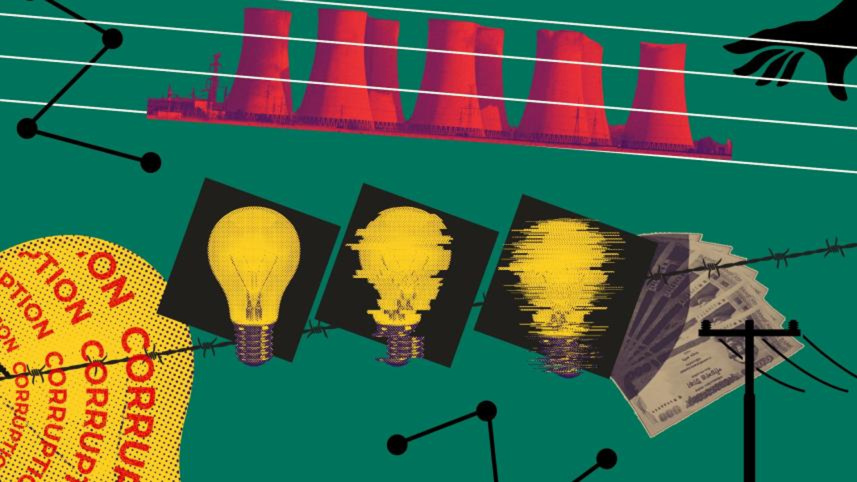
On August 11, Bangladesh faced a severe 3,592-megawatt electricity shortage—enough to power several mid-sized cities. Demand had peaked at 18,043 MW, but supply could not climb past 14,451 MW. In a garment belt town like Gazipur, the gap meant a mother cooking with firewood because the stove had no gas pressure, or a worker losing a shift. Scale that night across a country, and it becomes a pattern.
That pattern has been building since July 21, when a technical fault at a floating LNG terminal off Moheshkhali cut national gas supply by roughly 450 million cubic feet a day. Factories across Narayanganj’s dyeing and garment belt began cutting shifts. CNG filling stations saw pressure fall from seven to eight psi to near zero, queues of three-wheelers stretching down city blocks. In Noakhali and other rural districts, residents described going without power for seven to ten hours a day, reorganising how a household eats, studies and works.

This is not a story just about one damaged terminal. In 2022, Russia’s invasion of Ukraine sent global gas prices from roughly $4 to $60 per unit, forcing Bangladesh to halt open market LNG imports for seven months and leave the diesel-run power plants sit idle. This year, the US-Israel war against Iran that began in February knocked out a chunk of Qatar’s LNG export capacity and tightened global markets. Bangladesh is not fighting either war, but it is paying for both in the currency of blackouts.
That is the uncomfortable question worth sitting with: if the lights in Dhaka can be dimmed by a missile strike near the Strait of Hormuz, do we actually have energy security? Security that depends on decisions made in Doha, price shocks in Rotterdam, and conflicts in the Gulf is fragile. It buys reliability on credit, and the interest comes due every time the world gets less stable.
It is also worth asking who experiences the instability, since the crisis does not land evenly. Industrial zones and better-off neighbourhoods often have backup generators or captive power that cushion the worst outages; the Bangladesh Rural Electrification Board, which supplies electricity to three-quarters of the country’s consumers, has for years absorbed a disproportionate share of load-shedding so urban centres stay comparatively lit. A factory owner switching to diesel can absorb, although barely, the cost spike; a worker rationing gas at home cannot. The crisis is universal in name and unequal in practice.
Renewable energy will not close an 18,000 MW demand curve overnight. Bangladesh will still need gas, including from domestic fields, for years. But the more interesting number here is not the deficit; it is what is growing around it. Driven by the high costs of unreliable grid electricity and diesel back-ups, industrial rooftop solar has surged to nearly 1,000 MW. Although largely missing from official statistics, this factory-led capacity now rivals the size of the national grid’s entire renewable fleet. Of the country’s roughly 10 lakh diesel irrigation pumps, only a few thousands run on solar; converting even a third could save an estimated $244 million a year in diesel imports. These are underused tools that reduce exposure to the imported volatility now driving the blackouts.
However, scaling them carelessly would trade one problem for another. A solar park sited without consulting the community that’s farming that land, or a net-metering scheme only wealthier rooftop owners can afford, reproduces the same unequal pattern. A just transition keeps asking who gets reliable power, who pays for it, who owns the infrastructure, and who carries the cost when something goes wrong.
Bangladesh does not lack ambition; it lacks the architecture to match it. Closing that gap means, at first, systematic scoping and resource-mapping studies and district-level surveys of solar, wind, biomass and mini-hydro potential, so siting decisions rest on evidence, not guesswork, and land conflicts are avoided before they start. Second, community-based and cooperative ownership models, local solar cooperatives, and community-owned mini-grids should be supported so host communities share the benefits of new infrastructure rather than simply hosting its costs. Third, low-cost, blended financing, concessional loans, green bonds, and risk guarantees should be unlocked to fix the bankability problem that has stalled utility-scale renewable projects for a decade. Fourth, the net-metering process should be made faster and import duties should be eliminated to help sustain the ongoing boom in rooftop solar. Fifth, grid modernisation and storage investment cannot wait till the 2040s. And sixth, Bangladesh’s scattered renewable targets should be reconciled into one coherent roadmap with a credible fossil-fuel phase-down timeline.
Officials have pointed to years of underinvestment in domestic gas exploration; some noted that not a single new well was drilled in 17 years. Bangladesh can reasonably pursue further onshore exploration, including adding Bhola’s gas to the grid. The harder question is what that exploration is for: a bridge towards a more diversified system, or one more turn of a wheel that leaves the country just as exposed.
The blackouts will pass. What remains afterwards is less dramatic but more consequential: whether the country spends the next few years strengthening the existing import-dependent system or uses this crisis to change what “security” actually means. Reliable energy should not be something Bangladesh keeps buying at the mercy of wars it has no part in. It is something the country has real tools to start building at home.
Nur Nishat Anjum is a researcher in the Department of Anthropology at Dhaka University.
Views expressed in this article are the author's own.
Follow The Daily Star Opinion on Facebook for the latest opinions, commentaries, and analyses by experts and professionals. To contribute your article or letter to The Daily Star Opinion, see our guidelines for submission.
 For all latest news, follow The Daily Star's Google News channel.
Comments