


The World Cup: One month of shared humanity

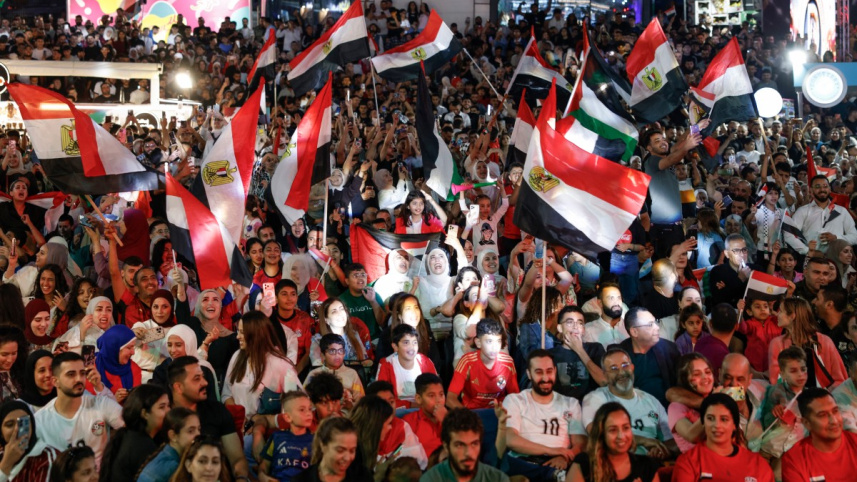
Every four years, something quite extraordinary happens. Wars do not stop. Poverty does not retreat. The grief that ordinary people carry in their hearts does not dissolve. And yet, for about one month, the world, for once, finds itself focusing on the same thing. Strangers gather around small screens in tea stalls in Dhaka, in makeshift bars in Lagos, in living rooms in Reykjavik. They lean forward together. They hold their breath together.
This is the World Cup.

The Olympics, for all its grandeur, remains in many ways a celebration of individual excellence. As beautiful as it is, it is in essence a collection of separate moments. But football is continuous, with no commercial interruptions to break its rhythm. Moreover, the rectangular field can be drawn in the sand, and the ball fashioned from rags in the absence of a real one. This is perhaps the game’s first appeal: football demands little. But it offers considerably more.
The economist will point to its accessibility. The sociologist will speak of collective identity. But neither can explain what passes through thousands of bodies in a stadium or millions watching the games on TV when a goal is scored. And the game itself is only half the spectacle; the other half is the camera cutting from one nation's reaction to the next. There is a term, collective effervescence, coined by the sociologist Émile Durkheim, describing the emotion generated when people gather around a common purpose and feel part of something larger than themselves. Religious ceremonies produce it. And the World Cup produces it perhaps most reliably. And there is in-group identity theory, which suggests that shared allegiance to a team temporarily dissolves the smaller divisions of class or religion. Engrossed in the game, people suspend their divisions and sorrows. This is not escapism in the cheap sense. This is survival. This is what humanity always does: find in ritual and spectacle, the momentary relief that makes the return to hardship bearable.
The stories the World Cup generates are often more eloquent than anything its administrators intend. In 1998, before a politically charged group match, the Iranian players presented white roses to their American opponents. The two teams then posed together for a photograph. Nearly three decades later, at the 2026 World Cup in Los Angeles, the Iranian team repeated the spirit of that gesture. After their match, the players left a handwritten note in their dressing room thanking the city for its hospitality and expressing a hope that “peace, respect, and friendship prevail among all nations.”
In 2018, after being eliminated by Belgium in a dramatic Round of 16 match, the Japanese players quietly cleaned their dressing room until it was spotless. They left a note in Russian—the host nation's language—that simply read: “Thank you.” Japanese supporters, meanwhile, stayed behind after matches to collect litter from the stands, an act that quietly inspired fans from other nations to do the same.
In 2005, the Ivory Coast—a nation in the middle of a civil war—qualified for its first World Cup. Didier Drogba, the team’s captain, dropped to his knees in the dressing room, looked directly into a television camera, and pleaded: “Please lay down your weapons. Hold elections. Forgive one another.” Some accounts suggest that a ceasefire followed.
And then there is Bangladesh—a country far removed from the final stage of the World Cup. Conventional logic dictates that its people would be mild spectators, appreciative but detached. Instead, Bangladesh erupts. The passion that many Bangladeshis carry for Argentina—a country most have never visited and whose language few speak—has baffled the world. When Argentina won the 2022 World Cup, the celebrations in Dhaka were, by several accounts, more intense than in Buenos Aires.
How does one explain this? Partly, it is the intoxication of excellence: watching Messi move with the ball in a way that seems to defy the laws of physics. Partly, it is a historical affection that accumulated across generations and became its own tradition. But partly—and this is the part that matters most—it is proof that football’s capacity for belonging has no geographical borders. You do not need to share a nationality with a team to claim them as your own.
This is extraordinary. This is, in the truest sense of an overused word, global. The World Cup has also quietly rewritten something about identity that politicians have struggled to legislate. The French national team—once predominantly a reflection of one ethnic tradition—now takes the field as one of the most diverse assemblages of players ever to represent a single nation. Their players carry faces from Algeria, Cameroon, Guinea, Mali, and the Caribbean. But France's story does not end with its own squad. It is reported that France has produced approximately 75 players—born and raised on French soil—who are representing eleven other nations in this World Cup. It means that the country has not merely diversified its own team; it has seeded the world’s tournament with its own talent. Football has made France, in a sense, everyone’s country.
Germany, England, Belgium—the story of diversity repeats itself across the tournament. Football has accomplished something that years of social policy have found difficult: it has made diversity a competitive advantage. The best team is the team that finds talent from wherever talent grows. This is not a perfect story. Racism in football exists, is ugly, and deserves to be named as such. But the direction is visible. The arc, however slowly, bends.
What is it, ultimately, that the World Cup does to us? Perhaps this: it reminds us that we are capable of caring about something that does not directly benefit us. That we can feel genuine joy or anguish for strangers, and return the next morning to our ordinary lives slightly enlarged by the experience. In a world that has grown very good at dividing people, this is not a small thing.
Philosopher Albert Camus, who played goalkeeper in his youth before illness ended that chapter of his life, once reflected that everything he knew about ethics and human obligation, he had learned from football. One may debate the philosophy, but the instinct behind it feels right. The game teaches you to depend on others. It teaches you that individual brilliance, unconnected to collective effort, is ultimately insufficient. It teaches you that the person beside you, whoever they are, is an extension of your own self.
The World Cup will come again. It will find the world much as it left it—complicated, wounded, and unresolved. But here is what the tournament has proven, across more than a century of playing: that the same species capable of extraordinary cruelty is also capable of leaving a spotless dressing room for a stranger, of carrying roses onto a field where politics dictated only hostility. These gestures will not be recorded in history books alongside treaties and battles. But they are real.
Every four years, the World Cup returns—not to save us, but to remind us of what we are still capable of being. That is, perhaps, exactly enough.
Hussain Samad is a consultant at the World Bank in Washington, DC, and an independent researcher. He can be reached at hsamad2000@yahoo.com.
Views expressed in this article are the author's own.
Follow The Daily Star Opinion on Facebook for the latest opinions, commentaries, and analyses by experts and professionals. To contribute your article or letter to The Daily Star Opinion, see our guidelines for submission.
 For all latest news, follow The Daily Star's Google News channel.
Comments