


Sitting for public uni admission tests a second time
One of the most gruelling rites of passage undertaken by the majority of the students in this country is the public university entrance exam. Students will prepare for months or even years just to get a chance to pursue higher education in their preferred fields through these universities. What rarely gets said out loud is that this preparation period is also, quietly, one of the most psychologically taxing stretches of a young person's life, even before a single result is published – a paper published in BJPsych Open in 2023 on entrance-test takers found that close to half report symptoms of depression and nearly a third report anxiety.
Yet, due to the large pool of candidates, universities have put in place eligibility criteria for students to be able to sit for these exams, and then they are, for most of the time, given only one shot at these exams. And it wasn't always like this. Most public universities, until 2015, allowed HSC and equivalent graduates from two years prior to sit for the entrance tests, giving students the opportunity to appear in the exam for a second time. However, in recent years only a handful of these universities have kept that door open, and the rest have permitted students only one shot at higher education in their institutions.

In most public universities, admission candidates are made up of students who passed the HSC and equivalent examination of that past year. However, the group of second-time admission candidates are made up of those who did not get admitted to a university or those who got into the university but not into their desired subject – who want to compete once more for a seat with the first-time candidates.
Just the ordeal of sitting for several board examinations, attending mock examinations, and trudging through pages of previous-year questions still sends shivers down the spine of people who have already made it to their dream universities. So, it takes a different type of willpower to even attempt to go through this exhausting experience once again.
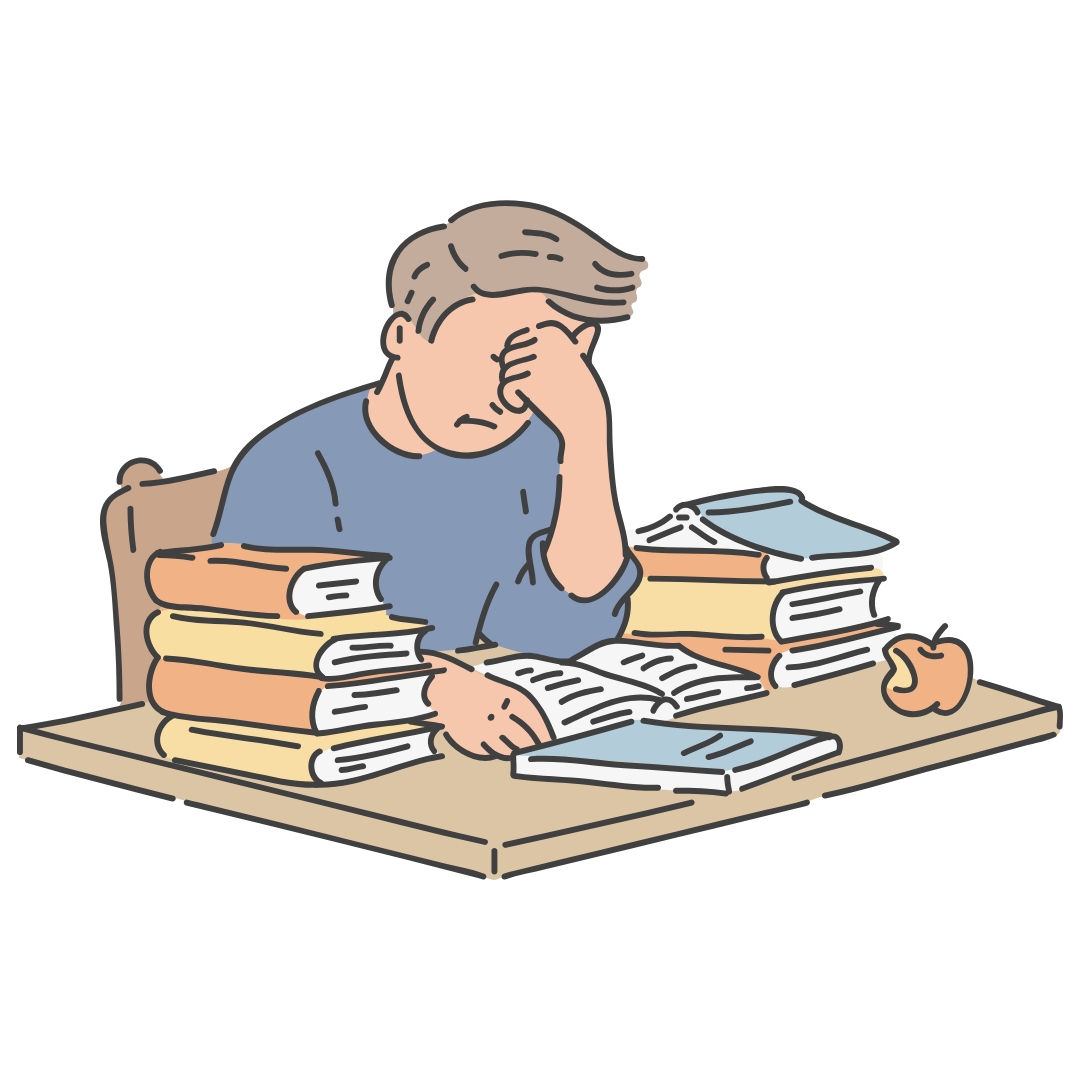
The policy landscape itself tells its own story of institutional anxiety. Engineering universities have been the most unforgiving on this front. Bangladesh University of Engineering and Technology (BUET) has never allowed a second attempt. Neither have Khulna University of Engineering and Technology (KUET), Rajshahi University of Engineering and Technology (RUET), or Chittagong University of Engineering and Technology (CUET), effectively shutting the door in front of thousands of students who just had the misfortune of not crossing this tightrope in one shot.
Dhaka University (DU) offers no second chance either. Medical and dental colleges are marginally more forgiving, but forgiveness here comes with a tax: five marks are docked from the final score of anyone appearing a second time. Military Institute of Science and Technology (MIST) follows the same logic, quietly docking five percent on the written test for students who passed their HSC the year before.
Other national public universities are slightly more forgiving, letting people sit for the examination a second time without any penalties. But even then, the policies aren’t set in stone, as the eligibility differs from year to year, either being reinstated due to student protests or simply written off due to disruption from the pandemic. What this patchwork really amounts to is a country that can't decide whether a second attempt is a mercy or a loophole. Thus, it keeps flipping the switch depending on which year's admission committee is in the room.
A significant portion of the student body doesn't bother with this arduous process anymore. Shanjida Tasnim Tonima, a current student at BRAC University (BRACU), shares her experience: “I wanted to study computer science and engineering (CSE) since most of the engineering universities won’t let me sit for a second time, and I didn’t want to go through the admission journey again as I got into BRACU right after most of the public universities' admissions were done. My parents, though a bit reluctant, decided to support my endeavours, as I would graduate early if I started my degree in a private university instead of sitting for it the second time.”

On the flip side, here is Abdullah Al Zubair, a current student at Bangladesh University of Professionals (BUP). Though he was already admitted to a public university, he decided to repeat the admission process not out of desperation but rather a familiar expectation. He reiterated that his father is of the belief that apart from a handful of prestigious private universities, getting a degree from the rest is just “a waste of money”. “I was always wary of the risk I was putting myself in by taking a gap year,” he explains.
Both of their decisions and concerns make sense, as public universities are sadly notorious for session lags. It may take people around an extra year or more to complete one’s degree. If you take a gap year, the difference between your age and the job you will be applying for does end up causing problems, especially for government jobs where there are age limits. In other words, the "second chance" isn't free even at the universities generous enough to offer it.
No matter how much you plan out your life, just like Odysseus, things might take a turn, and you won’t be able to reach some milestones you thought you would have reached by now. Such was the case for Arpita Chakraborty, an engineering aspirant who wasn’t able to give her best during her first time around due to severe physical illness.
But this illness came as a saving grace, according to her, as she found her passion for pharmacy. While preparing for her second time, she switched from being an engineering aspirant to someone fighting to study her favourite subject. She is currently in her second semester at Khulna University, studying this very subject.
Her decision was also backed by a gruelling truth people often overlook when saying that students can just study their chosen subjects in private universities, and that is finances. She states, “My parents were fully supportive of me pursuing my higher studies, but I knew that the fees of a private university would be too much for my family to bear. If I hadn’t gotten into any public university the second time, I would have gone for National University.” It’s worth highlighting how she had to have an entire backup plan, already mapped out, in case the second attempt failed too. That’s the anxiety these students face while still solving complex mathematical problems and memorising general knowledge.
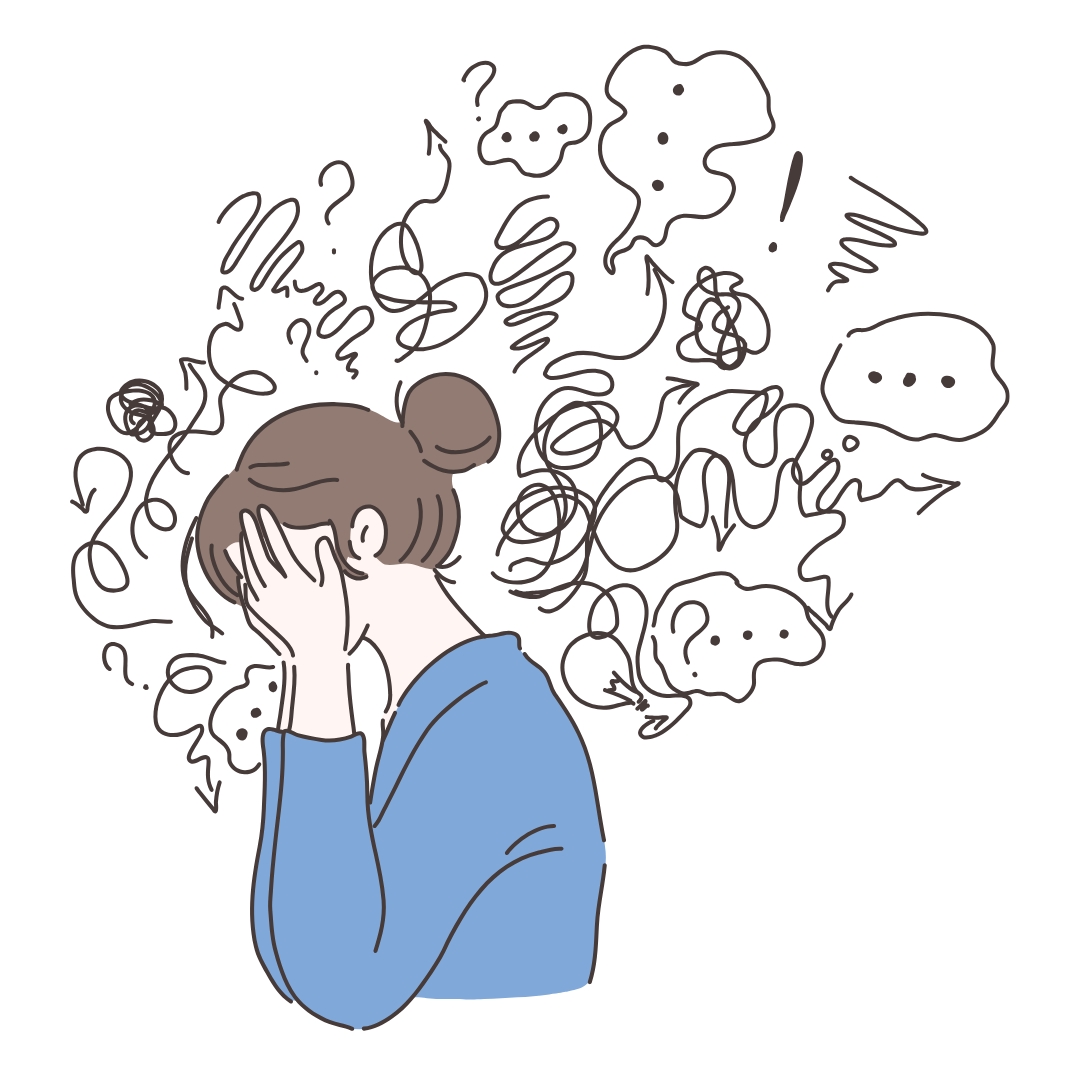
Some people, however, do not have such a supportive environment. Israt*, a current student of Dhaka Dental College, wanted to pursue her passion of becoming a fashion designer. Yet, her wishes were not deemed credible enough compared to how medicine is viewed as a “safe” career for women. As such, she gave her best during admission season, scoring top grades in almost every mock examination. Finally, when the time came, due to the mismanagement of the proctors in her hall, combined with exam anxiety, she was unable to do well enough to grab a seat in a public medical college.
She was heartbroken, and it didn’t help when the people who were supposed to be by her side turned against her. “My dad was always supportive of me, even though I wasn’t able to secure a seat the first time. He believed in me enough to support me through all the hectic second-time mock tests. Though it pains me to say this, my mother, on the other hand, wasn’t kind to me when I needed her the most,” she says.
She also highlights how isolated she felt during that time: “I didn’t want to face my friends; I felt like a failure. I almost became a shut-in; I was buried in books as a sort of misplaced punishment against myself.”
Israt's experience isn't an isolated case, either. A study investigating the psychological impacts on Bangladeshi entrance-test takers found that repeat candidates report suicidal ideation at meaningfully higher rates than first-time test-takers. For every individual story highlighted here, there remain countless other students: the ones who sat for it twice, three times, and simply never got in.
Meritocracy, as a word, likes to promise that the system rewards effort in proportion to how much of it you give. But effort doesn't negotiate with a single three-hour exam, a shrinking number of seats, or a mind that can only be pushed so many times before something gives. A second chance, dressed up as fairness, is still a system asking you to run the same wheel one more time and hope the mechanism works differently this time around. It doesn't make the people who attempt it any less admirable — if anything, more so — but admiration for their resilience shouldn't let the rest of us look away from how unforgiving the wheel itself is.
*Name has been changed upon request.
 For all latest news, follow The Daily Star's Google News channel.
 References:
BJPsych Open (2023), Prevalence and factors associated with suicidal ideation among students taking university entrance tests.
Wiley (2021). Suicidal behaviors and university entrance test-related factors: A Bangladeshi exploratory study.
PLOS One (2021). Burnout, does the university entrance test failing attribute? A Bangladeshi exploratory study.

Education / The A level grading system explained
Education / Sleep deprivation and school start times: A conundrum

Education / The hallmark of excellence

Education / Past recipients of The Daily Star O & A Level Awards share their stories

Education / The importance of student councils in schools and colleges
Last-minute study strategies that actually work

Why literature curricula in schools fail to instil the love of reading

Heavy school bags and the burden of our inaction

The joy, jingles, and jumbling schedule of Christmas in Bangladesh
