


WHACKY F1: Craziest cars from the pinnacle of motorsport
Formula One. F1 has held hundreds of thousands of fans enthralled for decades with a potent mix of physics-bending engineering, god-like drivers with superhuman abilities and the glitz and glamour of the world's most exotic race locations. In the 60s, 70s and 80s, F1 was even crazier—relatively lax engineering rules gifted the world some out-of-this-world creations. They weren't always successful or good to look at, but they had boatloads of character. Here's to the crazies.

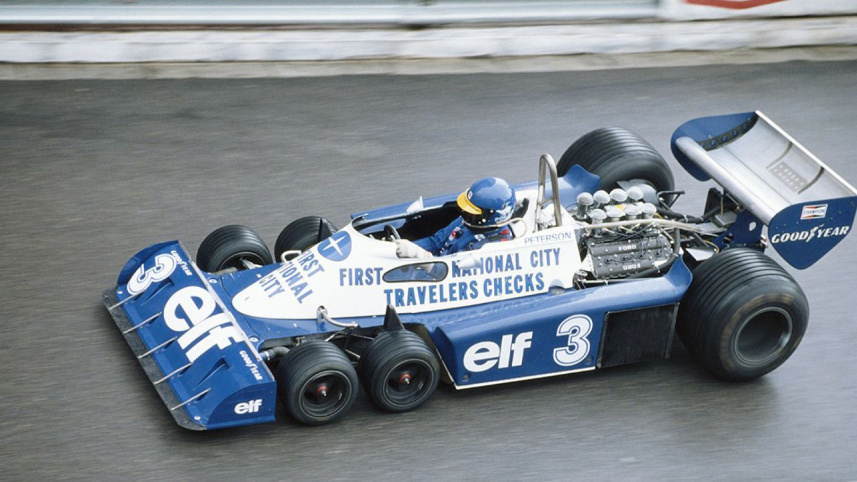
1976 Tyrrell P34
While there were many rules in F1 that a designer had to adhere to, Tyrrell's Derek Gardner was not asked to limit the number of wheels to four. Derek took full advantage of that to get rid of a problem that plagued a lot of teams for the 1975-76 season—a fixed width for the front splitter that pushed the wheels to the corners for engineers to actually make use of the wing while making space for the steering mechanism, suspension and drivers' feet. Maximising air-flow over the front wing meant reducing the front wheel sizes, but the contact patch for the front wheels would be too small in that case. Tyrrell adopted a six-wheeled approach—four 10-inch diameter especially developed wheels turning in unison, with standard rear wheels. Out of 30 races, the P34 won one and placed at the pole position once—cementing the Tyrrell's reputation as a "piece of junk". Collectors are quite prone to buying junk anyway.
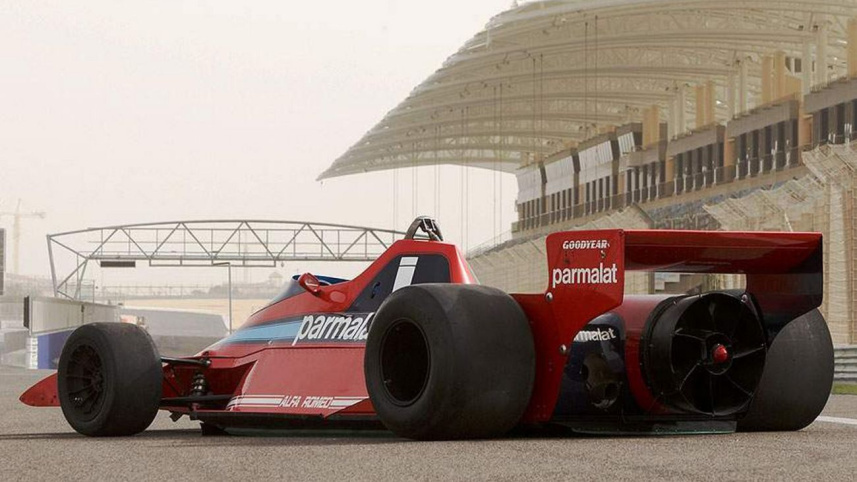
1978 Brabham BT46B
The original BT46 was designed by the famed Gordon Murray, engineer behind the McLaren F1 road car. In 1978, a large fan was attached to the back to create the BT46B, underneath the rear wing, as a counter to the ground-effect cars introduced by others, like the Lotus 79. The fan was claimed to be for cooling purposes for the FIAT-Alfa Romeo flat 12 engine, but in reality it extracted air from underneath the car and produced downforce. It was entered into only one race, at the 78 Swedish Grand Prix, where it was driven to a win by Niki Lauda. That's a perfect record—but Brabham pulled the car from competition.
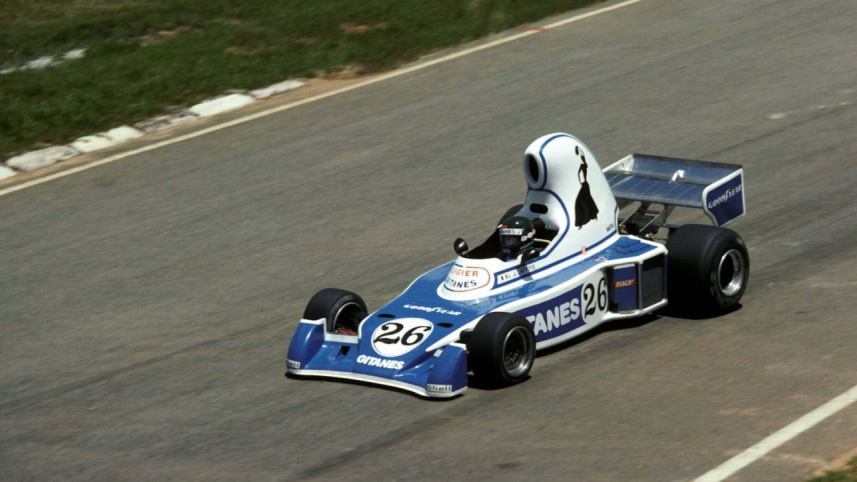
1976 Ligier JS5
If the Brabham BT46B was the good kind of jet-plane look-alike F1 car, the Ligier JS5 was the bad. 1976 saw the Ligier sprout a gulping maw on its back, Gérard Ducarouge's design getting the lovingly bad nickname of 'Teapot'. The air-box was downsized for the subsequent seasons after a rule change, and aerodynamics was significantly improved. One wonders why it was bad in the first place.
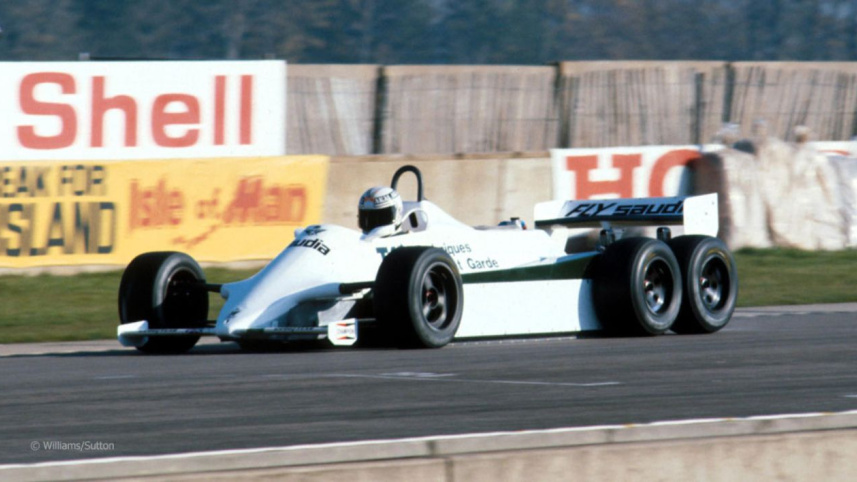
1981 Williams FW07D
Tyrrell might have kicked off the six-wheeled craze in F1, but by the 80s, it was dead. Williams used the hugely successful 1981 FW07C as the basis for a test bed car called the FW07D, which employed six wheels—four at the back—for increased stability and grip. The development car spawned the FW08B, which was never raced after the FIA changed its rules to only allow four-wheeled racers on the grid, only two of which can be driven.
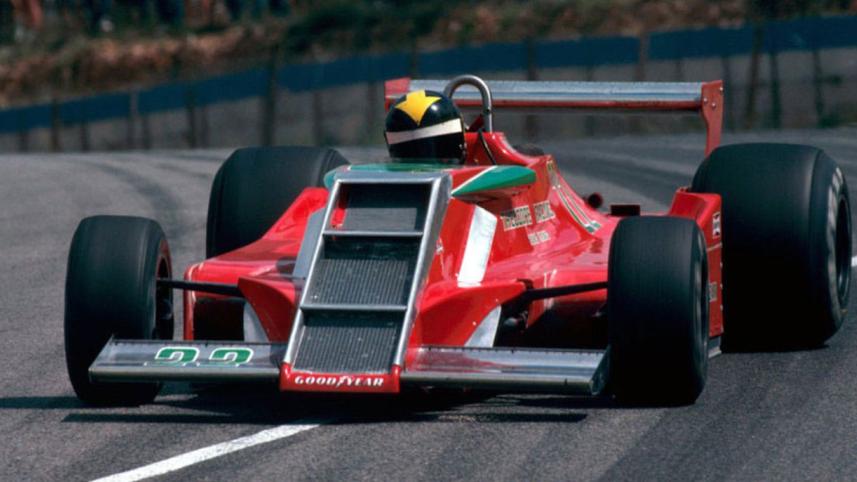
1979 Ensign N179
Often voted the ugliest F1 car of all time, the Ensign N179 carried its radiators on its snout, and, ironically, suffered from catastrophic overheating issues and heat inside the cockpit proved to be unbearable for the drivers. The 'cheese grater' Ensign failed to qualify seven times, and only finished one of the races it did manage to qualify in. Much like the team itself then–out of 133 GPs the Ensign team entered in with a total of 155 cars, they only managed to score 19 points and no podium finishes, with a best performance of coming in 4th. Yikes.
 For all latest news, follow The Daily Star's Google News channel.
Comments