Bhotekoshi flood: Another warning from the Himalayas. Are we listening?
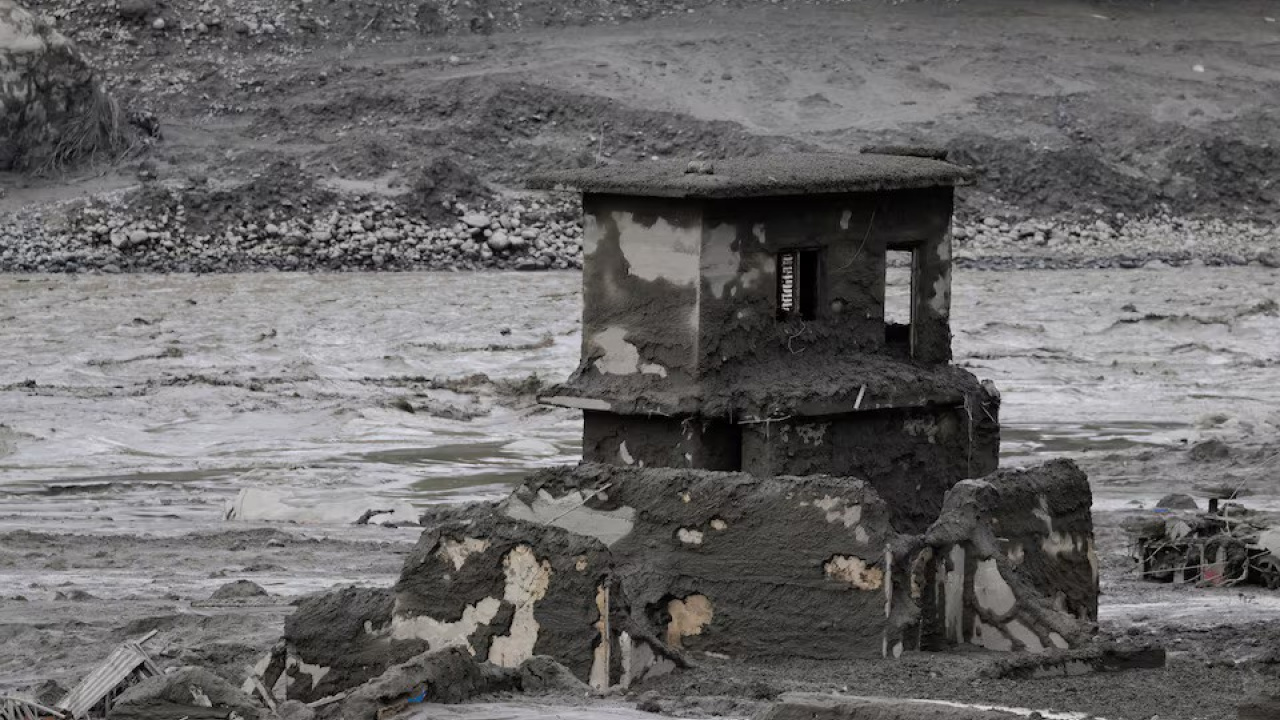
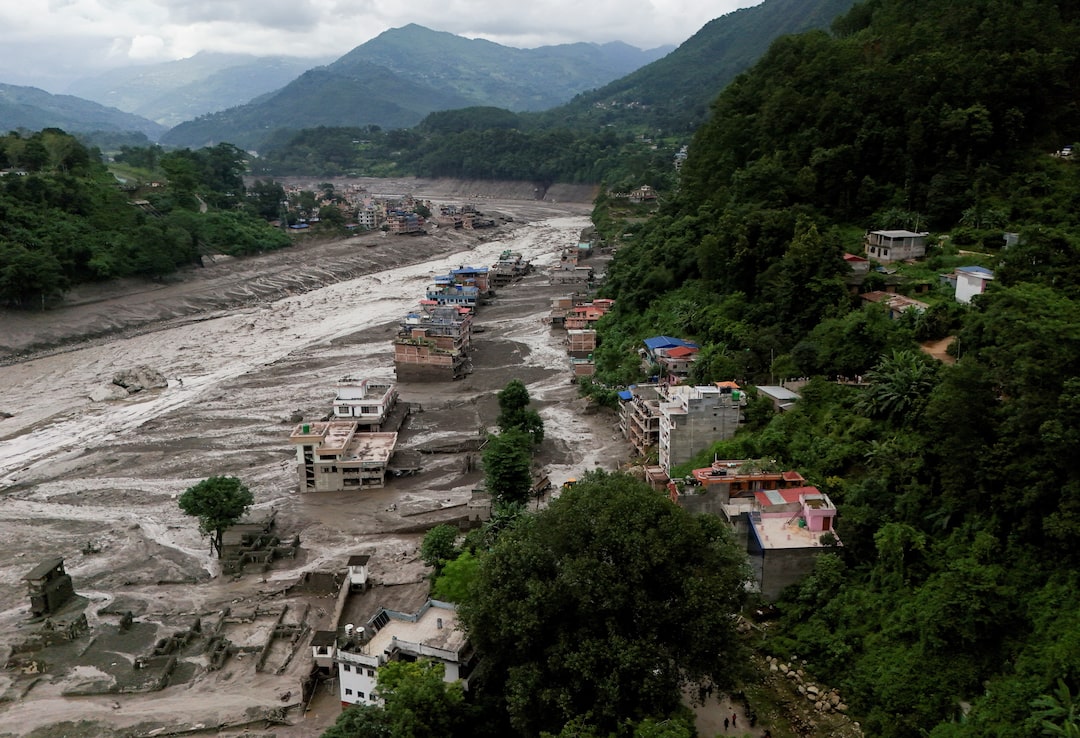
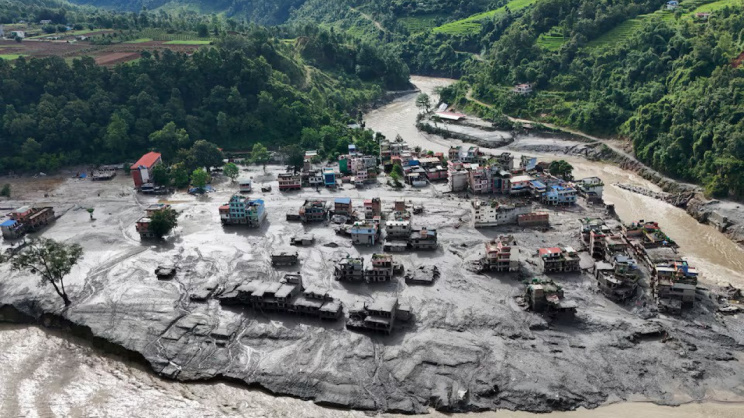
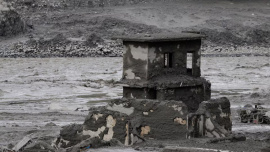
The Bhotekoshi floods came roaring down through the Himalayas on August 26, unleashing a seldom-believable fury of ice, rock and water, snowballing with debris as it charged down through the valley, sweeping away houses, bridges, roads, vehicles and, as of the time of writing, over 900 lives. Over 4,000 people are still missing. Families are still waiting, clinging to faint hope. Communities have been torn apart, their lives buried beneath mud, debris and wreckage. Amid unstable slopes, the threat of further landslides and newly formed water bodies upstream, rescue workers sift through the ruins, searching for the missing while risking their own lives. The scale of the devastation is almost beyond comprehension; the images are difficult to look at.
While the catastrophe seemed to come out of nowhere that day, the conditions that led to it had been building for years. The warnings had been piling up for years. Scientific warnings, environmental warnings, the receding glaciers, the unmistakable signs of a changing cryosphere—all these signs, yet we failed to listen.
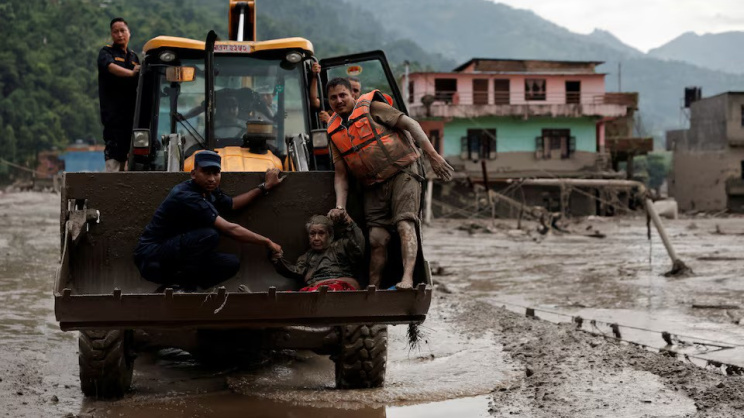
The Bhotekoshi disaster is a grim reminder that the climate crisis is not some abstract threat waiting for us in the distant future. It is here, tearing through Nepal’s Himalayan corridors, destroying lives and livelihoods in its path.
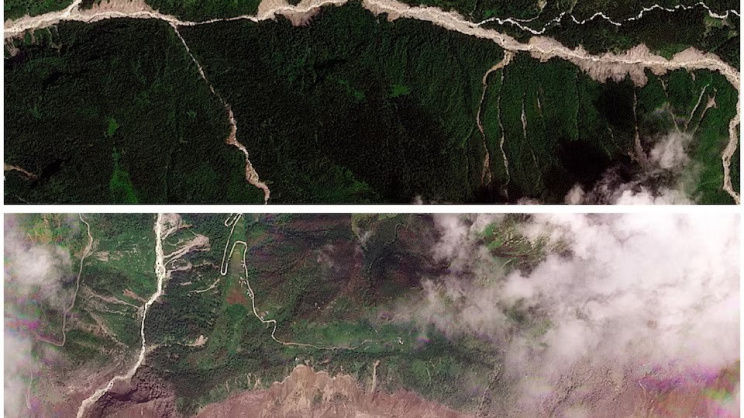
Scientists are still piecing together the precise chain of events that occurred. Early assessments pointed to an ice avalanche, rockfall or debris avalanche that temporarily blocked the Lhende River, followed by a catastrophic release of water and debris. Satellite imagery and subsequent analysis have increasingly pointed to a glacier collapse and ice-rock avalanche as the trigger. Whether the final label is glacial lake outburst flood (GLOF), ice-rock avalanche, landslide-induced flood or some cascading combination of these hazards, to the people downstream the distinction hardly matters. The mountain collapsed. The river exploded. People died. And it happened in a region where scientists, governments and environmental organisations have been warning for years that warming is making the Himalayas increasingly unstable.
On July 17, just six weeks before the Bhotekoshi catastrophe, a gathering of scientists, glaciologists, hydrologists, policymakers and civil-society leaders in Nagarkot, Nepal, warned of the mounting dangers of an unstable Himalayan cryosphere and the increasing frequency of GLOFs due to this instability, exacerbated by climate change. The conference was organised by Friends of the Earth Asia Pacific and Pro Public, otherwise known as Friends of the Earth Nepal. They investigated uncomfortable questions about what happens when the glaciers retreat, when the waters flow down rivers that are not contained within Nepal but travel across South Asia and wash out into the Indian Ocean or the Bay of Bengal. And perhaps most consequentially, what happens to the people who rely on and reside by the vast network of rivers that originate in the Himalayas?
This was not the first time Nepal has experienced a tragedy like this. The 2024 Thame disaster saw an avalanche plunge into a glacial lake, causing it to burst and unleashing destruction downstream
This was not the first time Nepal has experienced a tragedy like this. The 2024 Thame disaster saw an avalanche plunge into a glacial lake, causing it to burst and unleashing destruction downstream. According to ICIMOD, the event released 156,000 cubic metres of water and led to the identification of the Everest region as a GLOF hotspot requiring urgent, proactive risk management. In July 2025, flooding in the Lhende River near the Nepal-China border was attributed by Nepal's Department of Hydrology and Meteorology to a glacial lake outburst. These types of natural disasters are not something traditional early warning systems are designed to pick up on. Most early warning systems predict floods based on rainfall, not on the idea that a piece of a mountain can break off on a clear, sunny day. An ICIMOD-UNDP inventory identified 2,070 glacial lakes in Nepal's Koshi, Gandaki and Karnali basins alone and identified 21 potentially dangerous lakes. No low-income country can reasonably be expected to monitor every changing glacier, lake and avalanche by itself.
In July 2025, the Green Climate Fund (GCF) approved $36.1 million to help Nepal reduce risks from GLOFs, including strengthening early warning systems and protecting mountain communities. This project spent seven years in pipeline limbo before it was finally approved last year. Clearly, this was not implemented at sufficient scale or with sufficient speed. This is the cruel mismatch at the heart of climate adaptation, where finance is neither adequate, accessible nor quick enough to meet the ever-compounding challenges that befall developing countries due to the climate crisis. It’s worth remembering at this point that Nepal contributes less than 0.1% of global CO2 emissions and yet suffers the consequences, while the frameworks built for international support prove incapable of meeting the demands of the countries that most need that support. The climate crisis accelerates while the institutions meant to respond to it move at a snail’s pace (or worse, a bureaucrat’s pace). The Green Climate Fund was created to help developing countries confront climate change. Nepal is precisely the kind of country for which such support should matter.
But vulnerable countries are entitled to ask harder questions: Is the money arriving fast enough, and is it reaching the communities on the frontlines? This is not to single out the GCF as an institution but rather to question the whole international climate finance system. Ultimately, what good is adaptation finance sitting in a fund if it isn’t utilised to proactively help mitigate climate risks for vulnerable communities? In the face of the climate crisis, the success of adaptation can only be measured by how many lives we can save. There is something almost grotesque about the way we handle adaptation finance. It’s often an afterthought at the UNFCCC COPs – developing countries beg, some climate activists scream in the hallways, and ultimately very little happens to meet the needs of the Global South in terms of the resources they require. For the limited finance available, a long, complicated process awaits, as shown by the example mentioned above. From initial proposal to final approval, it took seven years, during which time the rate of glacial melt and permafrost thaw accelerated rapidly in Nepal. The effects of climate change are not waiting for the paperwork.
And while we can focus on finance, it is important to recognise that Nepal needs much more in terms of means of implementation. It needs scientific cooperation, technical capacity building, investments in early-warning infrastructure, technology transfer and loss and damage support. Nepal needs all of this before the next such disaster, because the only guarantee may be that this is not the last time such an incident will occur. The consequences of these climate impacts will, furthermore, not be limited to the mountains of Nepal. The Hindu Kush Himalaya feeds the rivers on which hundreds of millions of people across South Asia depend. This is a regional problem. Ultimately, it is a global problem.
The international community is usually most generous after disaster strikes. Emergency funds are announced, condolences are issued, and aid packages and rescue crews arrive. But there is something deeply perverse about a system that only responds after the preventable part is over.
The international community is usually most generous after disaster strikes. Emergency funds are announced, condolences are issued, and aid packages and rescue crews arrive. But there is something deeply perverse about a system that only responds after the preventable part is over. The most alarming aspect of the Bhotekoshi floods, as well as the annual wildfires, heatwaves, floods and other slow-onset disasters around the world, lies not just in the videos of the destruction but in the uncomfortable knowledge that the world knows enough about the direction of risk for the lack of urgency on display to be utterly unjustifiable. And yet, we see the dragging of feet and heads buried in the sand, if not outright denial from the powers that be. For the people of the Rasuwa valley today, being condemned to be buried under a rock-ice slurry is a choice that the international community has made.
The August 26 catastrophe should thus be a turning point. Nepal needs a permanent national Himalayan cryosphere and GLOF monitoring system, with adequate financing and direct links among scientists, glaciologists, disaster agencies, security forces, local governments and communities. It needs legally enforceable hazard maps and climate-resilient infrastructure standards. It needs a dedicated national mechanism for financing GLOF preparedness, early warning, protective engineering, relocation and community preparedness. But Nepal cannot finance this transformation alone. The international community must help. And the Green Climate Fund and other climate-finance institutions must reflect on whether they are fit for purpose and capable of standing by the most vulnerable communities. If they are not, urgent reform of the global climate finance architecture should be a priority at the UNFCCC COPs.
The fallout from the tragic disaster of August 26 will be felt for a long time. It should be a wake-up call and a warning of what the future of the Himalayas may look like. The only question is whether the international community will heed the warning while it is still only a warning.
Prakash Dahal is a governance and inclusion adviser at the Forum for Protection of Public Interest (Pro Public) in Nepal. Bareesh Chowdhury is a regional facilitator for Friends of the Earth Asia Pacific.
Send your articles for Slow Reads to slowreads@thedailystar.net. Check out our submission guidelines for details.
Renewing the Ganges Water Sharing Treaty: What should Bangladesh do?
What it really costs to live in Dhaka
Why Nepal’s devastating floods should no longer surprise us
What kind of doctors does Bangladesh need?
Why aren’t we talking about the health risks of battery rickshaws?

What six South Asian economists taught the world about development

Can Dhaka’s Pink Bus break a four-decade pattern?

Kazi Khalid Ashraf & Adnan Zillur Morshed on Dhaka's Future / What kind of city do we really want?
Is Bangladesh’s garment industry ready for the next shock?