Can Bangladesh afford not to invest in Bhola’s gas?

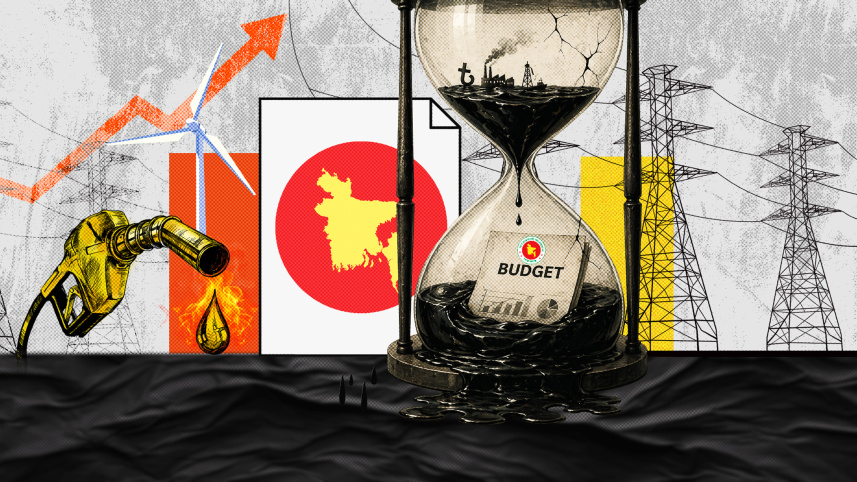
Whenever an energy crisis emerges, we hear calls for greater use of domestic gas. But once the crisis eases, the discussion goes no further. Bangladesh fell behind in gas exploration, extraction and infrastructure development under the Awami League government. Although gas was discovered in Bhola in the 1990s, it has still not been brought into the national grid, despite repeated arguments for doing so. Now, amid another gas crisis, Bhola’s gas has returned to the national debate—and so have questions about whether extracting it would be economically viable.
That question is important, but it cannot be answered by looking only at the cost of constructing a pipeline. We must also ask how much Bangladesh is spending on imported LNG, how much more it will spend in the future, and what risks this dependence poses to the economy, industry and national energy security.
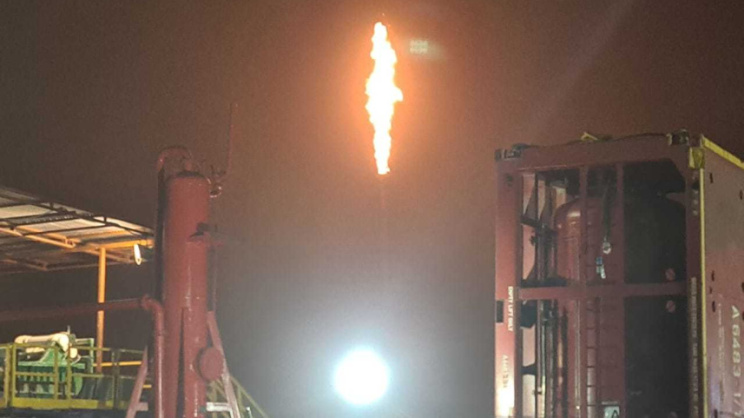
The missed opportunity in Bhola
Bhola currently has three gas fields: Shahbazpur, Bhola North and Sundarpur. Their potential reserves are estimated at around 2 trillion cubic feet (TCF), of which approximately 1.5 TCF may be recoverable.
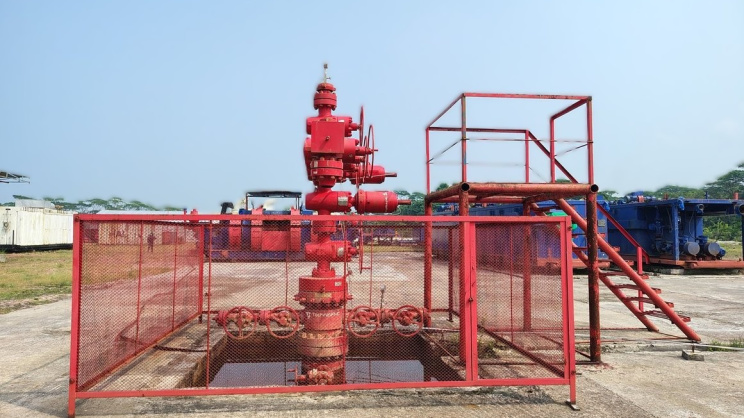
Existing wells in Bhola have the capacity to supply about 120 million cubic feet of gas per day, although BAPEX is currently extracting only around 74 million cubic feet a day. The government has also begun implementing a plan to drill 10 additional wells—five by a Chinese company and five by BAPEX. More wells mean more gas will be available, but without a pipeline, that gas will remain unused.
Gas has been found in every well drilled in Bhola so far, representing a success rate of 100 per cent. Against this background, the argument that Bhola lacks sufficient gas, or that investment there would not be profitable, is difficult to justify.
Gas has been found in every well drilled in Bhola so far, representing a success rate of 100 per cent. Against this background, the argument that Bhola lacks sufficient gas, or that investment there would not be profitable, is difficult to justify.
The proposal to build a pipeline from Bhola is not new. Discussions have continued for at least 15 years. In 2018, the preliminary cost of constructing a 24-inch pipeline was estimated at only US$48.8 million. Its daily transmission capacity was projected at 350–400 million cubic feet, close to the supply capacity of a modern LNG terminal.
However, the project was not implemented. Energy experts and industry insiders have attributed the delay to indecision, concerns about economic risks and lobbying in favour of LNG imports. As a result, a project that could have been built for US$48.8 million may now cost at least US$284.6–325.2 million. Depending on the route, and allowing for inflation, foreign consultants, imported materials, technology and land acquisition, the cost could rise to US$650.4–731.7 million.
This is not merely the failure of a pipeline project. It is an example of the high cost of delaying strategic decisions.
A failure of planning—or something more?
The obvious question is whether this is a case of a planning fallacy: the “penny wise, pound foolish” syndrome in which policymakers avoid a relatively modest investment today, only to incur vastly greater costs later. Could it also be a form of austerity theatre, in which governments appear cautious about public spending while committing the country to far more expensive imports? Or does the repeated preference for LNG over domestic gas point to a rent-seeking syndrome, in which influential commercial interests benefit from import-dependent policies?
Governments cannot make the same mistake repeatedly and then present each delay as an isolated technical or financial decision. When a US$48.8 million pipeline is postponed for years and eventually becomes a US$284.6–731.7 million pipeline, while billions are spent on imported LNG, the pattern demands serious scrutiny. If we rule out simple miscalculation, rent-seeking becomes the most plausible explanation. In this respect, the new BNP government will prove no different from its predecessors if it continues to prioritise costly imports while delaying domestic exploration and infrastructure development. Changing governments must not mean merely changing the beneficiaries of the same flawed policy. Any new administration must prove that decisions are being made in the national interest, rather than under pressure from import lobbies or politically connected businesses.
The cost of LNG dependence
While the Bhola pipeline was being delayed, Bangladesh moved rapidly towards LNG imports. LNG imports began in 2018 and were presented as a major solution to the country’s gas shortage. Yet the shortage has not disappeared, despite enormous expenditure.
According to Petrobangla data, Bangladesh spent US$22.52 billion on LNG imports between the 2018–19 and 2025–26 fiscal years. During the same period, the government provided an additional US$3.90 billion in subsidies to the gas sector. Gas prices were repeatedly raised, funds from the Gas Development Fund were used, and Petrobangla increasingly relied on foreign loans.
According to Petrobangla data, Bangladesh spent US$22.52 billion on LNG imports between the 2018–19 and 2025–26 fiscal years. During the same period, the government provided an additional US$3.90 billion in subsidies to the gas sector. Gas prices were repeatedly raised, funds from the Gas Development Fund were used, and Petrobangla increasingly relied on foreign loans.
In the last fiscal year alone, Bangladesh imported 113 LNG cargoes at a cost of US$4.86 billion. An additional US$1.02 billion was required in subsidies. In the current fiscal year, 115 cargoes are expected to be imported. If current market prices hold, LNG imports alone could cost around US$7.32 billion.
The international LNG market is highly volatile. Wars, geopolitical tensions, the state of shipping routes and supply disruptions all influence prices. According to the Japan-Korea Marker, spot LNG prices have risen to US$22.94 per million British thermal units (MMBtu), nearly 99 per cent higher than in the same period last year. In February, the price was US$10.72 per MMBtu; it has risen by roughly 114 per cent in the months since.
This volatility makes LNG an expensive and uncertain foundation for national energy policy.
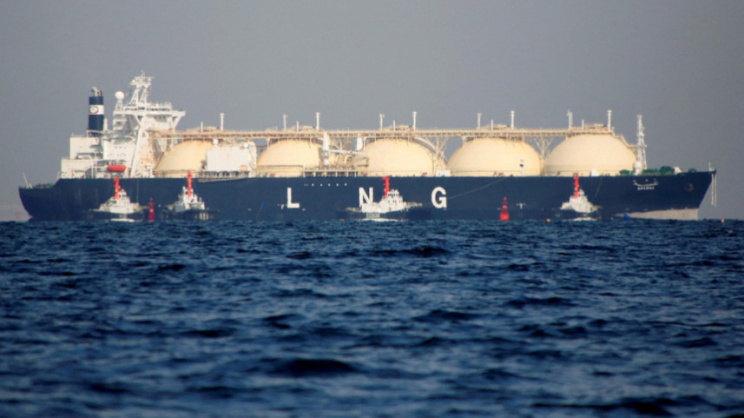
More terminals, more financial pressure
The government is planning to build additional floating storage and regasification units (FSRUs) to address the gas shortage. One new terminal has already received initial approval. Bangladesh currently has two floating terminals at Maheshkhali, with a combined supply capacity of approximately 1,100 million cubic feet per day. If two more terminals are built, capacity could rise to around 2,200 million cubic feet per day.
But the cost of a terminal does not end with construction. Gas must be unloaded, stored, regasified and transported through high-pressure pipelines to the national grid. New pipelines would require route surveys, environmental assessments, land acquisition and years of construction. A terminal proposed as an immediate solution may therefore not deliver gas quickly.
More importantly, even after the terminals are built, Bangladesh will still have to buy LNG. Experts estimate that annual import costs could rise to US$9.76–10.57 billion if two additional terminals become operational. Some Petrobangla officials believe that four terminals could result in annual LNG expenditure of at least US$8.13 billion.
A report by the Institute for Energy Economics and Financial Analysis (IEEFA) warned that if domestic gas discoveries remain limited and LNG prices remain volatile, Bangladesh’s LNG import bill could reach US$8.5 billion in the 2029–30 fiscal year. If market prices increase further, the cost could rise by several billion dollars.
Before committing to new terminals, Bangladesh must therefore ask whether it is building infrastructure that will deepen import dependence and create a permanent financial burden.
Domestic potential beyond Bhola
Energy expert Anwar Hossain Bhuiyan has identified several ways to increase domestic gas production. His analysis indicates that Bangladesh’s gas potential is not limited to new, unexplored areas. Significant reserves may still exist within existing gas fields.
Bangladesh has 29 gas fields, around 20 of which may be considered operational. Not all the gas in a field can be extracted through one well, or even a few wells. Geological barriers often leave gas trapped in areas known as “undrained compartments”.
Bangladesh has 29 gas fields, around 20 of which may be considered operational. Not all the gas in a field can be extracted through one well, or even a few wells. Geological barriers often leave gas trapped in areas known as “undrained compartments”.
Reprocessing, reinterpreting and re-evaluating existing geological data can help identify these compartments, and new wells could then be drilled in these areas. Since gas has already been found in the same field, the chances of success would be higher than in unexplored areas. Existing pipelines and processing facilities could also be used, allowing the gas to be supplied directly to the national grid.
A second opportunity is to work over old wells. Exploration in Bangladesh began in 1955, so many wells are now old or damaged. Repairing and rehabilitating them could increase production.
A third opportunity lies in deep drilling. Because of technological limitations, many fields have been explored only to a certain depth. Deeper geological layers may contain additional gas. Several deep-drilling initiatives have already been undertaken and could yield important results.
Anwar Hossain has also pointed to underexplored areas around the Titas, Bakhrabad and Bibiyana structures; the hinge zone extending from Kolkata through Pabna and Mymensingh to Sylhet; the Sylhet Trough or Surma Basin; and the Hatiya Trough. The Chittagong Hill Tracts deserve greater attention: Bangladesh has 28 identified structures in the Chittagong and Chittagong Hill Tracts regions, but exploration there remains limited.
India’s Tripura region, which shares some geological similarities with Bangladesh’s south-eastern areas, has produced approximately 2.7 TCF of proven gas from more than 150 exploratory wells. Its potential reserves are estimated at up to 14 TCF.
Bangladesh’s offshore areas also offer potential. The geological similarities between parts of Bangladesh’s maritime territory and Myanmar’s gas-producing areas are encouraging.
The economics of exploration
The strongest case for domestic gas lies in the comparison between investment and potential returns.
According to Anwar Hossain’s figures, drilling 30 wells could produce at least 5 TCF of gas. The estimated value of that gas is approximately US$40.65 billion. The cost of drilling the 30 wells would be around US$609.8 million, rising to approximately US$813 million once other expenses are included.
This is not a guarantee of discovery. Exploration involves risk, and some wells may be dry. But a dry well is not necessarily a total loss: the geological information obtained can improve future exploration and reduce uncertainty.

The comparison with LNG is striking. The total investment required to drill 30 wells would be approximately US$813 million—far less than the US$4.86 billion spent on LNG imports in the last fiscal year alone. Including subsidies, the LNG figure rises to US$5.88 billion. In other words, the cost of drilling 30 wells would be roughly one-seventh of last year’s expenditure on LNG imports and subsidies.
Domestic exploration also creates lasting national assets: reserves, infrastructure, technical expertise and geological data. Money spent on LNG, by contrast, largely leaves the country and provides no permanent resource once the gas is consumed.
A balanced energy strategy
Bangladesh cannot afford to stop importing LNG now. Imports are necessary to bridge the gap between demand and domestic production. But in the future, LNG should supplement domestic gas rather than replace it. Bangladesh must reduce its dependence on imported LNG and halt plans to build new LNG terminals.
Leaving domestic gas underground while relying increasingly on imports is irrational. Bangladesh needs a balanced energy mix that protects its reserves, reduces financial exposure, strengthens its bargaining power in international markets and gradually decreases import dependence.
The government should therefore accelerate the Bhola pipeline project, the plan to drill 150 wells, workovers of old wells, deep drilling, and exploration in underexplored onshore and offshore areas. BAPEX must be provided with modern rigs, software and seismic technology, along with better career opportunities for skilled engineers and geologists. Foreign companies may be engaged where necessary, but contracts must protect national interests, data ownership, control over resources and energy security.
With an investment of around US$813 million, 30 wells could potentially deliver gas worth approximately US$40.65 billion. If the Bhola pipeline had been built and domestic exploration undertaken earlier, Bangladesh could have saved the equivalent of nearly four years’ LNG import expenditure.
The opportunity still exists. Bangladesh cannot afford more austerity theatre, another planning fallacy or continued rent-seeking.
The question is no longer whether Bangladesh can afford to invest in domestic gas. The greater question is whether it can afford not to.
Dr Moshahida Sultana is an energy researcher and associate professor at the University of Dhaka.
Send your articles for Slow Reads to slowreads@thedailystar.net. Check out our submission guidelines for details.
Bangladesh’s renewable policy: Still too little but not too late
Prabhat Patnaik speaks / Why the Global South must rethink export-led growth
Bhotekoshi flood: Another warning from the Himalayas. Are we listening?
Renewing the Ganges Water Sharing Treaty: What should Bangladesh do?

What it really costs to live in Dhaka
Why Nepal’s devastating floods should no longer surprise us

What kind of doctors does Bangladesh need?

Why aren’t we talking about the health risks of battery rickshaws?

What six South Asian economists taught the world about development