How Roman Jakobson changed modern thought

The problem of intellectual passage
The intellectual history of the twentieth century can, in no small measure, be read as the history of disciplinary border crossings that progressively unsettled—and at times even dissolved—the inherited divisions between the humanities and the social sciences. Among the most consequential of these crossings was the migration of structural linguistics into psychoanalysis. This trajectory is conventionally narrated through two canonical figures: Ferdinand de Saussure, whose structural conception of language transformed modern linguistics, and Jacques Lacan, who reformulated psychoanalysis through linguistic categories. Yet the apparent linearity of this genealogy conceals the figure that both makes the passage possible and unsettles its coherence: Roman Jakobson, the indispensable yet curiously under-theorised mediator whose concepts traverse and transform both linguistics and psychoanalysis.
Between Saussure and Lacan, Jakobson is not simply a bridge. He is a site of theoretical transformation, misalignment, and productive distortion. If Saussure supplies the architecture of language and Lacan reconfigures psychoanalysis through linguistic form, Jakobson neither merely transmits nor stabilises this movement. He destabilises Saussure's system while simultaneously overdetermining the terms through which Lacan will later appropriate linguistics. As the forty-fourth anniversary of Jakobson's death (18 July 2026) approaches, his intellectual legacy continues to illuminate not only structural linguistics but also the broader question of how ideas travel across disciplines without ever remaining identical to themselves.
This essay advances a twofold thesis. First, Jakobson's reformulation of structural linguistics—particularly through the distinction between metaphor and metonymy—does not simply transmit Saussurean concepts to Lacan but fundamentally transforms them, activating latent tensions within Saussure's own framework while simultaneously generating the conceptual apparatus that Lacan will later appropriate. Second, this trajectory cannot be adequately understood through either a linear narrative of influence or a smooth narrative of epistemic convergence. Rather, it unfolds through the productive tension between what Edward Said theorises as travelling theory—the inevitable transformation of concepts as they cross disciplinary and institutional boundaries—and what Edward O. Wilson envisions as consilience—the aspiration towards a unity of knowledge across domains. Jakobson occupies the unstable interval between these competing intellectual imaginaries, making possible the migration of structural linguistics even as he reveals why perfect theoretical convergence remains unattainable.
Contrary to conventional wisdom, knowledge is neither strictly domain-dependent nor infinitely interdisciplinary. Rather, knowledge emerges through a productive tension between disciplinary specificity and conceptual movement across domains. Roman Jakobson not only epitomises this condition but embodies it, traversing linguistics, poetics, anthropology, semiotics, and communication theory in a manner that reveals disciplinary rigour and intellectual mobility to be mutually constitutive. Indeed, Jakobson's enduring influence rests not upon a single magnum opus but upon a remarkably diverse constellation of essays, lectures, and theoretical interventions whose cumulative force transformed multiple disciplines. It is precisely this dispersed yet remarkably coherent oeuvre that makes Jakobson the pivotal figure through whom the passage from Saussurean linguistics to Lacanian psychoanalysis can be most fruitfully be unpacked.
This essay makes no claim to provide a comprehensive account of Roman Jakobson's intellectual legacy. Its analytical focus is deliberately selective, concentrating on the trajectory through which Jakobson's reformulation of structural linguistics became available for Lacanian psychoanalysis when read through the competing frameworks of travelling theory and consilience. Such a focus necessarily brackets Jakobson's wider contributions to phonology, poetics, communication theory, Russian Formalism, Slavic studies, semiotics, translation, and interdisciplinary structuralism. These achievements, each of which warrants sustained examination in its own right, lie beyond the scope of the present inquiry. The argument advanced here concerns not the full versatility of Jakobson's scholarship but one particularly consequential pathway through which his concepts travelled across disciplinary boundaries and transformed twentieth-century intellectual history.
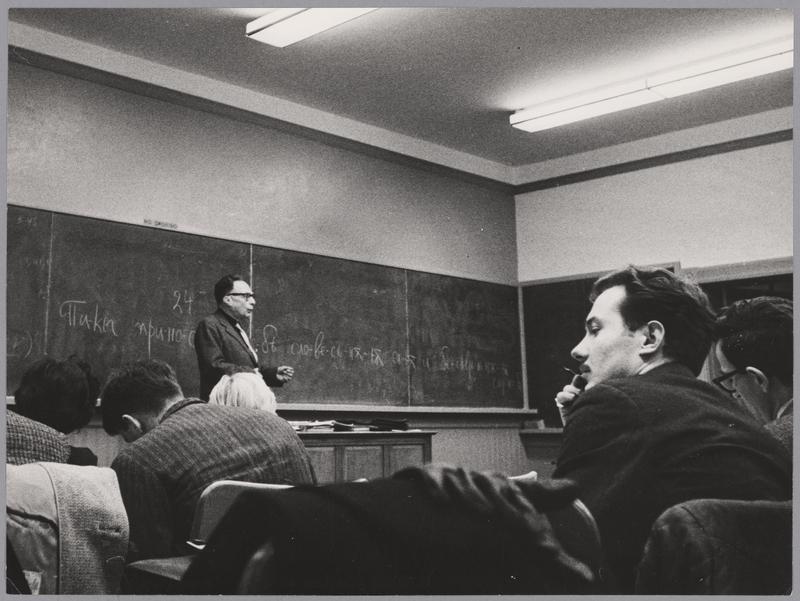
From this tension between structure and displacement, Lacan's rereading of Saussure emerges, reorienting the sign towards the unconscious, where meaning is never fully present but continuously deferred and retroactively stabilised. Read together, Saussure, Jakobson, and Lacan do not form a linear genealogy but a field of reciprocal intensifications in which language ceases to function as a transparent medium of thought and becomes instead the site where thought is produced, disrupted, and reconfigured.
This essay proceeds in four stages. It begins by revisiting Saussure's structural conception of language, attending not only to its formal closure but also to the productive tensions embedded within it, particularly the langue/parole distinction that anticipates later developments. It then examines Jakobson's reformulation of structuralism through metaphor and metonymy. It subsequently traces the migration of these concepts into Lacanian psychoanalysis before placing that trajectory in dialogue with Edward Said's notion of travelling theory and Edward O. Wilson's conception of consilience. The argument advanced here is that Jakobson occupies a paradoxical position between theoretical drift and epistemic convergence: his concepts travel across disciplines precisely because they are portable, yet they remain productive only because they are transformed in the process. The movement from Saussure to Lacan unfolds between Said's emphasis on conceptual migration and transformation and Wilson's vision of integration and convergence. Though these perspectives are fundamentally different, together they help explain how ideas travel and change across disciplines.
Saussure and the closure of structure
Ferdinand de Saussure's Course in General Linguistics (1916) redefined language as a system of differences without positive terms. A linguistic sign consists of a signifier and a signified, whose relation is arbitrary and whose value emerges only through differential relations within a system (Saussure 1959, 111–22). This move produces a decisive theoretical closure: language becomes a self-referential structure. Saussure's achievement, defining language as a self-contained system of differences, comes at a cost: it gives us the architecture of language but not its operations. The system is rigorously described, but Saussure leaves underdeveloped how it actually functions in speech, how it constitutes subjects, and how it transforms over time.
However, a more nuanced reading of Saussure reveals productive tensions within his system that complicate the "static" characterisation. The distinction between langue and parole—the abstract system of conventions and the individual execution of speech—introduces precisely the operational dimension that Jakobson will later exploit. Saussure compares langue to the rules of chess, the norms for playing the game, and parole to the moves an individual chooses to make. This analogy suggests that while the system is formally closed, its actualisation through use opens possibilities for variation and creativity. Moreover, Saussure's treatment of analogy as a creative force, whereby speakers generate new forms through patterned substitution, anticipates Jakobson's account of metaphor as paradigmatic selection.
Saussure did not entirely ignore the dynamic aspects of language. He recognised that if langue is the product that the individual passively registers, it is nevertheless "created in speech, and is in fact being continuously recreated, extended, altered, reshaped." The static characterisation that dominates structuralist readings of Saussure is thus a partial reading. The Cours contains the seeds of its own destabilisation: the system is actualised through use, and analogy demonstrates that speakers actively generate new forms rather than merely reproducing existing ones.
This recognition strengthens the argument that Jakobson does not simply supplement a static system but activates tensions already present within it. The claim that Jakobson "reopens" structuralism becomes more precise: he makes explicit what was implicit in Saussure's own framework. Saussure leaves us with a structure that is rigorously differential yet contains within it the possibility of movement and transformation. Jakobson's intervention consists less in supplementing this structure than in activating its latent dynamics. By theorising language through communicative functions, by distinguishing the operations of selection and combination, and by demonstrating how linguistic structures can be transposed into poetic and ultimately psychoanalytic domains, Jakobson exposes within structural closure the possibility of movement, transformation, and disciplinary migration itself.
| Thinker | Primary Object | Key Concept | Function of Language | Limitation |
| Saussure | Linguistic system | Signifier/Signified | Differential structure with latent operational tensions | Leaves productive dynamics underdeveloped |
| Jakobson | Linguistic operations | Metaphor/Metonymy | Dynamic processes of selection and combination | Opens structure without resolving instability |
| Lacan | Subjectivity and unconscious | Symbolic order | Language structures desire and subject formation | Risks of theoretical overextension |
Jakobson: From system to displacement
Roman Jakobson inherits Saussurean structuralism but immediately destabilises it. Formed within Russian Formalism and later the Prague Linguistic Circle, he approached language less as a static structure than as a dynamic system of operations, functions, and transformations. His intellectual trajectory placed him at the intersection of linguistics, poetics, communication theory, and emerging structuralist thought, making him uniquely positioned to facilitate the migration of concepts across disciplinary boundaries.
His most influential intervention, developed in "Two Aspects of Language and Two Types of Aphasic Disturbances" (1956), centres on a distinction between two fundamental axes of language. The first is the axis of selection, through which speakers choose among paradigmatic alternatives, for example, selecting cat rather than kitten. The second is the axis of combination, through which linguistic units are linked syntagmatically, as in the construction of a sentence such as The cat sleeps. Jakobson correlates these linguistic operations with two rhetorical mechanisms: metaphor, which operates through substitution and similarity, and metonymy, which operates through contiguity and association. A metaphor such as "My love is a rose" substitutes one term for another on the basis of perceived resemblance, whereas a metonymic expression such as "the crown" standing for monarchy depends upon a relation of proximity rather than similarity.
Crucially, in Jakobson's formulation, metaphor and metonymy are not fixed rhetorical categories. They are competing tendencies that organise linguistic, poetic, and communicative structures. Every speech event requires the intermingling of two types of operation: the selection of linguistic items and their combination into completed utterances. More importantly, these operations do not merely describe language; they redefine what counts as linguistic structure in the first place. Drawing upon clinical studies of aphasia, Jakobson demonstrated that damage affecting the paradigmatic axis impairs a speaker's ability to select among alternatives, producing deficits associated with metaphorical operations, while damage affecting the syntagmatic axis disrupts the capacity to combine linguistic units into coherent sequences, producing impairments associated with metonymic operations (Jakobson 1956, 55–62).
Language thereby appears not as a static system of relations but as a dynamic field structured by competing operations whose disruptions reveal their underlying organisation. As Bredin (1984) notes in his critical reading of Jakobson's text, "selection is based on similarity, and combination on contiguity," and these operations function and cooperate at every level of speech, from phonemes to phrases to entire discourses. Jakobson's significance therefore lies not simply in extending Saussurean linguistics but in reopening it. He transforms structuralism from a theory of differential relations into a theory of operations, movements, and transformations. In doing so, he destabilises Saussure's relative structural closure while simultaneously overdetermining the conceptual field that Lacan will later appropriate and reorganise.
Between Saussure and Lacan, Jakobson is not simply a bridge. He is a site of theoretical transformation, misalignment, and productive distortion. If Saussure supplies the architecture of language and Lacan reconfigures psychoanalysis through linguistic form, Jakobson neither merely transmits nor stabilizes this movement. He destabilizes Saussure's system while simultaneously overdetermining the terms through which Lacan will later appropriate linguistics.
Traveling Theory: Drift without identity
Edward Said's concept of traveling theory, introduced in The World, the Text, and the Critic (1983), offers a first lens through which to understand this instability. For Said, theories do not retain a fixed identity as they move across contexts. They are transformed by the institutional, historical, political, and disciplinary conditions into which they enter (Said 1983, 226–27). Concepts that appear stable at their point of origin are rearticulated, repurposed, and often fundamentally altered when they are appropriated by new intellectual communities. The movement of theory is therefore never a process of simple transmission but one of displacement and transformation.
Said's concept emerged from his specific concern with the politics of theory, the way theoretical movements from the "periphery" are domesticated by metropolitan institutions, their critical edge blunted or redirected. His paradigmatic examples include the travels of Georg Lukács's theory of reification from Hungary to Western Europe, where it was transformed by the Frankfurt School into a more abstract critical theory, and the migration of Raymond Williams's cultural materialism from British working-class experience into academic cultural studies. In each case, what travels is not a stable theoretical core but a set of problematics that are reconfigured by the conditions of their reception. The political implications of this insight are significant: theories that emerge from specific historical and political situations lose their critical force precisely to the extent that they are abstracted from those origins. Said's traveling theory is therefore not merely a descriptive account of intellectual migration but a critical intervention into how theory becomes depoliticised through institutional incorporation.
From this perspective, the Saussure–Jakobson–Lacan trajectory appears less as a chain of influence than as a sequence of theoretical migrations. Crucially, the institutional passage is historically traceable. Jakobson's ideas reached Lacan through multiple channels: Jakobson's 1942–44 lectures at the École Libre des Hautes Études in New York, attended by Claude Lévi-Strauss, who subsequently transmitted many of these structural insights into the French intellectual milieu; the structuralist conversations and seminars that circulated through Parisian institutions during the 1950s; and Lacan's own engagement with Jakobson's 1956 study of aphasia. The encounter was not merely textual. Jakobson's visit to Paris in 1960 and his personal exchanges with Lacan further complicated any simple distinction between influence, appropriation, and collaboration (Roudinesco 1990, 263–68).
Élisabeth Roudinesco's authoritative history of psychoanalysis in France documents how Lacan's institutional position shaped his appropriation of structuralist categories. The debates, scissions, and theoretical advances of French psychoanalysis during this period all "turn around Lacan's extraordinary personality," and the encounter with structuralism, mediated by figures like Lévi-Strauss and Jakobson, was formative for the development of Lacanian thought. As François Dosse (1991) documents in his magisterial History of Structuralism, the institutionalisation of structuralist thought in France involved a complex interplay of academic positions, journal networks, and intellectual alliances that shaped how concepts were received and transformed. Dosse's account reveals that the structuralist movement was never a monolithic enterprise but a heterogeneous field of competing projects, and Jakobson's concepts were appropriated differently by different constituencies, linguists, anthropologists, literary theorists, and psychoanalysts each taking what they needed while leaving behind what did not serve their purposes.
This institutional heterogeneity is crucial for understanding the Saidian dimension of the trajectory. What Lacan received was not "Jakobson's linguistics" in any pure form but a set of concepts already filtered through multiple institutional and disciplinary lenses. The institutional conditions under which ideas travel are not incidental to their transformation; they are constitutive of it. Moreover, Said's framework illuminates how the migration of structural linguistics into the Parisian psychoanalytic establishment involved a significant depoliticisation: what had emerged in part from Russian Formalist engagement with revolutionary poetics and from Prague School attention to language in social context became, in the French context, a more abstract theory of symbolic structure, stripped of many of its original institutional and political entanglements.
What travels, however, is never what arrives. Saussure's linguistic distinctions become, in Jakobson's hands, dynamic operations linking language, poetics, and pathology. These same operations are subsequently reconfigured by Lacan into mechanisms of unconscious desire and psychic structure. At each stage, concepts acquire new functions, new explanatory ambitions, and new theoretical burdens. The result is not continuity but productive distortion. Read through Said, Jakobson is not a stabilising mediator between Saussure and Lacan but the principal site of theoretical drift, the unstable interval in which structural linguistics ceases to be fully Saussurean without yet becoming recognisably Lacanian.
Contrary to conventional wisdom, knowledge is neither strictly domain-dependent nor infinitely interdisciplinary. Rather, knowledge emerges through a productive tension between disciplinary specificity and conceptual movement across domains. Roman Jakobson not only epitomizes this condition but embodies it, traversing linguistics, poetics, anthropology, semiotics, and communication theory in a manner that reveals disciplinary rigor and intellectual mobility to be mutually constitutive.
One possible objection is that Claude Lévi-Strauss, rather than Roman Jakobson, should be regarded as the principal intermediary between Saussure and Lacan, given his decisive role in introducing structural linguistics into French anthropology and his well-documented influence on post-war structuralism. As Vincent B. Leitch (1982) observes, Lévi-Strauss "always followed the emended Saussure of R. Jakobson and Troubetzkoy" (p. 16). Indeed, the structural anthropology of Lévi-Strauss was itself indebted to the linguistic innovations of the Prague School. Whereas Nikolai Troubetzkoy advanced Saussurean linguistics by identifying, classifying, and systematising phonemic oppositions, Jakobson extended this achievement by demonstrating that phonological oppositions are fundamentally binary while also generating more complex relational structures through gradational or mediating phonemes. This theory of binary differentiation furnished the conceptual basis for Lévi-Strauss's celebrated analysis of anthropological data in terms of binary oppositions (Leitch, 1982). Yet Jakobson's structural linguistics was never reducible to such dualisms. Distinctive features acquired explanatory force only within a larger relational system in which markedness, neutralisation, and mediating terms generated increasingly complex structural configurations.
Lévi-Strauss's contribution remained primarily one of disciplinary transposition. He relocated Saussurean linguistics into the analysis of kinship, myth, and culture, thereby extending structuralism into anthropology. Jakobson's intervention was of a different order. Rather than simply transferring structural linguistics to a new domain, he reformulated it from within by transforming differential structure into the dynamic operations of metaphor and metonymy. It was these operations, not anthropology as such, that Lacan appropriated in theorising the unconscious, symbolic substitution, and the metonymic movement of desire. Lévi-Strauss facilitated the diffusion of structuralism; Jakobson supplied the conceptual machinery that enabled its migration into psychoanalysis. The decisive passage from Saussure to Lacan therefore runs less through anthropology than through Jakobson's reconfiguration of linguistic structure.
Lacan: Productive misreading and structural overreach
Jacques Lacan does not simply apply Jakobson; he overextends him. The famous claim that "the unconscious is structured like a language" (Lacan 1977, 20) is not a descriptive equivalence but a theoretical inflation. Lacan takes Jakobson's linguistic distinctions, originally developed to account for operations within language, and elevates them into a general theory of subjectivity. Metaphor, which for Jakobson describes a process of substitution operating within linguistic and poetic structures, becomes in Lacan the mechanism through which the subject is inserted into the symbolic order. This transformation is most clearly visible in the paternal metaphor (Nom-du-Père), where the Name-of-the-Father substitutes for the mother's desire and thereby inaugurates the subject's symbolic existence (Lacan 1993, 198–202). The mechanism is more complex than simple substitution, however: the Nom-du-Père operates through the foreclosure of the paternal function, and its relation to the mother's desire is mediated by the phallus as a signifier of lack. Lacan's formula for the paternal metaphor, which he presents as a mathematical function, involves the substitution of the Name-of-the-Father for the desire of the mother, with the phallus as the signifier that is thereby signified. This formalisation reveals how Lacan's linguistic categories are not merely analogies but have operative, mathematical force.

Metonymy undergoes an equally dramatic expansion. No longer merely a linguistic relation of contiguity, it becomes the very structure of desire itself. As Lacan famously argues, desire is metonymic because it continually slides from one signifier to another, never coinciding with the object it appears to seek (Lacan 1977, 175). The symptom itself is reframed through this linguistic lens: it becomes a formation of the unconscious, and "the unconscious is structured like a metaphor." Lacan's insistence that we take his formulas literally, as mathematical functions, forces us to recognise that his linguistic categories are not merely analogies but have operative force. As one commentator notes, "taking the language functions literally engenders the effect they merely seem to signify"—the formulas perform the disruption they describe (Kuehne 2017, 193).
Yet this extension is not a faithful translation of Jakobson's concepts. It is a productive misreading. The unconscious does not literally operate like language; rather, language is retrospectively reconstructed as though it already contained the principles of unconscious life. What function as observable tendencies within Jakobson's analyses of aphasia, poetics, and linguistic structure are transformed by Lacan into transcendental conditions of subjectivity. The movement from linguistics to psychoanalysis therefore involves more than interdisciplinary borrowing. It entails a change in explanatory scale, whereby concepts developed to describe the functioning of language are reconfigured as principles governing the constitution of the subject itself. It is precisely at this point that travelling theory ceases to resemble continuity and becomes productive distortion. The concepts survive the journey only by becoming something other than what they were at their point of departure.
The question of whether Lacan's appropriation of linguistics constitutes a legitimate development or a category mistake has been a persistent source of critical debate. Critics such as Jean Laplanche (1999) and André Green (1999) have argued that Lacan's linguistic turn risks subordinating Freud's metapsychology to structural linguistics, thereby diminishing the centrality of affect, drive, and unconscious fantasy. For Laplanche, the unconscious is not structured like a language but is rather a set of "enigmatic signifiers" that resist linguistic formalisation. The unconscious, in this view, is characterised by a fundamental heterogeneity that cannot be captured by structural linguistics. Green, similarly, argues that Lacan's privileging of the symbolic order neglects the affective and libidinal dimensions of psychic life that resist linguistic reduction. From this perspective, Lacan's "overextension" is not merely a productive distortion but a fundamental misunderstanding that transforms psychoanalysis into a subspecies of linguistics.
The unconscious does not literally operate like language; rather, language is retrospectively reconstructed as though it already contained the principles of unconscious life. What function as observable tendencies within Jakobson's analyses of aphasia, poetics, and linguistic structure are transformed by Lacan into transcendental conditions of subjectivity.
Other critics, however, defend Lacan's project as a necessary corrective to the biologism and ego psychology that dominated post-war psychoanalysis. For Élisabeth Roudinesco (1993), Lacan's linguistic turn represented a vital effort to restore the intellectual respectability of psychoanalysis by grounding it in the most rigorous conceptual vocabulary available. The question of whether this turn was legitimate cannot be answered abstractly; it depends upon whether one accepts Lacan's fundamental premise that the unconscious is constituted through language and is therefore subject to formal analysis.
Yet Lacan's linguistic turn operates under the persistent pressure of a prior theoretical regime. Sigmund Freud's account of unconscious processes, condensation (Verdichtung), displacement (Verschiebung), and the formation of symptoms through compromise, provides the clinical and hermeneutic ground against which Lacan's structuralist appropriation must be measured. Freud offers a depth hermeneutics in which manifest content conceals latent wishes, where the analyst interprets distortions that point towards repressed meaning. Jakobson, by contrast, offers a surface formalism: linguistic operations produce observable patterns independently of depth interpretation. The concepts may appear isomorphic, metaphor resembles condensation in its operation of substitution, metonymy resembles displacement in its movement along chains of association, but they belong to fundamentally different explanatory economies. Freud's categories are interpretative and reconstructive; Jakobson's are descriptive and structural. This distinction echoes Paul de Man's observation that rhetorical readings risk either "grammatical" formalism or "rhetorical" interpretation, a tension that Lacanian psychoanalysis cannot fully resolve (de Man 1979, 9–11).
Lacan's synthesis depends upon maintaining this unresolved tension. His project does not simply replace Freudian hermeneutics with structuralist formalism but holds them in productive collision. When Lacan claims that "the unconscious is structured like a language," the claim is neither a reduction of depth to surface nor a denial of the interpretative enterprise. Rather, it reconfigures interpretation itself: the analyst no longer excavates hidden meanings but tracks the signifying operations through which the subject is constituted, disrupted, and divided. The unconscious becomes legible not despite but through its formal operations. In this sense, Freud is not a foundation superseded by structuralism but a rival explanatory regime that persists beneath the linguistic turn, a ghost that Jakobson's formalism cannot exorcise and that Lacan's synthesis requires.
| Jakobson's Linguistics | Original Linguistic Function | Lacan's Psychoanalytic Reformulation | Nature of the Transformation |
|---|---|---|---|
| Language as a system of differential relations | Meaning arises from differences among signs within a structured linguistic system. | "The unconscious is structured like a language." The unconscious is organised by differential signifiers within the Symbolic Order. | Linguistic structure becomes an ontological model of subjectivity rather than merely a description of language. |
| Metaphor (selection/substitution) | One sign replaces another through similarity, producing semantic condensation and poetic effects. | The paternal metaphor (Nom-du-Père) substitutes for the mother's desire, inaugurating entry into the Symbolic Order. | A rhetorical operation becomes the constitutive mechanism of subject formation. |
| Metonymy (combination/contiguity) | Meaning develops through sequential relations and contextual association. | Desire proceeds metonymically through an endless chain of signifiers, never reaching complete satisfaction. | A linguistic principle becomes the dynamic structure of desire itself. |
| Binary oppositions | Phonological distinctions are generated through differential binary features. | The Symbolic Order operates through differential signifiers that constitute identity through opposition. | Structural linguistics becomes a theory of symbolic identity and subjectivity. |
| Axis of selection vs. axis of combination | The paradigmatic (selection) and syntagmatic (combination) axes organise language and explain aphasic disorders. | Metaphor privileges substitution; metonymy privileges signifying chains that structure unconscious discourse. | Linguistic operations become mechanisms of unconscious production. |
| Poetic function | The message foregrounds its own linguistic organisation, emphasising the materiality of language. | Symptoms, dreams, slips, and jokes exhibit patterned signifying structures that demand formal rather than merely semantic interpretation. | Poetics expands into a general theory of unconscious formations. |
| Analysis of aphasia | Speech disorders reveal the structural organisation of language through impairments of selection or combination. | Neuropsychological observations become analogies for unconscious mechanisms and psychic symptom formation. | Clinical linguistics becomes a model for psychoanalytic explanation. |
| Communication model | Speaker, addressee, context, code, contact, and message define linguistic communication. | Communication is always mediated by the Symbolic; the subject is spoken by language before speaking. | Communication theory becomes a theory of the decentered subject. |
| Structural analysis | Linguistics seeks objective, formal relations governing language. | Psychoanalysis analyses signifying structures governing unconscious life. | Structural method migrates from descriptive linguistics to psychoanalytic ontology. |
| Limits of Jakobson's theory | Linguistic concepts explain language and poetic discourse. | Lacan universalises these concepts into a comprehensive theory of the subject, desire, and the unconscious. | The migration becomes a productive misreading or structural overreach, extending linguistics beyond its original explanatory domain. |
The trajectory is neither one of faithful inheritance nor simple influence. Saussure theorises differential structure; Jakobson operationalises that structure into dynamic linguistic processes; Lacan ontologises those processes into the constitutive logic of the subject. Structural linguistics thus travels from a theory of language to a theory of the psyche, changing not merely its disciplinary location but its explanatory scale. This shift marks not conceptual continuity but a productive theoretical overreach, the very condition that makes Lacanian psychoanalysis possible. Lacan does not simply borrow Jakobson's concepts; he refunctions them into a theory of subjectivity, desire, and the unconscious. What begins as a descriptive linguistics culminates in a constitutive ontology of the psyche.
Consilience: The illusion of convergence
At first glance, Edward O. Wilson's Consilience: The Unity of Knowledge (1998) appears to stabilise this trajectory by proposing an underlying continuity across domains of knowledge. Wilson's project rests on the assumption that phenomena investigated by the humanities, social sciences, and natural sciences ultimately participate in a common explanatory framework grounded in shared cognitive, biological, and evolutionary processes. For Wilson, consilience is not merely a hope but a methodological commitment: "the strong tradition of reductionism" should guide inquiry across all fields, and "the central idea of the consilience of the sciences" is that "the world is orderly and can be explained by a small number of natural laws" (Wilson 1998, 4–5), a formulation that embodies the principle of parsimony. From this perspective, the movement from linguistics to psychoanalysis would not represent a rupture but a convergence. Jakobson's distinction between metaphor and metonymy could be understood as the linguistic manifestation of more fundamental neural and adaptive mechanisms. Metaphor would emerge from capacities for analogical mapping and pattern recognition, while metonymy would reflect associative processes embedded within memory and inference. Both could thus be interpreted as evolutionary solutions to recurrent problems of reference, classification, and communication (Wilson 1998, 89–95). Under such a reading, Lacan's symbolic order would appear not as an autonomous realm but as a higher-level description of processes ultimately continuous with cognition and biology.
Yet Wilson's own treatment of the humanities is more nuanced than a simple reductionist programme might suggest. In his chapters on the arts and ethics, Wilson acknowledges the autonomy of cultural phenomena while insisting on their evolutionary ground. He argues that the arts are not merely epiphenomena of biological processes but represent "the hereditary construction of the mind" that enables human creativity. Similarly, he suggests that ethics can be understood as the "naturalisation of moral reasoning" without collapsing into crude determinism. These qualifications complicate any straightforward opposition between symbolic irreducibility and biological reductionism. Wilson is not, in fact, claiming that all humanistic knowledge can be reduced to biology; he is arguing that biological knowledge provides a necessary foundation for understanding human cultural phenomena.
Jakobson therefore occupies an unstable position between drift and convergence. The mobility of his concepts suggests a shared intellectual terrain, yet every migration simultaneously transforms what is being transferred. His work offers evidence both for the possibility of epistemic integration and for the inevitability of theoretical displacement.
The attempt to impose consilience upon this trajectory nonetheless produces tension rather than resolution. Lacanian psychoanalysis resists precisely the forms of reduction upon which Wilson's project depends, even in its more qualified forms. Language, for Lacan, is not a transparent expression of underlying cognitive mechanisms but a symbolic structure that irreversibly mediates and fractures human experience. The subject is not a unified processor of information but a divided being (sujet barré) constituted through lack, displacement, and misrecognition. As Fredric Jameson has argued, Lacan's insistence on the "primacy of the signifier" entails a "radical break" with any biological or cognitive reductionism, positioning the symbolic order as irreducible to natural processes (Jameson 1977, 173–75). What Wilson seeks to integrate, Lacan insists on separating. The symbolic cannot be collapsed into the biological without losing what psychoanalysis understands as constitutive of subjectivity itself.
This is not, however, to say that consilience is simply wrong. Wilson's project might be understood differently: not as the reduction of the symbolic to the biological, but as an asymptotic convergence in which different domains of knowledge approach common explanations without fully merging. In this reading, Jakobson's linguistic operations and Lacan's symbolic structures might be seen as higher-level descriptions of cognitive and neural processes that are not yet fully understood. The consilience Wilson envisions is not immediate reduction but gradual convergence across levels of explanation. From this perspective, the tension between symbolic irreducibility and biological grounding is not a contradiction but a productive incompleteness, a space for future research rather than a philosophical impasse.
Jakobson consequently occupies an unstable intermediate position. His distinction between metaphor and metonymy remains sufficiently formal to invite naturalisation within a consilient framework, yet sufficiently open to permit Lacan's transformation of linguistic operations into structures of desire and subject formation. The same conceptual apparatus therefore supports two radically different intellectual trajectories. From Wilson's perspective, metaphor and metonymy express an underlying continuity of cognitive processes. Lacan, by contrast, refunctions them as constitutive principles of symbolic division, rendering them irreducible to biological explanation.
Consilience, in this context, functions less as an achieved synthesis than as a receding horizon. The movement from Saussure to Jakobson to Lacan reveals not the realization of epistemic unity but the persistence of a productive tension between convergence and irreducible theoretical difference.
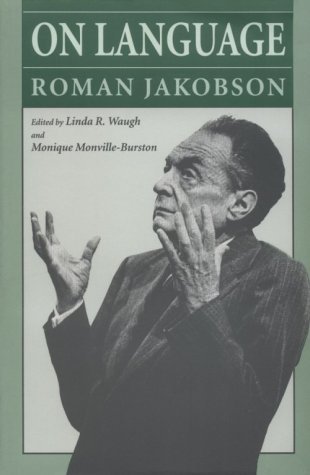
Jakobson between drift and convergence
The preceding discussions suggest that Jakobson cannot be adequately understood either as a simple transmitter of Saussurean ideas or as a precursor to Lacan. Rather, he occupies an intermediate position in which the opposing tendencies identified by Said and Wilson become simultaneously visible. His work therefore provides a useful site for examining the tension between theoretical transformation and intellectual convergence.
Roman Jakobson occupies a distinctive position in twentieth-century intellectual history because his work simultaneously invites two apparently incompatible interpretations. On the one hand, he exemplifies what Edward Said describes as the movement of theory across institutional and disciplinary boundaries. His concepts travel from linguistics into poetics, anthropology, communication theory, literary criticism, neurology, and psychoanalysis, acquiring new meanings and functions as they move. On the other hand, the remarkable portability of those concepts appears to support something closer to Edward O. Wilson's vision of consilience. The recurring applicability of distinctions such as metaphor and metonymy suggests the possibility that disparate domains of inquiry may share underlying formal structures.
From a Saidian perspective, however, the very success of these migrations reveals the impossibility of theoretical self-identity. Jakobson's metaphor is not Lacan's metaphor any more than Saussure's structure is Jakobson's structure. Each disciplinary crossing alters the conceptual apparatus it transmits. What appears as continuity is inseparable from transformation. The history of structuralism thus becomes a history of productive displacement rather than faithful inheritance. Jonathan Culler's observation that structuralism's "unifying force" lay not in a single doctrine but in "a set of methods and assumptions" that could be "applied to different objects" captures precisely this tension between formal portability and contextual transformation (Culler 1975, 8). Jakobson's concepts were portable precisely because they were abstract, yet this very abstraction rendered them susceptible to transformation upon arrival.
The passage from Saussure to Lacan via Jakobson is neither a linear transmission nor a smooth theoretical convergence. It is a sequence of displacements in which structure is continuously refunctionalised and transformed. Jakobson inhabits the productive tension between these incompatible visions, making possible the migration of structural linguistics even as he reveals the impossibility of complete theoretical consilience.
Yet the opposite conclusion also remains tempting. The persistence of Jakobson's conceptual distinctions across multiple fields invites the suspicion that they capture something more fundamental than a merely local linguistic phenomenon. Wilson's notion of consilience provides a language for this intuition. Metaphor and metonymy seem capable of organising explanations in domains ranging from language and literature to cognition and symbolic behaviour. Their repeated reappearance across disciplines creates the appearance of an underlying unity that transcends particular fields of inquiry.
Jakobson therefore occupies an unstable position between drift and convergence. The mobility of his concepts suggests a shared intellectual terrain, yet every migration simultaneously transforms what is being transferred. His work offers evidence both for the possibility of epistemic integration and for the inevitability of theoretical displacement. Read through Wilson, Jakobson appears as a figure of convergence whose concepts reveal common structures underlying diverse forms of knowledge. Read through Said, he appears as a figure of drift whose concepts survive only by becoming different from themselves.
The significance of Jakobson lies precisely in this unresolved tension. His work neither confirms consilience nor refutes it. Instead, it demonstrates that intellectual history advances through a process in which convergence and transformation are inseparable. Concepts travel because they are portable, but they remain productive because they are never transported unchanged.
Metaphor, Metonymy, and the breakdown of stability
Jakobson's distinction between metaphor and metonymy appears, in retrospect, more stable than it actually is. The distinction is internally marked by the very instability it seeks to describe. Metaphor presupposes substitution, yet substitution immediately destabilises identity, for if one term can stand in for another, neither possesses a fixed or self-sufficient meaning. Metonymy, by contrast, presupposes continuity, yet continuity itself generates potentially infinite displacement: the crown invokes the monarch, the monarch the palace, the palace the state, and so on without any necessary point of termination. The two principles therefore do not simply organise language; they expose language's constitutive instability.
This latent instability becomes increasingly visible as Jakobson's concepts travel beyond linguistics. Lacan radicalises it by transforming metonymic displacement into the very structure of desire. Because desire continually slides from one signifier to another, the subject never arrives at final satisfaction. Wilson, by contrast, seeks to contain this instability within a broader framework of epistemic convergence, treating metaphor and metonymy as manifestations of underlying cognitive structures shared across domains of knowledge. Said's notion of travelling theory points in the opposite direction, emphasising that concepts inevitably acquire new meanings and functions as they cross institutional and disciplinary boundaries. What appears as a stable distinction at one point of departure becomes increasingly difficult to stabilise at its destinations.
A clinical example from Jakobson's aphasia research crystallises the problem. A patient unable to produce the word "knife" may nevertheless generate related terms such as "fork," through contiguity, or "dagger," through similarity. For Jakobson, these substitutions provide evidence for distinct linguistic operations and remain primarily descriptive categories. For Lacan, however, the same disturbance can no longer remain merely descriptive. The missing signifier becomes interpretable as a symptom whose significance exceeds the mechanics of language and enters the domain of unconscious desire. As Julia Kristeva observed in her reading of the same material, the "semiotic chora" disrupts any purely formal account of linguistic operations, introducing a heterogeneity that Jakobson's binary framework cannot fully contain (Kristeva 1984, 25–27). Kristeva's semiotic is not merely a supplement to Jakobson's formalism but a fundamental challenge: it suggests that the linguistic operations Jakobson describes are themselves grounded in a pre-symbolic, bodily dimension that resists formalisation. The semiotic chora, the rhythmic, pulsing, pre-linguistic space of drives and affects, disrupts any purely formal account of linguistic operations by introducing a heterogeneity that Jakobson's binary framework cannot fully contain. The distance between these readings marks the point at which theoretical migration becomes transformation. Jakobson's distinction thus functions less as a bridge than as a pressure point where linguistic categories begin to exceed the disciplinary boundaries that originally contained them.
| Thinker | Metaphor | Metonymy |
|---|---|---|
| Jakobson | Similarity and substitution | Contiguity and association |
| Freud | Comparable to condensation | Comparable to displacement |
| Lacan | Mechanism of symbolic insertion | Structure of desire |
| Wilson | Cognitive pattern recognition | Associative inference |
| Said | Concept transformed through travel | Concept transformed through travel |
The unstable middle
The trajectory from Saussure to Jakobson and from Jakobson to Lacan reveals that intellectual history advances neither through simple continuity nor through absolute rupture, but through a process in which concepts travel, mutate, and occasionally generate unexpected forms of convergence. Jakobson's lasting contribution lies not merely in advancing linguistics but in making structuralism travel: he transformed linguistic concepts into interdisciplinary instruments that crossed disciplinary borders and reconfigured the intellectual interface between the humanities and the social sciences.
The passage from Saussure to Lacan via Jakobson is neither a linear transmission nor a smooth theoretical convergence. It is a sequence of displacements in which structure is continuously refunctionalised and transformed. For Said, the trajectory exemplifies conceptual drift: theories travel only by undergoing transformation. For Wilson, it suggests an asymptotic convergence in which shared formal structures promise disciplinary unity without ever fully delivering it. Jakobson inhabits the productive tension between these incompatible visions, making possible the migration of structural linguistics even as he reveals the impossibility of complete theoretical consilience. In other words, he simultaneously enables disciplinary migration and demonstrates why perfect consilience cannot be achieved.
Jakobson is neither origin nor destination, neither neutral transmitter nor stable mediator. Rather, he is the figure through whom structural linguistics ceases to be identical with itself and becomes available for interdisciplinary migration. The aphasic disturbances that Jakobson analyses as linguistic phenomena reappear in Lacan as structures of desire; the concepts survive the journey only by becoming something else. This transformation reveals what Culler identified as structuralism's essential paradox: its methods achieve their power through abstraction, yet this same abstraction ensures their transformation across contexts (Culler 1975, 12–14).
The implications of this analysis extend beyond the specific trajectory examined here. Contemporary debates about the "crisis of the humanities," the place of theory in the university, and the possibility of interdisciplinary knowledge production all echo the tensions that Jakobson's work embodies. The movement from linguistics to psychoanalysis demonstrates that disciplinary boundaries are permeable without being arbitrary: they enable intellectual labour even as they constrain it, and their crossing requires transformation rather than simple transfer. What Said and Wilson together reveal, in their incompatible ways, is that knowledge production is always caught between the specificity of disciplinary practices and the aspiration towards broader understanding. Jakobson's legacy is not that he resolved this tension but that he made it productive. His work continues to illuminate not only the history of structuralism but the ongoing question of how ideas travel, transform, and occasionally converge across the intellectual landscapes they traverse.
Dr. Faridul Alam, a former academic, writes from New York City.
Works Cited
- Bredin, Hugh. "Metonymy." Poetics Today 5, no. 1 (1984): 45–58.
- Culler, Jonathan. Structuralist Poetics: Structuralism, Linguistics, and the Study of Literature. London: Routledge, 1975.
- de Man, Paul. Allegories of Reading: Figural Language in Rousseau, Nietzsche, Rilke, and Proust. New Haven: Yale University Press, 1979.
- Dosse, François. History of Structuralism. 2 vols. Translated by Deborah Glassman. Minneapolis: University of Minnesota Press, 1991.
- Green, André. The Work of the Negative. Translated by Andrew Weller, Free Association Books, 1999.
- Jakobson, Roman. "Two Aspects of Language and Two Types of Aphasic Disturbances." In Fundamentals of Language, by Roman Jakobson and Morris Halle. The Hague: Mouton, 1956.
- Jameson, Fredric. "The Imaginary and Symbolic in Lacan: Marxism, Psychoanalytic Criticism, and the Problem of the Subject." Yale French Studies 55/56 (1977): 338–95.
- Kristeva, Julia. Revolution in Poetic Language. Translated by Margaret Waller. New York: Columbia University Press, 1984.
- Kuehne, Tobias. "Mathemes avant la lettre: Lacan's Language Functions in 'The Instance of the Letter' as Triggers for Formalization." Paragraph 40, no. 2 (2017): 193–210.
- Lacan, Jacques. Écrits: A Selection. Translated by Alan Sheridan. New York: W. W. Norton, 1977.
- Lacan, Jacques. The Seminar of Jacques Lacan, Book III: The Psychoses, 1955-1956. Edited by Jacques-Alain Miller, translated by Russell Grigg. New York: W. W. Norton, 1993.
- Laplanche, Jean. The Unfinished Copernican Revolution: From the Recentring of the Unconscious to the Recentering of Sexuality. International Psychoanalytical Association, 2006.
- Leitch, Vincent B. Deconstructive Criticism: An Advanced Introduction. New York: Columbia University Press, 1983.
- Roudinesco, Élisabeth. Jacques Lacan: Esquisse d'une vie, histoire d'un système de pensée. Paris: Fayard, 1993.
- Said, Edward W. The World, the Text, and the Critic. Cambridge, MA: Harvard University Press, 1983.
- Saussure, Ferdinand de. Course in General Linguistics. Edited by Charles Bally and Albert Sechehaye, translated by Wade Baskin. New York: Philosophical Library, 1959.
Wilson, Edward O. Consilience: The Unity of Knowledge. New York: Knopf, 1998.
Send your articles for Slow Reads to slowreads@thedailystar.net. Check out our submission guidelines for details.

APO 433: Dhaka’s forgotten post office of World War II
Dadabhai Naoroji: The man who exposed the economics of British colonialism

Untold stories of 1971 through private letters

The extraordinary journey of Atish Dipankar Srigyan

Forgotten story of Jeanette Van Tassel, the American woman who flew over Dhaka in 1892

Beyond 1947 / A personal essay
Abul Mansur Ahmad / A global quest in search of a nation

Chand Bibi and the forgotten history of Muslim women’s political resistance

Women’s voices in Nazrul’s Dhumketu