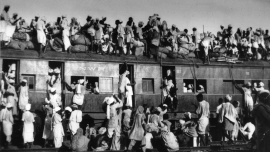
The rise, decline and revival of Buddhism in Bengal
Buddhism has a rich and intricate history in Bengal, evolving alongside various other religious traditions. ‘Bengal’ refers to present-day Bangladesh, which was once part of India, and the Indian state of West Bengal. Buddhism originated in India during the 5th or 6th century BC. It is commonly believed that the Buddha himself introduced Buddhism to Bengal, delivering several discourses. Although there is no conclusive evidence that Buddhism thrived in Bengal during the Buddha’s lifetime, it is generally accepted that Buddhism spread to the region during the reign of Emperor Ashoka (r. 268–232 BCE). An inscription from the 3rd century CE found at Nagarjunakonda mentions Bengal (Vanga) as a significant centre of Buddhism, where monks from Sri Lanka came to promote the faith.
During the Gupta dynasty (240–550 CE) in Bengal, Buddhism interacted with Brahmanism, as the Gupta rulers were primarily followers of Vaisnavism, one of the major Hindu traditions. However, they maintained a tolerant attitude towards Buddhism. This is evident from the Gunaighar Copper Plate of Maharaja Vainyagupta, dated 507 CE, which records grants made to Buddhist monks of the Mahayana school. The travel accounts of the Chinese monk Xuanzang (602–664 CE) indicate that religious tolerance was prevalent in medieval Bengal, characterised by the coexistence of Buddhist monasteries, Hindu temples, and Digambara Jain ascetics.
The Pala rulers (750–1161) actively promoted Buddhism, which became closely associated with Tantric Buddhism (Vajrayana Buddhism). During this period, Bengal experienced a significant expansion of the Buddhist tantric movement, with influential scholars such as Santideva, Santaraksita, and Atisa making notable contributions. This Tantric Buddhist tradition became widespread and took deep root in Tibet and Nepal.
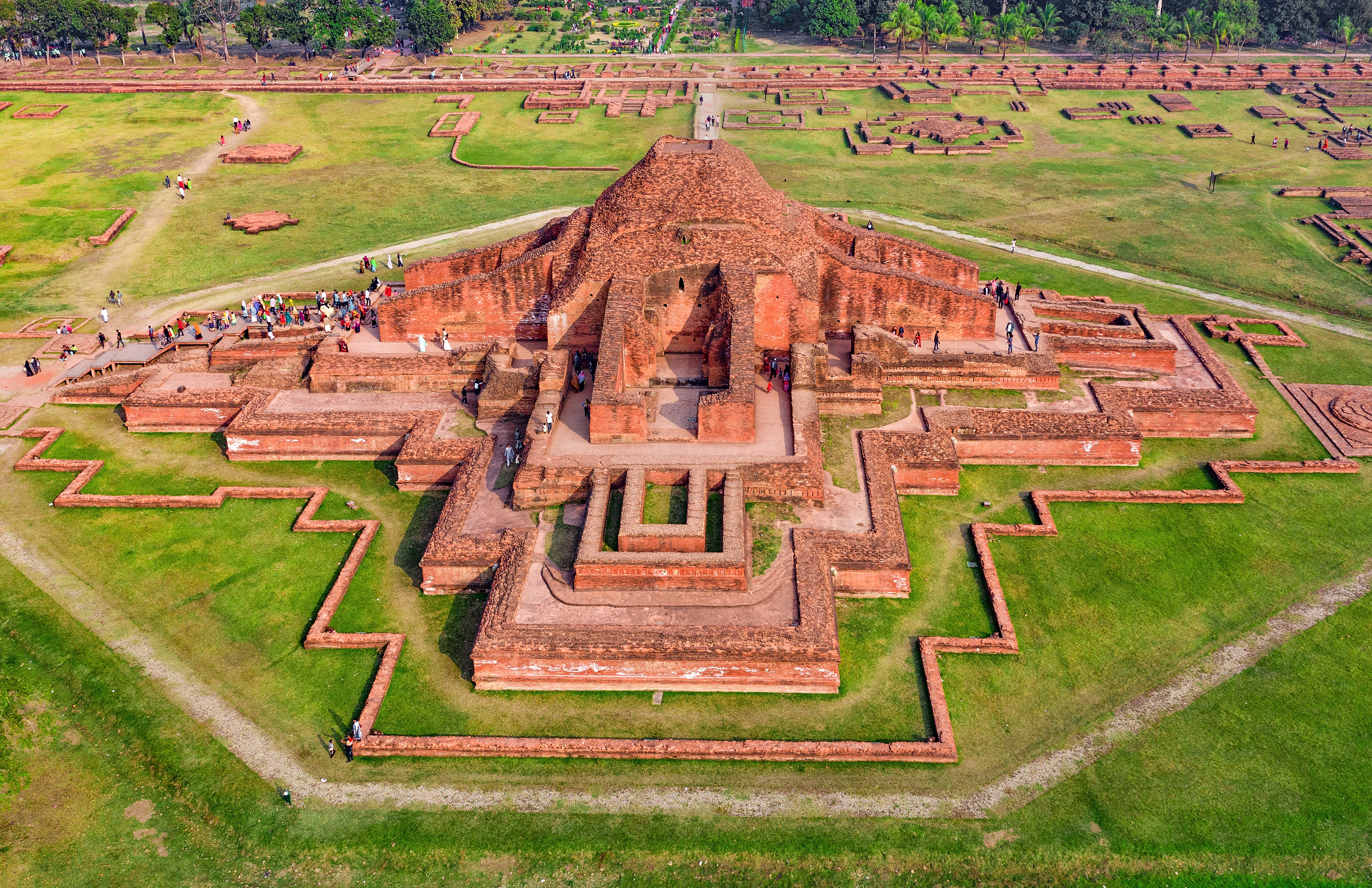
Under the Pala dynasty, Buddhism flourished more than at any other period in Bengal. The Pala kings provided substantial patronage to numerous Buddhist monasteries, including the famous Sompura Mahavihara, the largest monastery in the Indian subcontinent, founded by King Dharmapala (770–810). The ruins of this monastery have been excavated at Paharpur in the Naogaon district of Bangladesh.
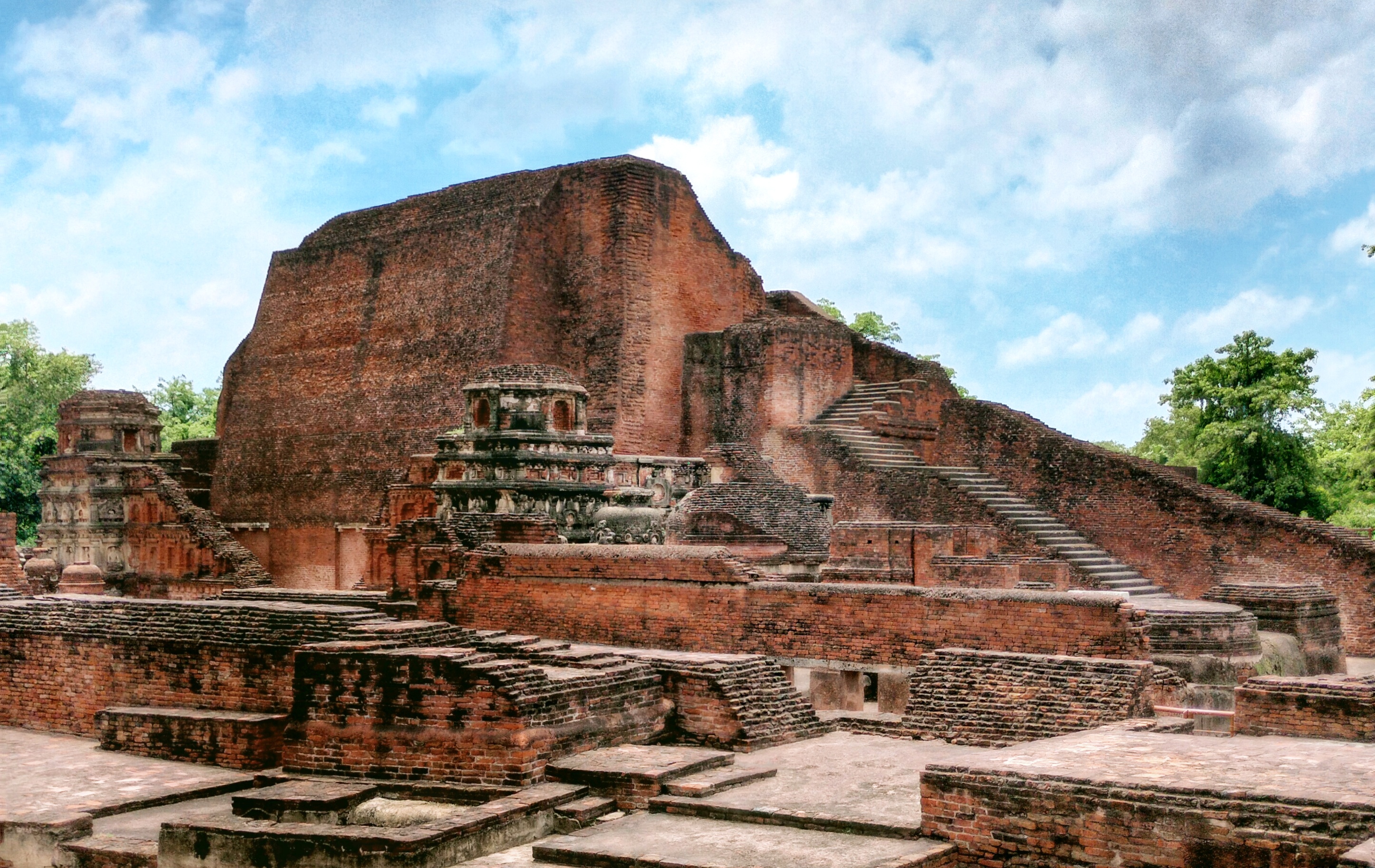
During the Pala dynasty, Brahmanism and Buddhism coexisted, with many ministers in the kingdom being Brahmans and Vedic rituals being performed. This religious collaboration is evident at the excavated Somapura Mahavihara, where the external walls feature various Hindu deities alongside Buddhist ones.
Under the subsequent Chandra rulers (905–1055), Buddhist beliefs began to be influenced more by Brahmin cults, leading to an intertwining of Tantric Buddhism with various Brahmin beliefs. During the Varman (1080–1150) and Sena (1070–1230) dynasties, Brahmin culture spread and became more influential, contributing to the decline of Buddhism in Bengal.
The period of Muslim rule in Bengal (1204–1760) was marked by the rapid spread of Islam, during which both Brahmanism and Buddhism faced significant challenges. In areas such as Chittagong and southern Arakan, Buddhists managed to survive, preserving a living tradition in the region.
The influence of Hinduism led many Buddhists in Bengal to adopt various Hindu rites, rituals, and the worship of Hindu deities, including Durga, Laksmi, Sani, Magadhesvari, and Kali. Additionally, Buddhists observed certain Muslim customs, such as offering sinni—a food preparation made of wheat or rice, molasses, banana, coconut, and milk—in honour of Sufi spiritual masters such as Satyapir and Manikpir.
Despite the decline of Buddhism in much of Bengal, remnants of the tradition persisted among lower-class communities such as the Dom, Pod, and Bagdi in western and southern Bengal. Evidence of this can be found in some districts of West Bengal, where many Buddhist deities are worshipped in forms aligned with Hindu mythology.
Certain communities in Bengal, such as the Baul, Rajbongshi, Nath, Vratya, and Harijan, are considered to be concealed Buddhists who have retained various Buddhist customs and beliefs, albeit in transformed and obscured forms due to the pressures of Brahmanical assimilation during the Sena dynasty.
While many believe that Buddhism disappeared from India by the 8th or 13th century, Buddhists were not entirely uprooted from the region. Ethnic groups such as the Barua and Chakma in the Chittagong Division of Bangladesh have continued to practise traditional Buddhist customs, and the regions of Chittagong and southern Arakan State are recognised as areas where Buddhism has survived as a living tradition.
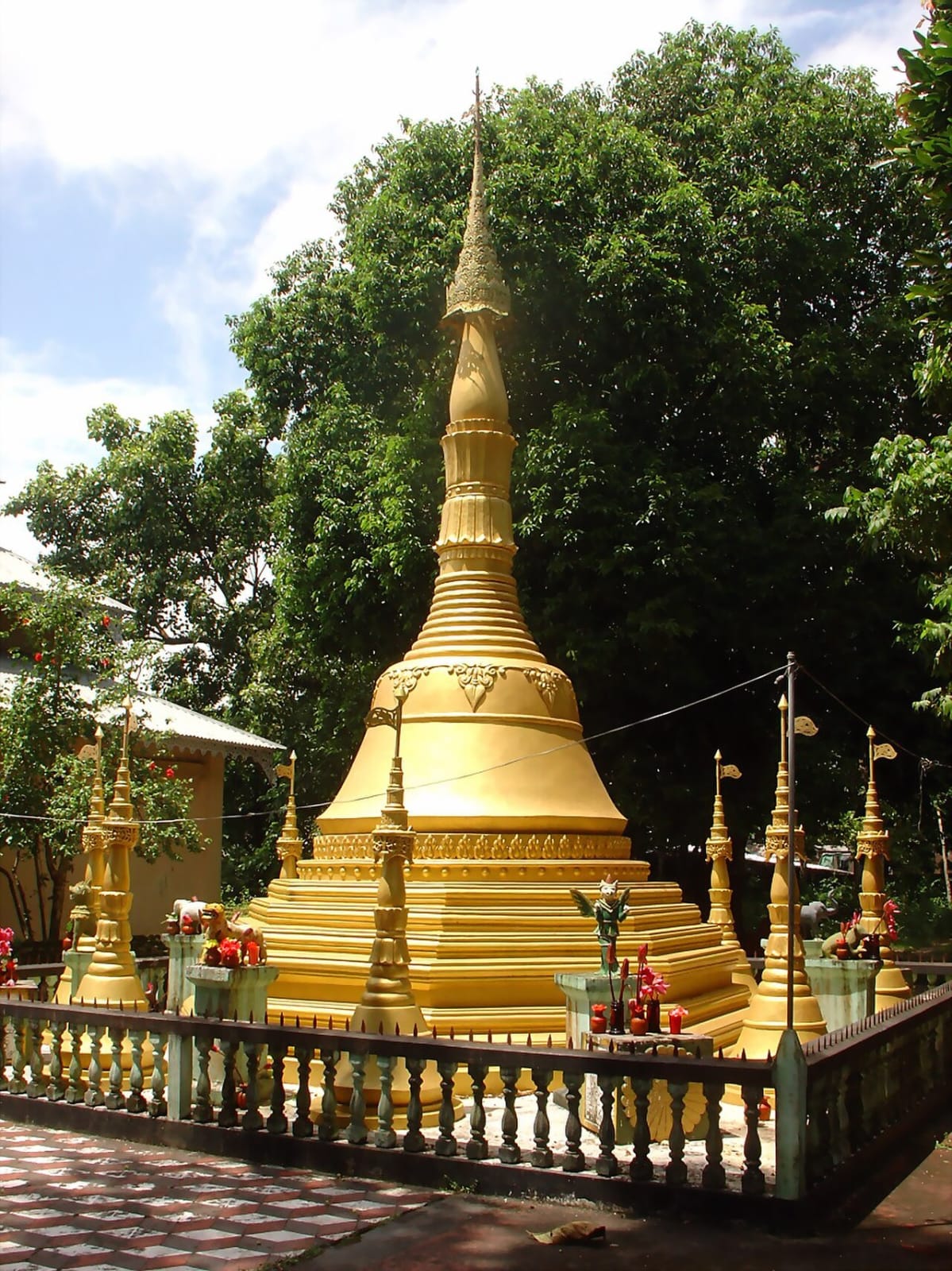
The revival of Buddhism (specifically Theravada Buddhism) in Bengal began in the mid-19th century, particularly under the influence of the Arakan region (now Rakhine State in Myanmar). This revival was spurred by European scholarship, which encouraged Bengali scholars and historians to revisit the Buddhist tradition during the 18th and 19th centuries.
Prominent figures such as Sir William Jones, Alexander Cunningham, Rajendralal Mitra, Haraprasad Shastri, Rabindranath Tagore, and Benimadhab Barua wrote extensively on the history of Buddhism and the Buddhist tradition in Bengal, contributing to a renaissance in Buddhist studies that inspired a revivalist movement throughout South Asia. This European-influenced revival of Theravada Buddhism continues to shape the practice of Buddhism in both Bangladesh and West Bengal today.
By the early 19th century, Buddhist society in Bengal was experiencing a renaissance that would inspire a revivalist movement throughout South Asia. Buddhist revivalists established numerous temples, Pali institutions, schools, and organisations. Many Buddhist publications, including books, newspapers, magazines, and newsletters, were produced. Respected monks made significant contributions to this movement. Organisations such as the Bangladesh Buddhist Association (established in 1887), the Bengal Buddhist Association (founded in Calcutta in 1892), and the Bangladesh Bauddha Kristi Prachar Sangha (established in Dhaka in 1950) have played crucial roles in promoting Buddhism.
Major festivals, rites and rituals
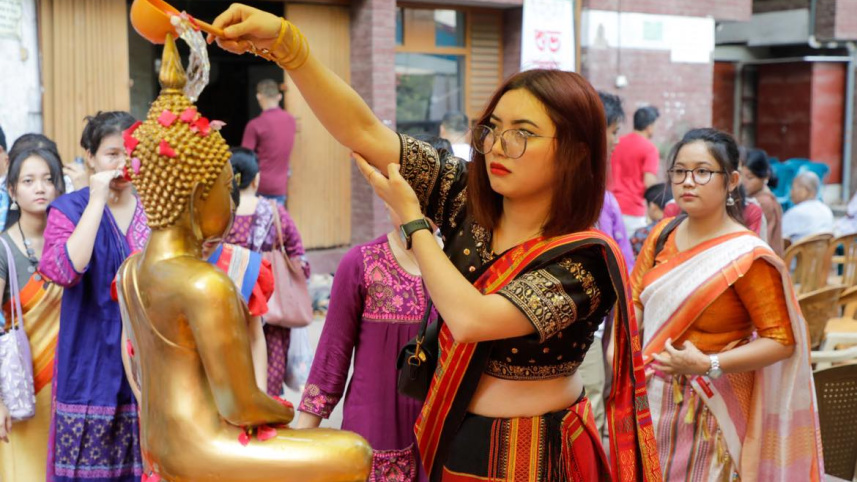
Buddha Purnima, also known as Boishakhi Purnima, is the most significant religious festival for the Buddhist community in Bengal. It is celebrated on the full moon day of the first month of the Bangla calendar, Boishakh (which falls in May in the Gregorian calendar). On this day, Buddhists across Bangladesh and West Bengal hoist the national and Buddhist flags atop temples, chant discourses from the Tipitaka, hold sermons on the life of the Buddha, recite various scriptures, and engage in group meditation. Many Buddhist organisations jointly organise colourful processions in Dhaka, Chittagong, Kolkata, and other regional cities. Additionally, various seminars and discussions are hosted by Buddhist organisations. In the morning, devotees visit temples to offer puja, flowers, incense, and candles, and to worship the Buddha. They reaffirm the Five Precepts (abstaining from killing living beings, stealing, sexual misconduct, lying, and intoxication), with many also accepting the Eight Precepts from monks. The Eight Precepts build upon the Five Precepts by expanding the third precept to prohibit all forms of sexual activity. Additionally, three more precepts are included, which involve abstaining from eating at inappropriate times, refraining from entertainment and personal adornment, and abstaining from the use of luxurious furniture.
Special prayers are offered for the peace and progress of the country and the world. Buddhists also engage in charitable activities, providing assistance to the sick and elderly, and distributing fruit and clothing to those in need.
Rites such as annaprashan, or “food feeding”, known in Bengali as “mukhe bhat”, mark the first solid food given to a baby after breastfeeding. Following this ceremony, the baby receives solid food in addition to breast milk. This ceremony is culturally significant among Buddhists, similar to its observance among Hindus as a Vedic ritual. Some religious practices, such as making offerings to monks, are observed for the baby’s health and prosperity.
Buddhist funeral rituals in Bangladesh reflect the rich tapestry of its ethnic cultures. These funerals often involve many community members, who may spend days or even weeks providing food for the bereaved family. For seven evenings after the death, a local monk visits the home of the deceased to chant and offer teachings on death. On the seventh day, the family organises a sanghadana (offerings to the Buddhist monastic community). The dynamics of Buddhist funerals in contemporary Bangladesh are evolving. Traditionally, funerals were conducted by local monks and were characterised by chanting and reflections on the deceased’s life. However, depending on financial circumstances, relatives may now invite a larger community of monks and family members to participate.
Senior monks are often accorded elaborate funerals, with their bodies preserved for extended periods—sometimes six months or even two years—during which their followers arrange funerals lasting two or three days or longer. These ceremonies are unique, attracting hundreds of monks and thousands of devotees, with offerings of food and gifts. Funerals for monks are often followed by entertainment, including religious songs and band performances.
Enduring Hindu-Buddhist syncretic culture
Following the reformation and revival of Buddhism, communities such as the Baruas and Chakmas became officially identified as Buddhists, practising a distinct Buddhist culture. However, upon closer examination of their daily lives, it becomes evident that they, especially Bengali Buddhists, continue to follow an enduring Hindu-Buddhist syncretic culture. For example, during celebrations for a pregnant woman or wedding ceremonies, Buddhists maintain certain Hindu customs, often inviting Buddhist monks to legitimise these practices.
Legally, Buddhists are still governed by Hindu customs. During the British Raj, the courts relied on old, uncodified shastric Hindu law to adjudicate matters concerning Buddhists. This legal framework was later adopted by the Government of East Pakistan and amended under Article 149 of the Constitution of the People's Republic of Bangladesh in 1972.
Despite the revival of Buddhism in the 18th and 19th centuries, Bengali Buddhists maintain a distinct identity while still adhering to a transformed socio-cultural framework. Bangladeshi Buddhists have made notable strides in asserting their identity, often criticising the observance of Hindu rituals. In contrast, many Buddhists in West Bengal remain influenced by Hinduism, participating in rituals for deities such as Kali, Durga, and Sarasvati.
As part of the Indian subcontinent, Bengal has been a significant crucible for the modern restoration of South Asian Buddhism. Political upheaval and oppression led to the decline of Buddhism in Bengal. The first revival of Buddhism occurred under British rule, influenced by European scholarship that encouraged revivalists to embrace Theravada Buddhism. Nevertheless, social revitalisation remains essential for Buddhists to ensure continuity in Bengal. After the transformation of Theravada Buddhism in Bengal, the Hindu-Buddhist Tantric practices of that era largely disappeared from Buddhist communities in Bengal. However, it is evident that Buddhists have adapted their socio-cultural practices to fit within a Buddhist framework. Currently, Buddhists in Bengal comprise several ethnic communities, including the Barua, Chakma, Tanchangya, Marma, and Rakhain, each with its own unique culture but all practising Theravada Buddhism. Additionally, there are followers of Vajrayāna Buddhism in Darjeeling and the surrounding areas of West Bengal, as well as new Buddhists who follow the teachings of Bhimrao Ramji Ambedkar in West Bengal.
Dr Dipen Barua is a Teaching Faculty Member at the Centre of Buddhist Studies, The University of Hong Kong. He can be contacted at dipen@hku.hk.
Send your articles for Slow Reads to slowreads@thedailystar.net. Check out our submission guidelines for details.
Women’s voices in Nazrul’s Dhumketu
How Milad-un-Nabi shaped Muslim cultural life in colonial Bengal
What Rashomon teaches us about truth and human behaviour
Why Chittagong never became a maritime city
The many worlds of Ghulam Murshid

Operation Jackpot: How Bangladesh’s naval commandos struck at Pakistan’s lifeline in 1971
The Yellow Butterfly: How Sheba shaped my world growing up

What Bangladesh’s historic Test victory in Australia means for Bangladeshi-Australians
Remembering Sumit Sarkar, a historian who questioned orthodoxy