Rediscovering Santal history through Scandinavian archives
History often hides in plain sight. Sometimes it survives in official archives, sometimes in fading manuscripts, and sometimes in the memories of people whose voices rarely find a place in history books. Sometimes, however, a book brings these scattered fragments together and compels us to rethink the past.
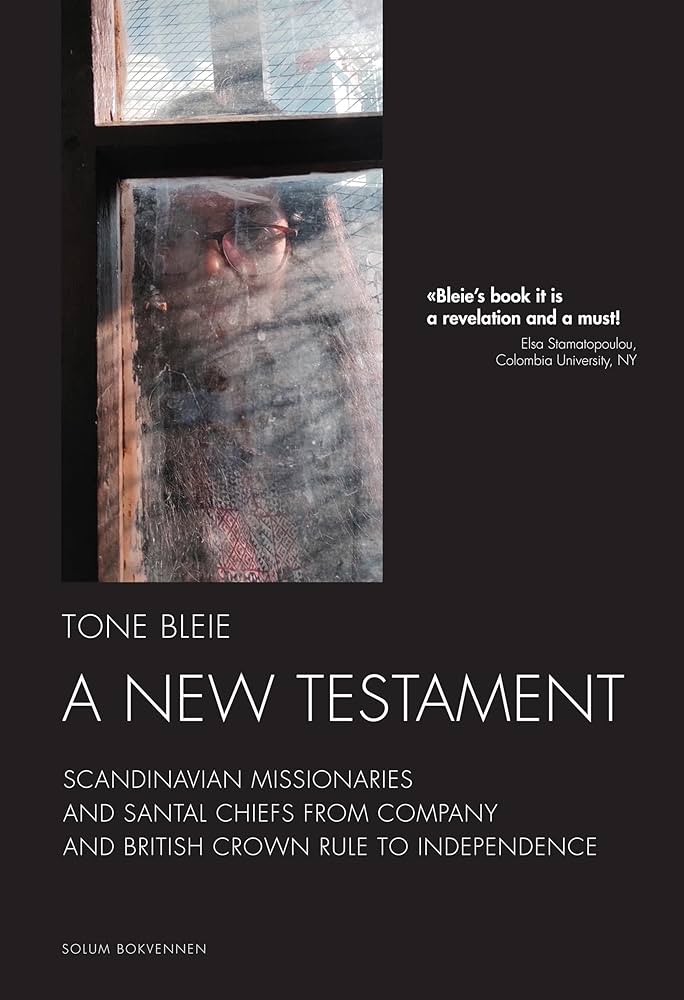
That was my experience while reading and rereading Professor Dr Tone Bleie's remarkable A New Testament: Scandinavian Missionaries and Santal Chiefs from Company and British Crown Rule to Independence. Richly illustrated and deeply researched, the book reconstructs nearly two centuries of encounters among Scandinavians, Santals and Bengalis, revealing intertwined histories of faith, land, power and resistance that continue to shape our present.
The title itself is significant. A New Testament functions simultaneously as a declaration, a legal trust document and an expression of belief. These layered meanings frame Bleie's central concern: who gets to write history, whose voices survive in the archive, and whose stories disappear? Although written in English, this is a history that deserves a far wider readership in Bangladesh. Its forthcoming Bengali translation and related exhibition initiatives are therefore important acts of restoring public access to a shared past.
Dinajpur: A window into colonial Bengal
The story begins not in Europe but in the villages of Dinajpur.
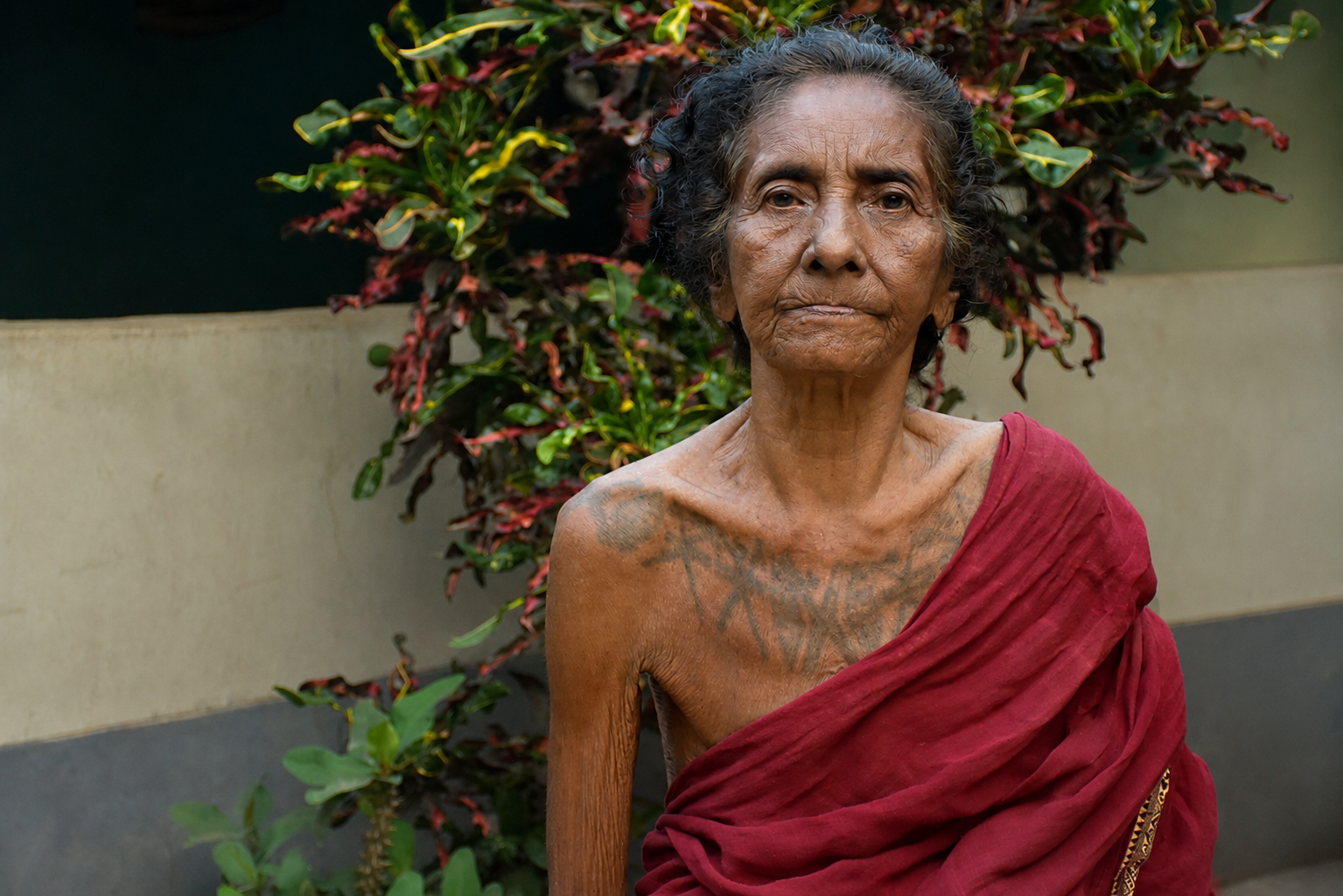
During the 1980s, Bleie conducted extensive fieldwork among Santal, Oraon and Bengali communities in northern Bangladesh. Her approach changed significantly when she returned between 1995 and 1998 to lead an action research programme supported by the Strømme Memorial Foundation. Rejecting the conventional practice of extracting information from Indigenous communities, she trained sixteen young Santal and Oraon women and men as co-researchers. Together, they documented oral traditions, customary land systems, livelihoods and local histories.
This collaborative methodology helped strengthen the emerging rights-based movement that advocated constitutional and international recognition of Adivasi and Indigenous peoples in Bangladesh. More than three decades later, Bleie remains a committed voice in support of minority and Indigenous rights.
The questions about colonial Bengal that first emerged in Dinajpur gradually expanded into a much broader investigation across eastern India, Nepal and Scandinavia.
Beyond the missionary narrative
At first glance, the book appears to be a history of Christian missions in South Asia. It is, in fact, a much broader history of colonial transformation.
Bleie situates the Transatlantic Santal Mission within the political economy of British colonialism, examining how faith, law, land and governance became deeply interconnected. She is critical of the ways missionary institutions became embedded within colonial structures, yet avoids reducing Scandinavian missionaries to mere instruments of empire. Instead, they emerge as complicated historical actors who sometimes defended Indigenous communities against predatory landlords while simultaneously facilitating legal and institutional reforms that strengthened colonial rule.
Rather than offering simple moral judgements, Bleie reconstructs the shifting relationships among missionaries, British administrators, Bengali landlords and Santal leaders, revealing a history defined by negotiation, conflict and accommodation.
Decolonising the archive
One of the book's greatest strengths lies in its treatment of missionary archives.
Drawing on more than a decade of research across Bangladesh, India, Nepal, Scandinavia and North America, Bleie treats archival collections not as neutral repositories of truth but as sites where power shaped authorship and historical memory. She asks difficult questions: whose voices were preserved, whose were silenced, and how did colonial institutions determine what became official history? By reading archival records alongside oral histories and neglected manuscripts, Bleie recovers Indigenous perspectives that had long remained obscured.
Faith, trust and indigenous memory
One of Bleie's most original contributions is her analysis of the Transatlantic Santal Mission as both a religious movement and a colonial institution. Through the remarkable career of the Norwegian missionary Lars Olsen Skrefsrud—simultaneously missionary, elected Santal chief and adviser to the colonial administration—she demonstrates how missionary networks became deeply entangled with British land policies, trust law and systems of governance. Missionary institutions did not simply preach Christianity; they also became influential intermediaries in the remaking of colonial frontiers.
Yet the emotional centre of the book lies elsewhere: in its recovery of indigenous intellectual traditions.
Bleie brings renewed attention to two extraordinary Santal figures: Guru Kolean and Sagram Murmu. Guru Kolean's oral narratives, dictated to Skrefsrud in 1871 and later published as The Ancestors' Tales, preserved Santal cosmology, customary law, migration and memories of colonial oppression. A half-generation later, Sagram Murmu documented an extraordinary corpus of Santal oral literature, now preserved in Norway's National Library as one of the world's earliest and richest archival collections written by Indigenous people about their ancestral legacy.
Revisiting these collections, Bleie argues that they should not simply be celebrated as missionary achievements. They also testify to Indigenous intellectual agency. Although Scandinavian editors translated them from Santali into English and organised these materials, the historical consciousness, cultural sovereignty and resilient spirit embedded within them remained unmistakably Santal.
In doing so, A New Testament shifts our historical gaze. Indigenous people are no longer passive subjects of missionary or colonial history; they emerge as its interpreters, custodians and authors.
The paradox of colonial "protection"
One of Bleie's greatest strengths is her refusal to reduce history to heroes and villains. Her portraits of Scandinavian missionary scholars such as Lars Olsen Skrefsrud and Paul Olaf Bodding are balanced, acknowledging both their remarkable contributions and the contradictions that accompanied them.
There is no denying their role in documenting and preserving the Santal and Boro languages through grammars, dictionaries and extensive archival collections. They also challenged exploitative landlords and, at crucial moments, defended Indigenous land rights. Yet Bleie demonstrates that these achievements came with unintended consequences. The paternalistic ideals of the so-called "civilising mission" gradually weakened traditional systems of Santal self-governance and reshaped communal institutions in ways that mirrored colonial priorities.
Borders that divided
If colonial rule transformed Santal society, the Partition of British India in 1947 fractured it even further.
Today's Santals live across Bangladesh, India and Nepal, yet they continue to share memories that long predate modern borders. Their historical realm stretches across the Chota Nagpur Plateau, Birbhum and northern Odisha, while Santal settlements in northwestern Bangladesh and the tea gardens of Sylhet and Assam largely emerged through colonial labour and migration policies.
Bleie shows how Partition disrupted far more than geography. New international borders weakened kinship networks, redirected migration and deepened political divisions. Over the decades, disputes over script, religion, land rights and electoral politics have further fragmented Indigenous communities. Yet a powerful sense of shared ancestry and transborder belonging has endured despite these pressures.
The book's final chapters trace how sacred forests disappeared, ancestral lands were appropriated and repeated waves of displacement, especially during communal violence and regional conflicts, placed Indigenous communities under increasing pressure. Meanwhile, the Transatlantic Santal Mission itself gradually transformed. By the early twenty-first century, many of its institutions had evolved into humanitarian organisations, hospitals such as LAMB Bangladesh, and successor churches. Bleie argues, however, that traces of colonial inheritance remain embedded within these institutions.
Why this history matters today
A New Testament is far more than a reframed regional history. It provides a new vocabulary for understanding Indigenous politics and minority rights in South Asia.
Bleie demonstrates that many of the constitutional and international rights claimed by Indigenous communities after the Second World War were built upon the efforts of the first generation of mission-educated Adivasi leaders. More importantly, she shifts our historical gaze. Santal chiefs, gurus and intellectuals no longer appear as passive recipients of missionary charity or colonial authority. Instead, they emerge as strategic actors who navigated empire while defending their communities, identities and political aspirations.
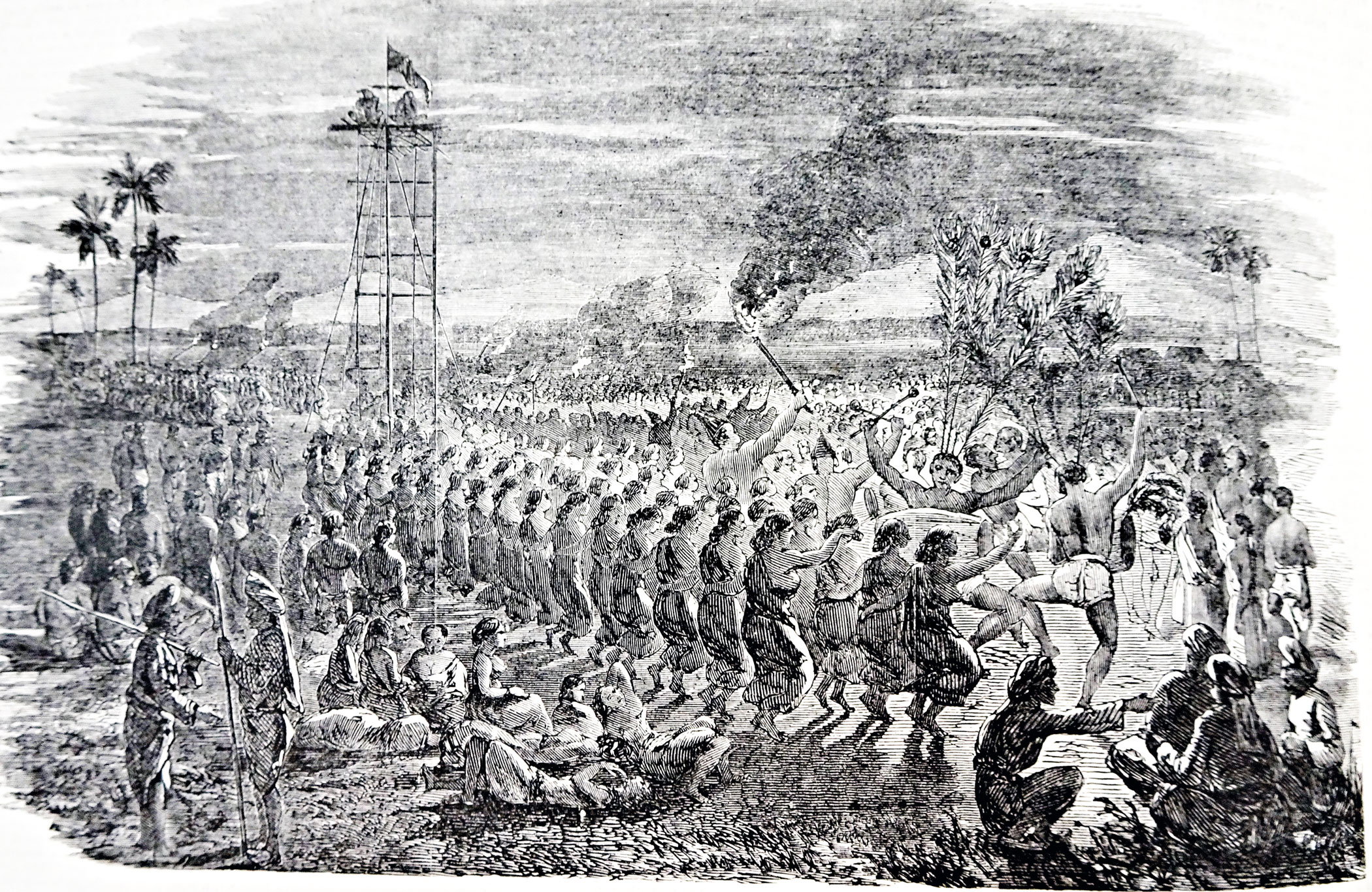
This perspective also challenges conventional interpretations of the Santal Rebellion of 1855. Often described simply as a peasant uprising, Bleie situates it within a broader history of colonial incursions, Indigenous political thought, egalitarian traditions, anti-colonial resistance and struggles over land, governance and cultural sovereignty.
Returning the ancestors' voices
History, however, does not end in the archive.
Across thousands of manuscripts preserved in Oslo emerge the voices of Santal chiefs, gurus, storytellers, healers, pastors and artisans—voices that have otherwise too rarely been heard in contemporary South Asia. Bleie reminds us that these collections should not remain the preserve of specialists. They deserve to be reclaimed, retold and reinterpreted by Santali and Bengali communities themselves, particularly through the digital technologies embraced by younger generations.
This vision is already taking shape. Together with the Santal-led Language Resource Hub (LRH) and the University of Tromsø, the International Centre for Study of Bengal Art (ICSBA) is collaborating on a digital exhibition titled The Ancestors Return. By connecting the archives of Oslo with the villages of northern Bangladesh, Jharkhand, West Bengal and Assam, the exhibition seeks to bridge historical scholarship with living memory.
More than a digital exhibition, it is an invitation to reconnect with ancestral voices, recover Indigenous knowledge systems and challenge the historical amnesia produced by colonialism and majoritarian nationalisms. It reminds us that the past is not simply something to be preserved. It is something to be rediscovered, reinterpreted and shared with our youth and future generations.
In that sense, A New Testament is much more than an exceptional work of history. It is a testament to memory, resilience and Indigenous agency, a powerful reminder that people once treated as marginal subjects of history were, in fact, among its most important authors.
Dr S M Saiful Islam is a visual artist and researcher at the International Centre for Study of Bengal Art (ICSBA). He is also a visiting scholar at the University of Tromsø (UiT), Norway.
Send your articles for Slow Reads to slowreads@thedailystar.net. Check out our submission guidelines for details.
Asma Abbasi: The essence of orange
Tigers and the empire: A history of hunting, power and resistance

25th Death Anniversary / A life so full: Remembering Ahmed Sofa
Bengal's forgotten slave trade: Portuguese, Arakanese and Dutch trafficking networks
Mufazzal Haider Chaudhury and the idea of Bangladesh
The Tagore paradox: Why critique strengthens his legacy
What Sufism can teach us about the modern world
The journey of Qawwali across South Asia: Music, mysticism, and cultural exchange
Thinking with Partha Chatterjee