A global quest in search of a nation

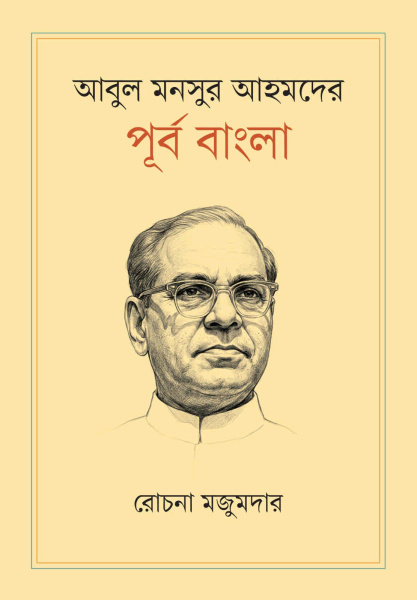
Abul Mansur Ahmad’s lifelong interest was to develop a constitutional future that would uphold the Bengali Muslim’s statist (rashtrik) and cultural (krishtik) freedom (jatiyata). In a five-hour-long speech delivered at the Pakistan National Assembly after the adoption of the constitution on March 23, 1956, he noted, “Pakistan is a nation of two states,” in which “a minority rules a majority”. Unlike many thinkers of his time, Ahmad’s interest in questions of sovereignty and autonomy did not take a parochial or nativist turn. Instead, he made his case, whether for language or constitutionalism, by opening himself up to the world. Abul Mansur Ahmad was, in many ways, a global thinker before the formal advent of globalisation theory in modern social science. In what follows, I offer a brief illustration of this through Ahmad’s reflections on the Bengali language.
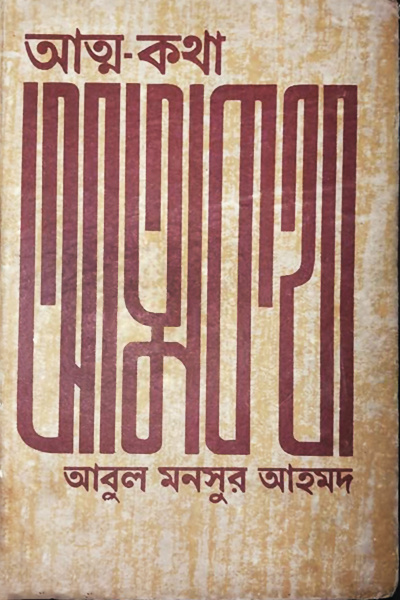
As far as Ahmad was concerned, the partition of India in 1947 into India and Pakistan [West and East] was historically necessary and justified. But something within him shifted after 1947. He described it as a “fundamental” (moulika) transformation in his “literary” approach. He writes that, after partition, the category “East Bengal” substituted the space hitherto occupied by “Musalman” in his thought. “East Bengal was a part of Pakistan in the statist sense. In the cultural sense, East Bengal was always a sovereign, self-contained province. That cultural autonomy was on the one hand completely independent of the other province, West Pakistan; on the other hand, it was also completely independent of the other part of historic Bengal, that is, West Bengal” (Ahmad, Atmakatha).

That most East Bengali Muslim poets, litterateurs, and intellectual leaders seemed completely unaware of their cultural difference not only “saddened” Ahmad, but also left him “astonished”. One group among these intellectuals argued that there was no separation between East and West Pakistan, as both were “Islami”. To them, a separation on the grounds of “krishti” (culture) was untenable. An opposing faction argued with equal fervour that both East and West Bengal were united by a common Bengali krishti. For the Islami group, Muhammad Iqbal was the national poet, while the votaries of a shared Bengali krishti championed Rabindranath Tagore. Both groups seemed united by a consensus that East Bengalis or East Pakistanis had no cultural autonomy. There was no room in the discourse for a sovereign, original language, culture, and literature—as if such autonomy were superfluous.
Ahmad did not identify with either camp. He recalled that, for the thirty years or so before partition, when he moved in Calcutta literary circles, he was regarded as a person who was linguistically “Musalman”. Upon his return to literary circles in Dhaka, post-partition, he was, ironically, treated as “Bāngal”. Dipesh Chakrabarty noted, “The name East Bengal as used to designate a geographic division may have been of modern colonial and administrative origin, but the languages and the ways of life of the people of the eastern side of Bengal were long an object of amused contempt for those on the western side, who called the easterners, bangals.”
On the question of East Bengali literary autonomy, Ahmad did not even see eye to eye with the famous Bengali Muslim poet Kazi Nazrul Islam (1899–1976), who extended generous support to him when he was in Calcutta and whom he otherwise revered. Despite their mutual affection, there was a basic difference between the two men. It had to do with the way Nazrul and Ahmad used Perso-Arabic, “musalmani”, words in their writings.
Ahmad used them not because they were Arabic or Persian but because they occurred in the everyday prose of Bengali Muslims. Spoken every day, these words were spelt and pronounced differently by Bengalis from the way they were by speakers of Arabic or Farsi. Ahmad made no effort to retain their original Arabic or Farsi spellings or their original pronunciation. Nor did he scour dictionaries for such words.
By contrast, Nazrul Islam, he noted, used a series of “sweet” and “difficult” words from the Perso-Arabic lexicon in his poems. In Nazrul’s writings, such words only appeared in his “musalmani”-themed poems, not in other poetry or prose works. Ahmad argued instead that Perso-Arabic words should be part of Bengali vocabulary because everyday, ordinary usage had rendered them Bengali. Bengali Hindus rarely used these words. The question of a different Bengali language was a matter of the “cultural originality” or cultural autonomy (sbakiyata) of a minority community in undivided India; in undivided Bengal, it had been a matter of cultural repression by an “advanced minority” (Hindu Bengalis) of a “backward majority” (Muslim Bengalis). As he put it, “in East Bengal or East Pakistan [present-day independent-sovereign Bangladesh] this grew into a question about the cultural and political autonomy, personality, and freedom of a liberated nation-state” (Ahmad [1978] 2018, 310–311).
Ahmad coined phrases such as “tower-Bengali” and “khamar [farm]-Bengali”, sophisticated versus crude Bengali, and the Bengali of the “master” and “servant”, to draw attention to the discrimination he alleges. “East Bengalis had no culture, only agriculture” was the patronising description of farm-Bengali by the speakers of tower-Bengali. Everyday Hindu-Bengali snobbery about their language must have contributed to the alienation that intellectuals like Ahmad experienced and to their linguistic non-identification with the former.
Cultural, literary, and linguistic colonialism were “principally mental phenomena”, he noted, unlike “statist discrimination and economic class-divisions that were readily manifest as symptoms of colonialism”. Such literary, cultural, and linguistic domination was therefore more difficult to cognise.
Ahmad recalls writing regularly in the daily Ittehad while he was still in Calcutta to gather support on the language issue. Upon his return to Dhaka, he threw himself into the language movement of 1952. But the language movement failed to do justice to the cultural originality of the new nation. Ahmad notes, “The themes of national sovereignty, cultural originality, and popular freedom that a handful of authors were able to express as part of the East Pakistan renaissance movement in Calcutta … were not articulable in Dhaka in the 1950s”. So badly scorched was the consciousness of educated Bengali Muslims by the fire of “tower Bengali”, a language created predominantly by Bengali Hindus in British Calcutta over two and a quarter centuries, that they continued to identify themselves as “bhadralok”.
To restore sovereignty not only in the realm of rashtra (nation-state) but also of krishti (culture), East Bengali Muslims must break the shackles of “tower Bengali” and bring the “khamar-Bengali” of everyday speech into literature. Only then would Bengali literature be decolonised from the iron grip of the British-influenced, Fort William-trained bhadralok classes, whose cultural emblems were Michael Madhusudan Dutta, Bankimchandra Chattopadhyay, and Rabindranath Tagore.
Linguistic decolonisation entailed the creation of a new literature that would hew closer to the speech of the Muslim peasant and tenant cultivator (krishak, praja) whose support made East Pakistan a political reality. The clear appreciation of “krishtik-sbakiyata” (cultural originality) came to him, writes Ahmad, from reading the history of the cultural upliftment of Germany, Italy, Ireland, and, especially, the United States.
Ahmad was by no means the only person to bring language to the centre stage of East Pakistani politics. Dr Md Shahidullah, Mohammad Akram Khan, Kazi Motahar Hussain, Md Barkatullah, and Abul Hashim, to name just a few intellectuals, wrote powerfully about the importance of Bengali in Pakistan. But Ahmad was distinct from his contemporaries in two respects. First, for Ahmad, the question of Bengali was two-pronged in that it was both religious and linguistic—that is to say, his analysis was undertaken from the point of view of being Muslim and Bāngal. Second, Ahmad interrogated post-partition linguistic/literary sovereignty, self-respect, and the politics of recognition within a global context, with the American example foremost in mind.
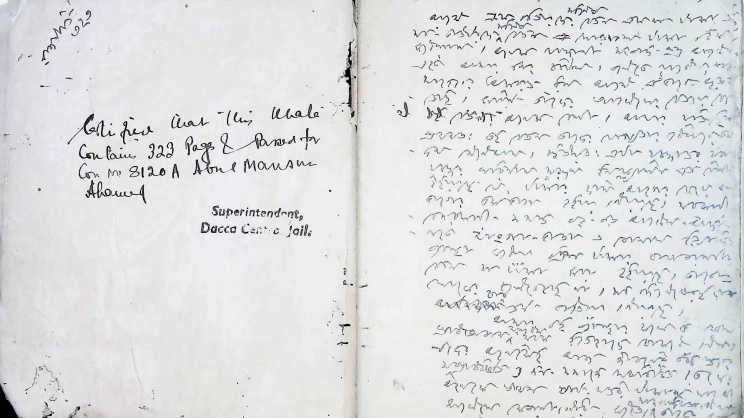
In a wide-ranging chapter in his last published work, Atmakatha, entitled “Statist versus Cultural Uniqueness” (“rastrik banam krishtik sbakiyata”), Ahmad drew an analogy between his own crusade to persuade East Pakistani Bengali Muslims to shed the burden of the dominant Bengali of West Bengal and that of a number of American intellectuals, leaders, and authors from the late eighteenth to the twentieth centuries. The chapter laid out a brief history of English in the United States, as Ahmad understood it. Ahmad’s reference to the American debates on English appeared in the early 1960s, a decade when the Cold War was at its height. In the United States, the 1960s witnessed the spread of the civil rights movement and the tragic assassinations of Medgar Evers, Malcolm X, John F. Kennedy, and Martin Luther King Jr. on the domestic front; on the international front, there was the unspeakable and prolonged violence of the Vietnam War. American campuses roiled in strong reaction to these events; academic disciplines such as English were under pressure as cultural studies challenged the then-dominant formalist textual approaches. In fact, America during the 1960s, at the height of the Cold War, was going through movements we associate with decolonisation: the struggle of peoples for self-respect, political and cultural rights, and recognition of difference.
In expressing his anger at the slights he experienced as an East Bengali and as a bāngal, Ahmad was not only participating in a conflict within Bengali, east versus west. His was also a powerful voice of decolonisation in a global milieu debating questions of difference.
America was a weapon of decolonisation that Ahmad deployed, emblematically, in his quest for self-respect and to elevate particular modes of speech of his people, the “khamar” Bengali, as it were, alongside the literature rendered in tower Bengali that was bound up with his experience of cultural belittlement and marginalisation. Reading him today is a means of opening up the politics of nationalism to unexpected global encounters. The question of American English was relevant to Ahmad because, as an East Pakistani, he realised that sovereignty of the state was no guarantee of krishtik and bhashik (cultural-linguistic) sovereignty. The Bengali Muslim must struggle to establish bāngal as the beating heart of the Bengali language, taking their pride of place next to the bhadralok successors of Bankim, Michael, and Rabindranath, perhaps even—Ahmad hoped—defeating them one day.
Rochona Majumdar is the George V. Bobrinskoy Professor of South Asian Languages and Civilizations, Cinema and Media Studies, and the College at the University of Chicago.
Send your articles for Slow Reads to slowreads@thedailystar.net. Check out our submission guidelines for details.
 For all latest news, follow The Daily Star's Google News channel.
Chand Bibi and the forgotten history of Muslim women’s political resistance
Women’s voices in Nazrul’s Dhumketu
How Milad-un-Nabi shaped Muslim cultural life in colonial Bengal
What Rashomon teaches us about truth and human behaviour
Why Chittagong never became a maritime city
The many worlds of Ghulam Murshid

Operation Jackpot: How Bangladesh’s naval commandos struck at Pakistan’s lifeline in 1971

The Yellow Butterfly: How Sheba shaped my world growing up

What Bangladesh’s historic Test victory in Australia means for Bangladeshi-Australians