


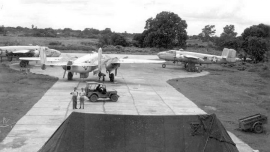
APO 433: Dhaka’s forgotten post office of World War II
9 September 2026
•
In Focus
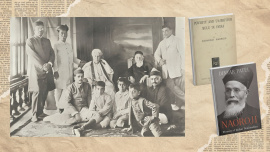
Dadabhai Naoroji: The man who exposed the economics of British colonialism
8 September 2026
•
In Focus
Untold stories of 1971 through private letters
7 September 2026
•
In Focus
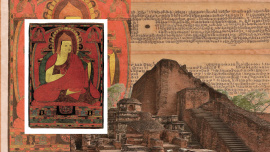
The extraordinary journey of Atish Dipankar Srigyan
6 September 2026
•
In Focus
Forgotten story of Jeanette Van Tassel, the American woman who flew over Dhaka in 1892
5 September 2026
•
In Focus
Beyond 1947 / A personal essay
4 September 2026
•
In Focus
Abul Mansur Ahmad / A global quest in search of a nation
3 September 2026
•
In Focus

Chand Bibi and the forgotten history of Muslim women’s political resistance
2 September 2026
•
In Focus
Women’s voices in Nazrul’s Dhumketu
31 August 2026
•
In Focus
How Milad-un-Nabi shaped Muslim cultural life in colonial Bengal
26 August 2026
•
In Focus
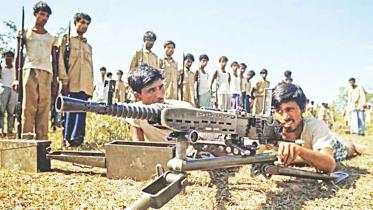
How the Mukti Bahini was trained
On May 1, 1971, General SHFJ Manekshaw issued the Indian Army Operational Instruction No. 52. A structured policy to provide training facilities and logistical and operational support for the liberation of Bangladesh was prepared by Lieutenant General Jagjit Singh Aurora, General Officer Commanding-in-Chief (GOC-in-C) Eastern Command.
23 May 2021
The current status of Jerusalem
This is an excerpt of the paper delivered by Edward Said, author of the famous book Orientalism, at a conference on Jerusalem held in London on 15-16 June, 1995.
16 May 2021
Ray and His Political Films
“Films cannot change society. They never have. Show me a film that changed society or brought about any change,” said master director Satyajit Ray in an interview for the American magazine Cineaste more than three decades ago.
9 May 2021
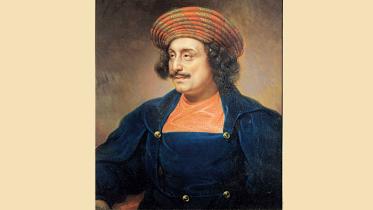
The early history of press freedom in Bengal
In mid-eighteenth century Mughal India, slowly but surely, the old was giving way to the new in complex ways.
2 May 2021

The myth of martial race: Seared into a schoolboy's memory!
The years 1968-1969, were a tumultuous period in the political history of the state of Pakistan. My father a Bengali civil servant from East Pakistan, was an official in the then central government in Islamabad.
18 April 2021
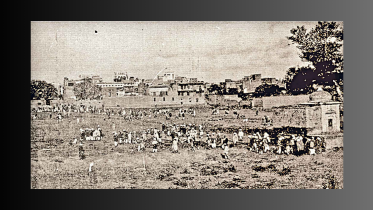
The End of Empire: The meanings of Jallianwala Bagh
It has often been said that Britain lost its empire the day when, one hundred [two] years ago, 55-year old Brigadier-General Reginald Dyer, commanding a regiment of 50 Gurkha and Baluchi riflemen,
11 April 2021

Bengali Muslims and their identity: From fusion to confusion
One of the grand paradoxes facing Bangladeshis is expressed in the negotiations and contestations on the simple question about who they are, particularly in the context of the strains caused by the Universalist claims of their religion on the one hand and the particularist demands of their ethnicity and culture on the other.
4 April 2021
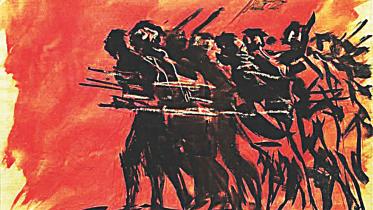
The Historian and the Riflemen
On the evening of the 25th of March of 1971, Yahya Khan, third President of Pakistan, was driven from an elegant, storied house at 22,
28 March 2021
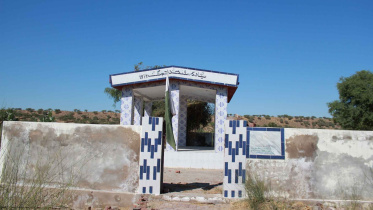
The 1971 war, caste, citizenship and a war memorial in Tharparkar
Perhaps the only memorial for the martyrs of the 1971 war in Pakistan stands quietly and forgotten near the village Barach, about 25 kilometers southeast of Mithi, the desert district headquarters of Tharparkar.
27 March 2021

The birth of Bangladesh and nationality question in South Asia
26 March 1971 is a significant date in South Asian subcontinent not simply because Bengali majority of Pakistan decided to assert a right to secede in the face of brutal military crackdown but also because the very fundamental framework of the parameter of nation formation in South Asian subcontinent had been altered.
21 March 2021

No student can be tortured, intimidated
The High Court yesterday observed that no student can be tortured, intimidated and pressurised physically or mentally as per an earlier directive of the court .
14 March 2021
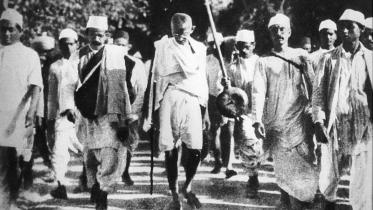
When Gandhi's Salt March Rattled British Colonial Rule
Since the late-1910s, Mohandas Karamchand Gandhi had been at the forefront of India’s quest to shake off the yoke of British colonial domination, otherwise known as the “Raj.”
14 March 2021
One in three women endure abuse: WHO
One in three women have already suffered physical violence or sexual abuse, the World Health Organization said, warning that the coronavirus pandemic was deepening the problem.
10 March 2021

Why no dedicated rail carriages for women
The High Court, in a rule, yesterday asked the authorities why a special compartment should not be allocated for female passengers and separate reserved seats for children, physically challenged passengers, and senior citizens in every train for ensuring their privacy and security.
10 March 2021
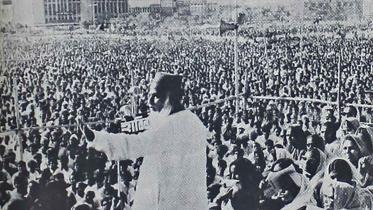
Bhashani’s support for non-cooperation movement
Maulana Abdul Hamid Khan Bhashani addressed a mass gathering at Paltan Maidan on March 9. In his address, he proclaimed full support to the ongoing non-cooperation movement and called upon the people to continue the struggle unless success was achieved.
8 March 2021

50 years later, the fight goes on
When speaking about our Liberation War of 1971, we often commend our freedom fighters for their sacrifices and bravery and condemn the then Pakistan army for inflicting inhumane torture on our innocent people, especially our women.
7 March 2021
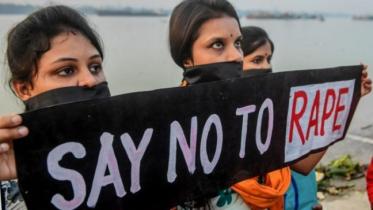
26,695 rape cases filed in last 5 years
A total of 26,695 rape cases have been filed across the country in the past five years, said a short report submitted by the office of the Inspector General of Police (IGP) to the High Court yesterday.
3 March 2021

Rohingya Relocation: Another 3,800 on way to Bhasan Char
The government is going to relocate around 3,800 more Rohingyas to Bhasan Char by tomorrow from different refugee camps in Cox’s Bazar.
2 March 2021

Louis Kahn's Capital Complexity
The National Capital Complex in Dhaka, designed by Louis Kahn, is an epic work in the annals of modern architecture. Even after sixty years of its conception, Kahn’s complex remains a wondrous phenomenon that is continuously renewing the purposes of architecture.
28 February 2021
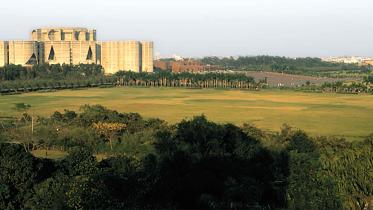
Kahn's Journey to the National Assembly Building
What Einstein’s E=mc2 is for physicists, Louis I Kahn’s “Silence and Light” is for architects. Kahn’s lecture on “Silence and Light” in 1969, five years before his death, was the recapitulation of his collective thoughts based on metaphysical reasoning that he considered a key to his point of view, applicable to all works of art, including architecture.
28 February 2021