Bhawaiya: Songs of desire and defiance

Bhawaiya, like many Bangla folk traditions, is often framed as a repository of cultural values that symbolise national, political, religious, and gendered identities. However, such a view risks stabilising what is, in fact, a dynamic and contested field. Rather than simply reflecting social norms, these songs can often transcend them, as Bhawaiya demonstrates.
Having been born in a district of North Bengal, Bangladesh, I encountered Bhawaiya, but I did not yet have the language to interpret what I was hearing. It was only later, after becoming familiar with feminist theories, that I noticed a dissonance between the lyrics and the social realities they reflected for women in Bengal. Women subjects in these song lyrics articulate longing, dissatisfaction, and desire, often in ways that unsettle normative gendered expectations. From the first collected Bhawaiya song by Sir George Grierson (1903) to contemporary Bhawaiya songs, these expressions are not peripheral but central to the genre.
For example, the first printed Bhawaiya song translation by Grierson was:
At dawning youth I was not Hymen-favoured,
How long still am I to remain single at home?
O fate, marble-hearted!
The full-bloom flower of my golden youth yields to Malaya’s softest breeze,
My parents have become my foes in not sending me to another’s home, bound in ties hymeneal,
O fate, marble-hearted.
The existence of such defiant emotions in these song lyrics raises the question of who composed these songs and the gender of these composers in the search for the 'female voice' of Bhawaiya songs. Based on my research, I argue that authorship and voice in Bhawaiya are not about who wrote the songs but about how emotion, desire, and defiance are collectively expressed and reinterpreted over time.
The same song is explained by Barma (2004) as: “The woman, in the bloom of youth, has not been given in marriage in the prime of her youth, which is gradually withering away. Her parents are not in a position to arrange the marriage. The youthful woman cannot even express her mental feelings to anybody out of shame and fear. She feels like running away with the man of her choice, marrying him, and spending conjugal life in peace and happiness. She would not mind even if people speak ill of her and despise her for this act” (232). While Barma’s (2004) interpretation explains the literal meaning of the song, the eagerness for sexual fulfilment, expressed through the word ‘marriage’ in the song, is not emphasised.
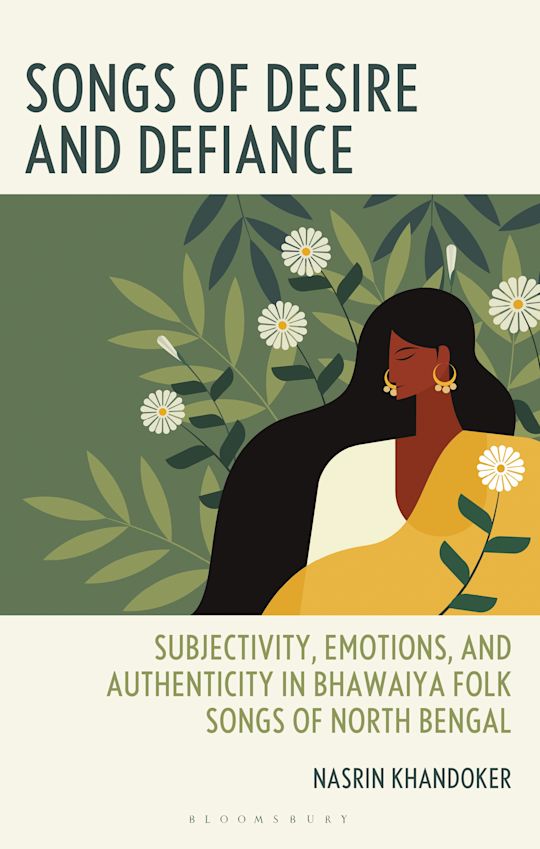
From my research on Bhawaiya, I found that marriage, rather, has an open meaning here that is tied to its context, rather than being expressed as a familial, social, or legal contract established through the reformations of marriage in Bengal. In some of the lyrics, it is described as a path to sexual fulfilment. In other cases, when the woman expresses the desire to meet her lover, it is sometimes within the context of an oppressive marriage. For example:
আবে ও মোর শ্যম কালা কার আগে আমি কব মোর দুঃখের কথা (O dear, to whom I will tell the story of my sorrow)
ওরে কায় মোর দরদি হবে এ দুঃখ আমি কব কাকে রে (Who would have empathy for me?)
ওরে বাপে মায়ে মোর দিসেরে বিয়া পাগলা সোয়ামি দিয়া রে (My parents married me to a crazy man)
পাগলা সোয়ামি মোর ঘরে থাকে এক দিন না হাত দেয় শিতানের বালিশে রে (The crazy husband stays home, but never even touches my pillow)
শাশুড়ি ননদের খোঁটায় মোর শরীর হইল কালা রে (The scorns of my in-laws are making me sick)
যখন কালা তুমি বাজায় বাঁশি তখন আমি রান্ধন রাঁধি রে (O Kala, I was cooking while you were playing the flute)
ভিজা কাষ্ঠ চৌকাত দিয়া কান্দন ধুমার ছলে রে (I cry hiding under the smoke that I created with the damp wood)
There is a consensus among Bhawaiya researchers about the musical tradition that upholds and celebrates the day-to-day material life of women, such as household chores like cooking and cleaning, and the professions of their lovers, i.e., garial (bullock-cart driver) or mahout (elephant tamer) (Barma 2004; Buli 2011). Therefore, in Bhawaiya, the carnal emotions and love expressed through metaphor are grounded in real-life experience and do not hide behind the guise of spirituality (Barua 2000; Barma 2004).
The existence of such defiant emotions in these song lyrics raises the question of who composed these songs and the gender of these composers in the search for the ‘female voice’ of Bhawaiya songs. Based on my research, I argue that authorship and voice in Bhawaiya are not about who wrote the songs but about how emotion, desire, and defiance are collectively expressed and reinterpreted over time. Folk song traditions are collective products, and notions of individual authorship do not align with them, especially as gender identity is often untraceable. Men and women alike have created, sung, and disseminated these songs. I argue that Bhawaiya’s ‘voice’ is collective and performative rather than biologically gendered. Through singing, both men and women embody the emotions of ‘woman’ in the songs, creating a shared subjectivity.
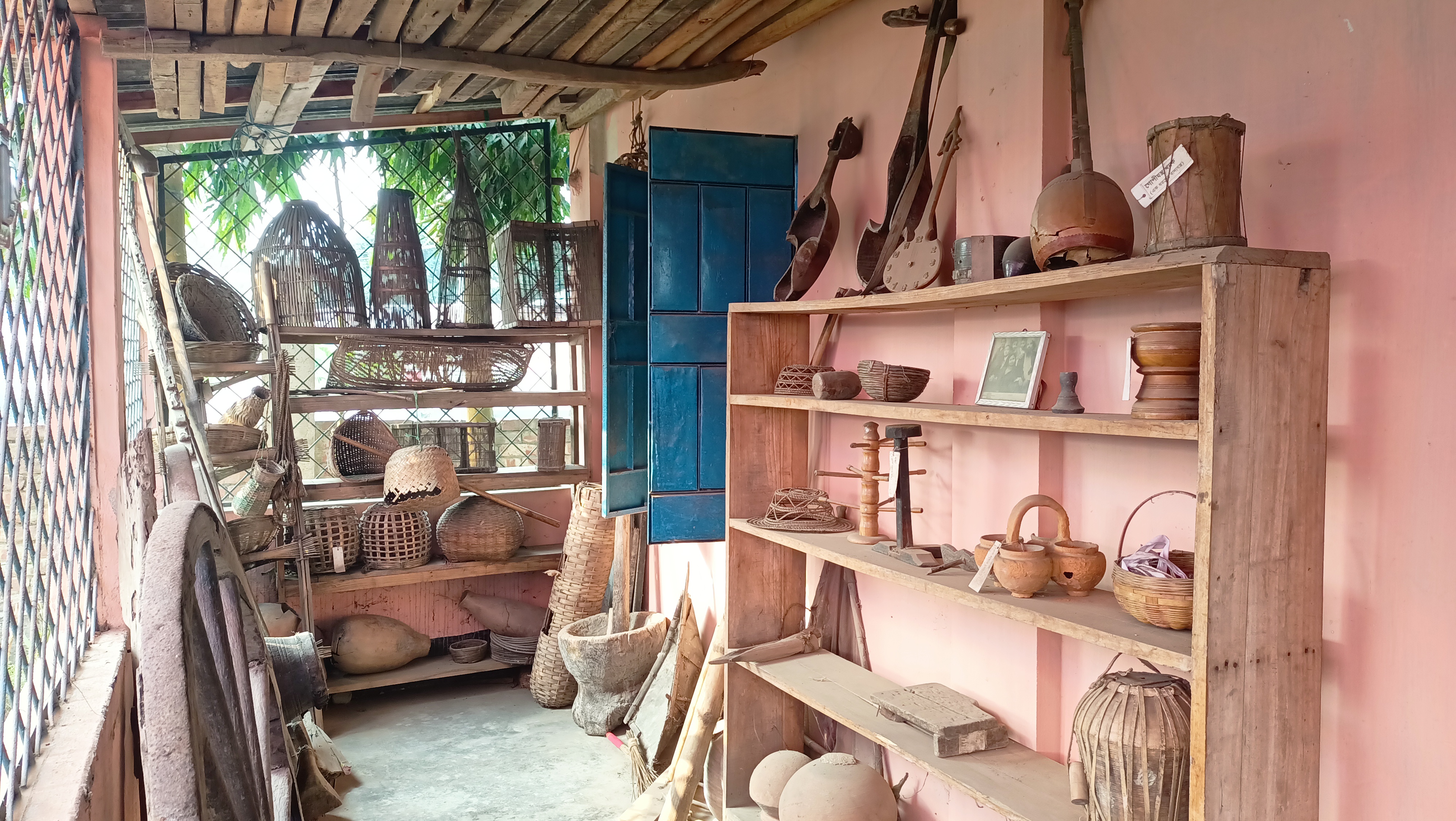
Moreover, during my fieldwork, I observed the agency of Bhawaiya women as they negotiated their limited spaces within normative gender boundaries, expressing hope for change. The songs reflect this defiance, portraying women as active agents and subjects rather than passive victims reliant on men to voice their stories. The ‘woman’ of Bhawaiya is therefore not reducible to a single, stable identity. She is a symbolic and affective figure that enables the articulation of desire, anger, longing, and defiance. Her stories are often fictional, yet they resonate deeply with the lived experiences of the women who compose, sing, listen, enjoy, celebrate, and pass them on to the next generation. This resonance allows the songs to circulate widely, particularly among women who recognise aspects of their own emotional lives within these narratives. At the same time, the fictional framing provides a degree of protection, allowing for the expression of feelings that would otherwise be constrained.
To analyse the transcendence of multiple, fluid, and temporal female subjectivities produced by the songs, I draw on the concept of “becoming woman” as a relational mode of subjectivity. In Bhawaiya, this subjectivity is not tied to biological gender. Rather, it is produced through singing, listening, and emotional engagement. Through these processes, the songs generate a shared emotional atmosphere in which subjectivities are temporarily reconfigured and transcend prescriptive gendered emotions. The significance of this lies not in the dissolution of gender, but in the opening of a space where it can be reimagined and felt in the body. It is also felt through embodied emotions that leave a residue on the body over time. Emotion does not remain fixed within the song or the performer; it moves between the bodies of listeners and performers, and across moments. Each act of performance and reception reshapes the song, allowing it to acquire new meanings while retaining traces of previous ones. This mobility of emotion challenges any attempt to stabilise interpretation and underscores the tradition’s collective nature.
The question of authenticity further complicates the interpretation of Bhawaiya and Bangla folk songs more broadly. Expressions of anger, desire, and defiance among women are particularly vulnerable to such filtration. Both nationalist aesthetics and religious moral frameworks have, in different ways, sought to regulate the emotional content of folk songs by removing or reinterpreting elements that do not align with dominant identities. In this process, the desiring female subject is often recast as a passive victim, and the more unsettling aspects of the songs are softened or erased. Yet these efforts are never entirely successful. Bhawaiya continues to circulate across different contexts, adapting to new conditions while retaining its affective intensity.
What Bhawaiya and other Bangla folk musical genres offer is not a simple narrative of resistance or conformity, but a more complex interplay of desire, negotiation, and expression. It appears through the persistence of certain emotions, and through the refusal to silence women’s desire, dissatisfaction, or anger.
Dr Nasrin Khandoker is a Postdoctoral Researcher in the Department of Sociology and Criminology at University College Cork, Ireland. She previously served as an Associate Professor in the Department of Anthropology at Jahangirnagar University, Bangladesh.
Send your articles for Slow Reads to slowreads@thedailystar.net. Check out our submission guidelines for details.
Tajuddin Ahmad: A life for Bangladesh

Interactive / The haor crisis explained
Interactive: Bangladesh Labour History · 1881 - 2026 / Fight for Justice
Justice at work for all
The Price of Labour
Interactive / How many more lives before workplaces become safe?
The expansion of wage labour and the message of May Day
In conversation with Richard Wolff / Can workers seize the opportunity as Western capitalism declines?