Wera Saether: The Norwegian voice of Bengali folk music

Norwegian citizen, poet, photographer, and researcher Wera Saether, inspired by her love for Bengali folk culture, established ‘Mayer Tori’ with local cultural activists. She recently spoke to S Dilip Roy of The Daily Star about her journey into Bengali folk traditions, the vision behind ‘Mayer Tori’, and her efforts to preserve and nurture folk music.
The Daily Star: How did your journey with Bengali folk music and traditions begin? As someone from Norway, what initially attracted you to Bengali folk music?
Wera Saether: I am a poet, photographer, and researcher. I am not an artist. I cannot sing. In 1998, I came to Bangladesh to understand the reality of the flood and the post-flood situation, to write and to take photographs. I went to Roumari upazila in Kurigram district, in the northern part of Bangladesh. I visited Uttar Namajer Char, a shoal in the Brahmaputra River. I took photos of flood-affected people. I captured the devastation caused by the flood. I listened to and wrote about the stories of people who survived by fighting the flood. During that time, I heard ‘Bhanga Noukar Gan’ and ‘Marfati Gan’ in Uttar Namajer Char. I really liked the melodies of the songs, but I did not understand the lyrics. Hearing the broken boat songs and Marfati songs on the Brahmaputra River shoal, I fell in love with the folk music of Bangladesh.
TDS: Why did you choose to dedicate yourself specifically to Bengali folk traditions rather than other musical or cultural forms you may have encountered around the world?
WS: Folk music of Bangladesh is the song of the soil, the song of roots. Truth is hidden within these songs. I find truth in these songs. There is no truth anywhere else except in the songs of roots. The melodies of folk music moved me so deeply that, even after returning to my country, I could not remain still. The tunes kept echoing in my ears. To understand the lyrics, I had to learn the Bengali language. It was very difficult for me to practise Bengali. After much effort, I was able to gain a command of the language, though I am still learning. Now I can understand the lyrics of Bengali folk songs. However, I cannot sing or play instruments. I simply love listening to folk music.”
TDS: In your view, what makes Bengali folk music unique? What separates it from other folk or spiritual musical traditions globally?
WS: In my view, Bengali folk music is unique. It speaks of life, the mind, abundance, tradition, and spirituality. There are many folk traditions around the world, but Bengali folk music is distinct and beautiful in its melody and words. Certainly, Bengali folk music is different from other folk traditions worldwide. That is why I have become attracted to it. Its loving melodies stir my ears and nourish the hunger of my mind.
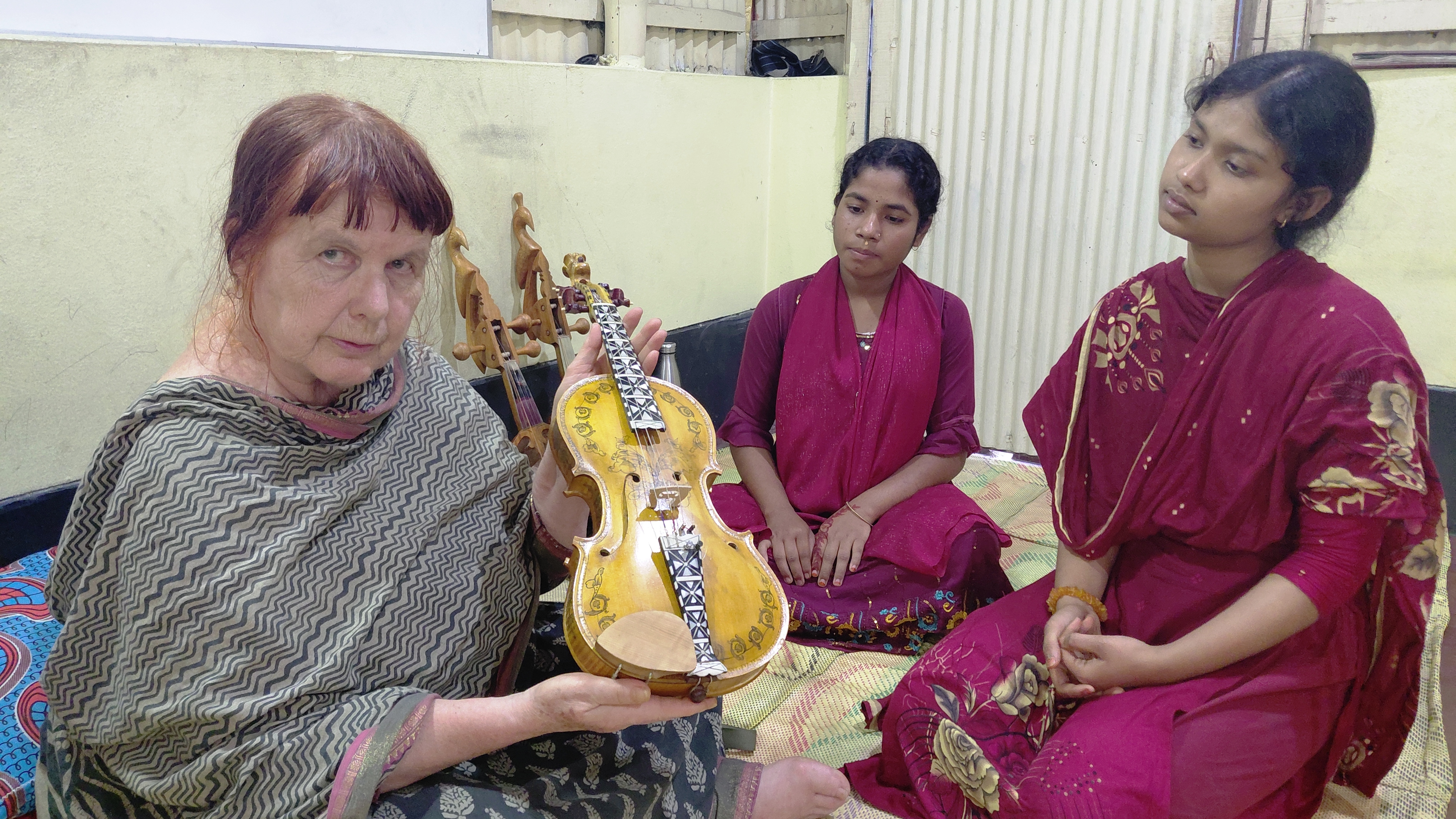
TDS: Did you personally choose the name “Mayer Tori”? What is the meaning behind it, and why did it feel right for this initiative?
WS: Mayer Tori was established in 2016. I did not give this name. People in this region who practise and love folk music gave it this name. I liked the name. It fits well with the tradition of folk music. Here, ‘Ma’ means mother, and ‘Tori’ means boat. The mother who will strengthen the struggle to keep alive the songs of the soil, the songs of roots—folk music—and carry them from generation to generation, that is what Mayer Tori represents.
TDS: How do you view recent attempts to fuse folk songs with modern musical forms, as well as broader efforts to revive them?
WS: Recent attempts to mix folk songs with modern music are highly condemnable and criminal. I do not like it, I do not support it, and I will never support it. Because of such attempts, Bengali folk music will be at risk. Folk music may disappear. The songs of the soil, the songs of roots, must be allowed to live in their own way and must be preserved. Folk songs must be protected from such fusion. Admirers of folk music must come forward. If this is not resisted now, one day the melody of folk songs may no longer be heard. Then there will be great regret.
TDS: Looking ahead, what is your long-term vision for Mayer Tori and the future of folk music in Bangladesh?
WS: The artists of Bengali folk music have given me the title of ‘Ma’. They call me mother. I am trying to uphold Bengali folk music and stand beside those connected with it. If folk artists survive, folk music will survive. Therefore, new folk artists must be created. Children must be encouraged to engage in the practice of folk music. These children must be developed as the boatmen of folk music. One day, these boatmen will carry folk music far and wide. I am emphasising the practice of folk music among children, along with traditional Bengali musical instruments. Mayer Tori is doing this work. I hope and dream that Bengali folk music will live forever. Because when we are in trouble, in sorrow, in pain, we take refuge in folk music. At such times, folk music gives us comfort. If folk music disappears, humanity, tradition, and roots will also be lost.
I believe that in today’s world—marked by war, greed, and environmental destruction—it has become very difficult to keep people mentally sound. Lalon, Baul, Marfati, and Murshidi songs can bring people back to the path of true love and peace. The ‘Mayer Tori’ is working not only to teach music to children but also to shape them into humane individuals.
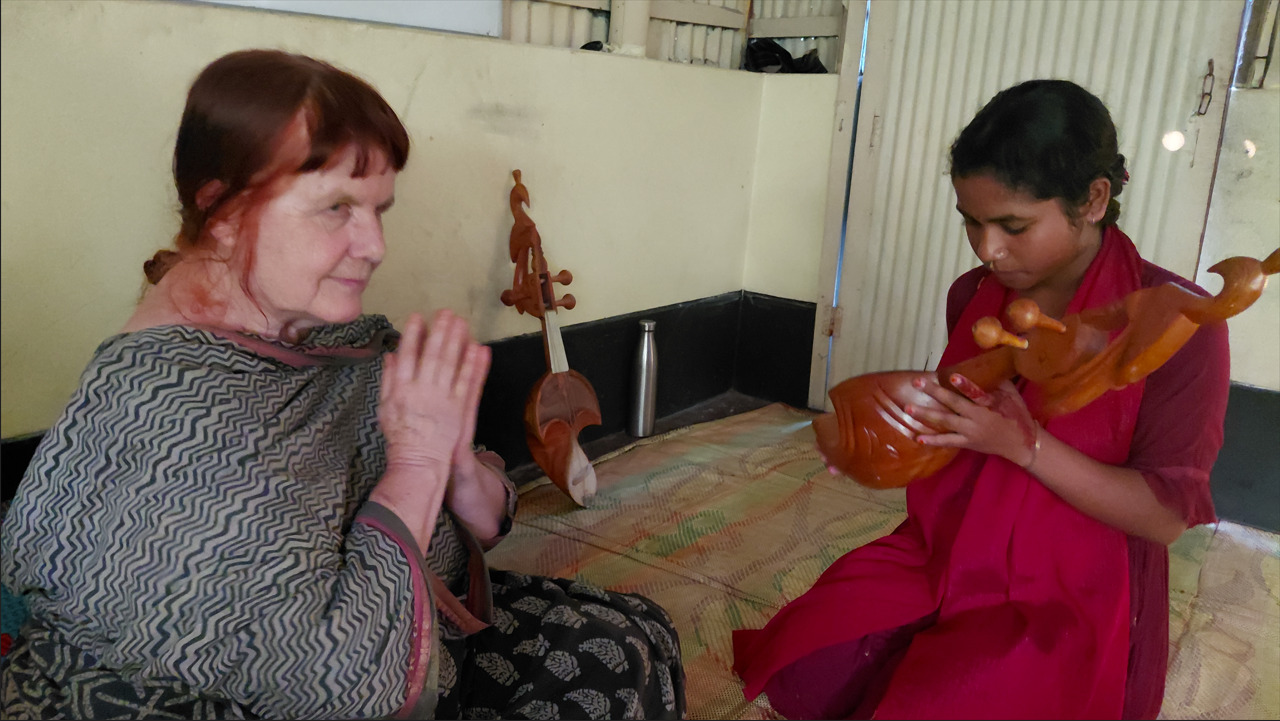
In the northern border districts of Bangladesh—Lalmonirhat and Kurigram—‘Mayer Tori’ has emerged as a new beacon of folk music and cultural practice. Through this organisation, more than 600 children in the two districts are learning Lalon songs, Marfati, Murshidi, Bhawaiya, Palli songs, and other folk genres.
In addition, children are learning various traditional instruments such as the dotara, ektara, khamak, sarinda, tabla, flute, Bangla dhol, and violin. Even in the era of modern and melody bands, such initiatives by Mayer Tori have created a unique response in the cultural sphere.
S Dilip Roy is a journalist at The Daily Star.
Send your articles for Slow Reads to slowreads@thedailystar.net. Check out our submission guidelines for details.
Tajuddin Ahmad: A life for Bangladesh

Interactive / The haor crisis explained
Interactive: Bangladesh Labour History · 1881 - 2026 / Fight for Justice
Justice at work for all
The Price of Labour
Interactive / How many more lives before workplaces become safe?
The expansion of wage labour and the message of May Day
In conversation with Richard Wolff / Can workers seize the opportunity as Western capitalism declines?