What can a teacher give that AI cannot?
Every year on Teachers’ Day, we thank teachers for shaping the future. Perhaps now it is high time to raise a difficult question: What kind of future are we preparing for teachers and our children?
Children who enter school today may enter the workforce in the 2040s. By that time, many jobs that exist now could have changed, disappeared or been transformed by artificial intelligence. Knowledge will become easier to access at the touch of a screen. AI may explain maths problems, generate lesson plans, translate languages, analyse data, and much more. If a machine can increasingly provide information, what should a teacher provide? The answer may determine the future of education in Bangladesh.
Paper reforms vs classroom realities
Since independence, Bangladesh has repeatedly tried to redefine the purpose of education, from the Qudrat-e-Khuda Education Commission in 1972 to the National Education Policy 2010, which emphasised learning, creativity, values, citizenship and national development.
The National Curriculum 2012 introduced several changes, recognising that the secondary curriculum introduced in 1995 had become too theoretical and information-heavy, without focusing sufficiently on investigation, problem-solving, creativity and learning by doing. It clearly explained that curriculum development is a continuous process and that knowledge, technology, society and learning needs are constantly changing.The uncomfortable truth is that attending school does not necessarily mean learning. Bangladesh has made progress in expanding access to education. But access and learning are not the same thing.
The pattern is revealing. Bangladesh has repeatedly recognised the fundamental principle that education must change because society changes. Now the question needs to become even more fundamental: How quickly can education change when the world itself is changing faster than our education cycles?
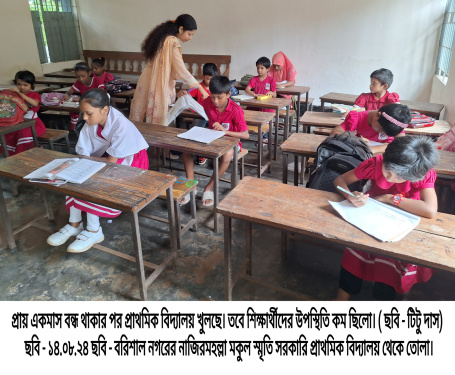
The curriculum cannot continue to lag behind the world. Here is the thing: the curriculum is not the education system. A textbook is not the curriculum. A new curriculum does not automatically create a new classroom. The curriculum only becomes real when a teacher interprets it, teaches it, assesses learning and connects it to the lives of learners. That is why the teacher remains the crucial bridge between policy and practice.
The uncomfortable truth is that attending school does not necessarily mean learning. Bangladesh has made progress in expanding access to education. But access and learning are not the same thing.
Maybe the most important educational question of the AI era is not what AI can do. It is what human beings must continue to learn to do well.
The educational philosopher John Dewey argued that true education comes through experience rather than simply receiving information. This view is also echoed by constructivist theories that treat learners as active participants who build understanding through inquiry and reflection. These are not new concepts. AI makes them more relevant than ever.
The crisis of foundational learning
The World Bank's 2024 Learning Poverty estimate suggests that 51 per cent of primary-school-age children in Bangladesh are not proficient in reading with comprehension, even after adjusting for children who are out of school. This should make us pause. If a child spends years in school but does not develop foundational literacy, numeracy, reasoning and communication skills, then the question is no longer simply whether the child attended school. The question is: What happened to learning inside the classroom?
The World Bank frames this as a human-capital issue. Foundational learning is not necessary only for examinations. It influences further education, employability, participation in society and economic development. This is where teacher development becomes a national development issue, not merely a professional development issue. We need to rethink the teacher's role, moving from the ‘teacher who knows’ to the ‘teacher who enables’.
In previous generations, a good teacher was often seen as someone who knew the subject well and could explain it clearly. Yes, that remains essential, but it is no longer adequate. A good teacher must also be able to identify learning gaps, manage diverse classrooms, use assessment evidence to guide instruction and help students distinguish reliable knowledge from misinformation.
Now there is another essential skill: AI literacy. AI literacy should not simply mean teaching teachers how to use ChatGPT or another AI tool. It also means knowing when not to use AI.
At this point, the role of the teacher does not diminish. The teacher increasingly becomes a designer of learning, a mentor, diagnostician, questioner, ethical counsellor and developer of potential rather than simply a provider of knowledge. Here, the teacher's greater responsibility may be to help learners question information, test evidence, think critically, collaborate, communicate, create, make decisions and understand their own society.
Maybe the most important educational question of the AI era is not what AI can do. It is what human beings must continue to learn to do well. A student may ask AI to write an essay. But can the student decide whether the argument is meaningful? AI can provide information about Bangladesh, but can a student understand what it means to belong to Bangladesh while also being a responsible global citizen? These are educational questions, not technological ones.
Equipping learners with roots and wings
That’s why the future learner should not have to choose between being Bangladeshi and being a global citizen. Our education should give children both roots and wings.
Roots mean language, history, the Liberation War, literature, culture, heritage, community, environment, values and an understanding of Bangladesh's economic realities. Wings mean critical thinking, proficiency in English and other communication skills, digital and AI literacy, collaboration, creativity, entrepreneurship, intercultural understanding and the ability to participate confidently in a global society.
The goal should not be simply to produce children who can compete with the world. It should be to develop Bangladeshis who can contribute to the world without losing their connection to where they come from. This is where our textbooks and curriculum deserve greater scrutiny.
Instead of just asking, “Is the content correct?”, we should also ask: What capabilities will this content develop? Is the learner able to read, understand, question, analyse, create, communicate, collaborate, solve problems, reflect and act?
The classroom: The unit of reform
The challenge, therefore, is not simply to revise textbooks frequently. It is to establish a living curriculum, one that is periodically reviewed and tested against evidence on student learning, teacher practice, emerging technologies, national priorities and the changing labour market.
That’s why the classroom must become our unit of reform. We often discuss education reform in terms of policies, curricula and infrastructure. But every reform eventually faces its final test: the classroom.
National education policy can be excellent on paper, and curricula and textbooks can be full of competencies and activities. But if teachers lack the preparation, time, confidence, resources, professional support and autonomy to translate them into practice, the reform remains mostly on paper.
That’s why the future learner should not have to choose between being Bangladeshi and being a global citizen. Our education should give children both roots and wings.
This is why teacher development should no longer be treated as a series of workshops or training sessions. It should be viewed as a learning ecosystem encompassing preparation, induction, mentoring, collaborative planning, classroom practice, observation, feedback, reflection, professional growth and leadership. The success of that system should ultimately be assessed by one question: “Are students learning better?”
The best way to honour our teachers is not simply to tell them that they are the architects of the nation. It is to give them the environment they need to perform that role. We should prepare teachers not merely to deliver today's curriculum but to interpret tomorrow's world. We should equip schools not merely to produce examination results but to develop capable, ethical and adaptable human beings. We should judge education not merely by how many children enter classrooms, but by what they can understand, question, create and contribute when they leave them.
What no algorithm can teach
AI, curricula, jobs and technology will all change. One thing, however, should not disappear from the centre of education: the human relationship between a teacher who understands a learner and a learner who is discovering what they can become.
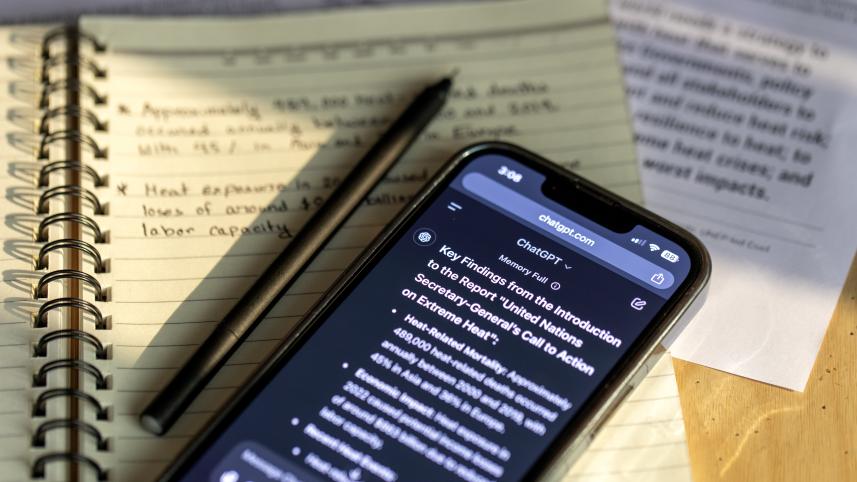
Perhaps the future of education, therefore, is not about teachers versus AI. It should be about better teachers, better pedagogy, effective use of technology and stronger human capabilities. If Bangladesh can build that combination well, our classrooms can produce something that neither a textbook nor an algorithm can produce alone: young people who are deeply rooted in Bangladesh, confident in the world, capable of working with technology and, most importantly, capable of thinking for themselves.
That is how we can prepare learners who are not only ready for the jobs of tomorrow but also capable of becoming the citizens and leaders that Bangladesh will need.
Md. Musle Uddin Bhuiya serves as the Head of Professional Development Centre & Outreach at Aga Khan Academy Dhaka.
The views expressed are the author’s own and do not necessarily reflect those of Aga Khan Academy Dhaka.
Send your articles for Slow Reads to slowreads@thedailystar.net. Check out our submission guidelines for details.

What phuchka and jhalmuri can teach us about the science of taste

Remembering Yayoi Kusama: My encounters with the master of infinity

Dress and morality : The politics of what women wear

Is being single at 35 a failure?
Travelling through books / One more page please, Mama
BTV does not need a new look to have a new future
Why is there so much anxiety about women’s bodies?
Buddhadeva Bose: As I knew him
End of reading? A post-literate society in the making