


Taliban seeks to manage image
Girls have returned to some secondary schools in a northern province of Afghanistan, Taliban officials and teachers said yesterday, but they remain barred from classrooms in much of the country.
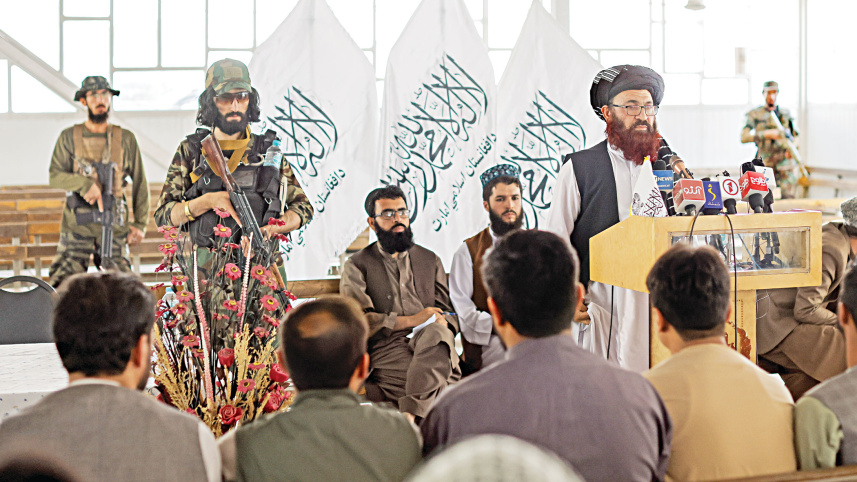
The new hardline government also announced at a stage-managed rally that some women civil servants have been called back to work and a backlog of salaries would be paid, signs the Islamists may be trying to soften their public image after 50 days in power.

A video posted by the group's spokesman Suhail Shaheen showed dozens of schoolgirls in black, some wearing white head scarves and others with black face veils, sat in chairs waving Taliban flags.
"Girls are going to high schools in Khan Abad, Kunduz Province," tweeted Doha-based Shaheen, who has been nominated as the new Afghan government's permanent representative to the United Nations.
But in Kabul, education ministry official Mohammad Abid said there had been no policy change from the Taliban's interim central government, telling AFP yesterday: "High schools still remain closed for girls."
The Taliban, notorious for their brutal and oppressive rule from 1996 to 2001, have faced international fury after effectively excluding women and girls from education and work across the country, while incrementally stripping away at Afghans' freedoms.
Meanwhile, The Taliban killed at least 13 members of the Hazara ethnic group, including a 17-year-old girl, in the central province of Daykundi, shortly after they took power in Afghanistan, according to a new report from Amnesty International.
On August 30, a convoy of 300 Taliban fighters entered Khidr district and killed at least 11 former members of the Afghan National Security Forces (ANSF), nine of whom were taken to a nearby river basin where they were executed shortly after having surrendered, the rights group said in its report published yesterday.
A British envoy held talks with senior members of Afghanistan's new Taliban government in Kabul yesterday.
Senior civil servant Simon Gass met with deputy prime ministers Abdul Ghani Baradar and Abdul Salam Hanafi, the British foreign office said.
They discussed how Britain could help Afghanistan address a deepening humanitarian crisis, terrorism and the need for safe passage for those who want to leave the country.
 For all latest news, follow The Daily Star's Google News channel.
Comments